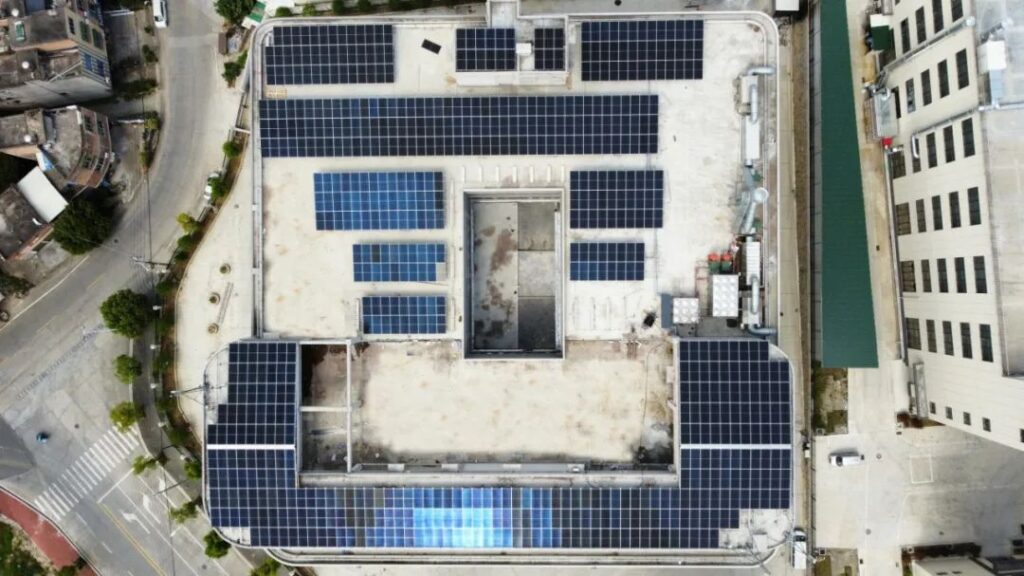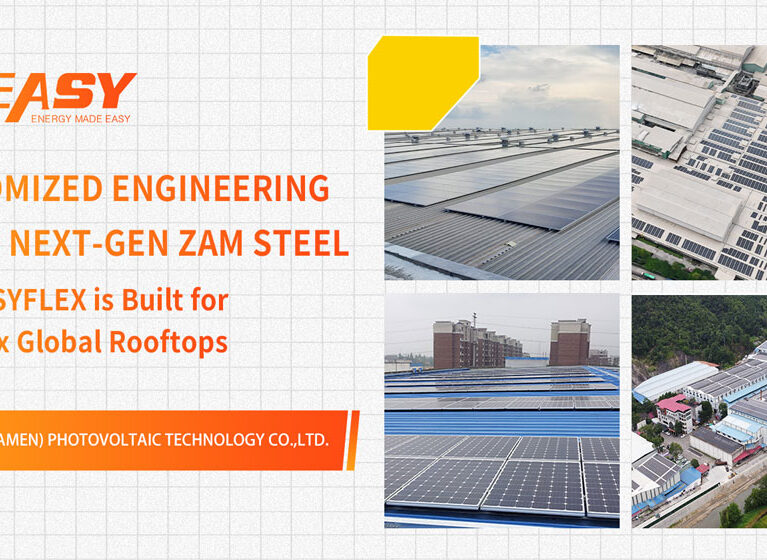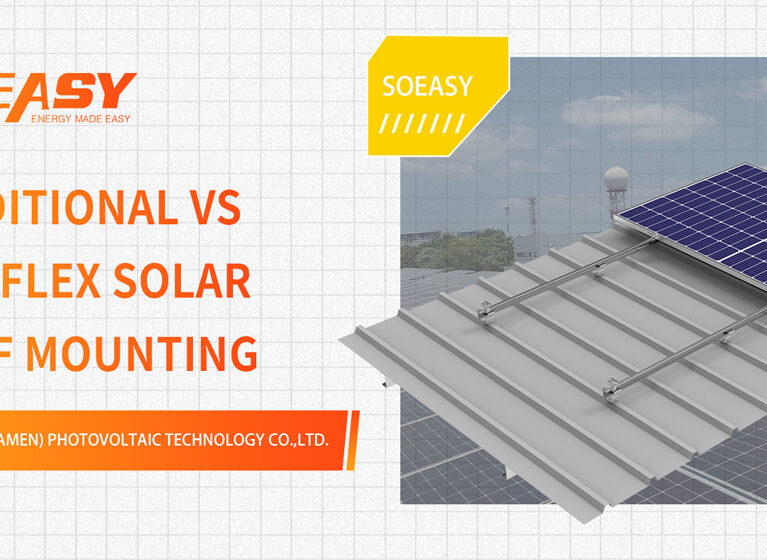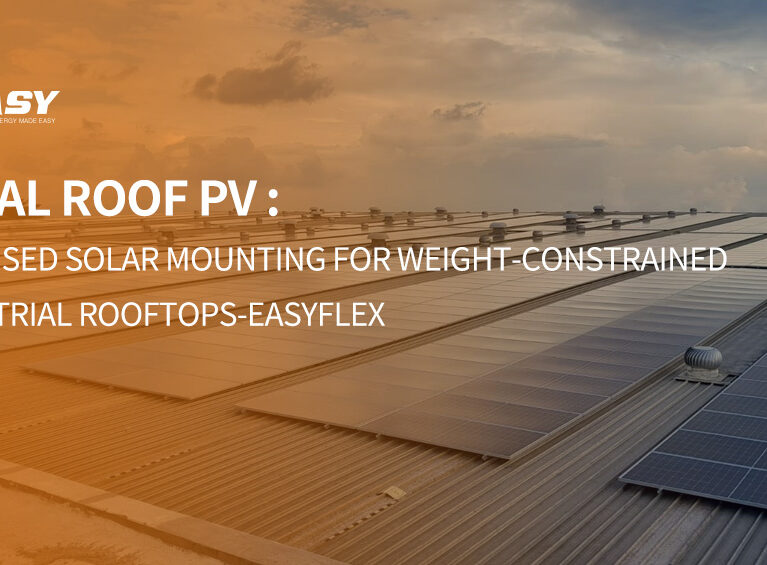
Flat roofs are one of the most common roof types in commercial, industrial, and large public buildings. Warehouses, office buildings, shopping malls, hospitals, and schools—these structures offer ideal spaces for distributed photovoltaic systems. However, installing solar systems on flat roofs always faces one core challenge: How to ensure the stability of the mounting system without damaging the waterproof layer?
Traditional installation methods typically require penetrating the roof to fix the mounting system using chemical anchors or expansion bolts. Although this method is stable, every penetration point becomes a potential leakage risk. Once the waterproof layer is compromised, long-term leakage issues can plague building owners, causing ceiling mold, structural steel rust, and even impacting the building’s service life.
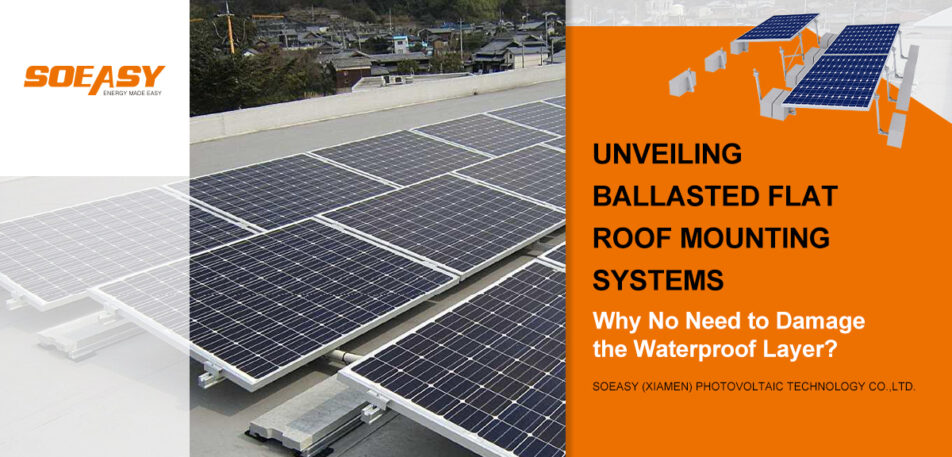
In response to this issue, ballasted flat roof mounting systems were developed. These systems rely entirely on self-weight for stability, requiring no penetration, thus completely avoiding the risk of damage to the waterproof layer.
This blog will deeply analyze the working principle, core advantages, design points, and suitable scenarios of ballasted flat roof mounting systems, explaining why this “penetration-free” installation method is becoming the mainstream choice for flat roof photovoltaic projects.
What Is a Ballasted Flat Roof Mounting System?
1. Definition of Ballasted Systems
A ballasted flat roof photovoltaic mounting system, as the name suggests, is a solar mounting solution that uses weight (ballast) to secure the system on the roof surface. Unlike traditional penetrating installations, a ballasted system does not require drilling, bolting, or chemical anchoring; instead, it uses the weight of concrete blocks, cement ballast, or gravel to counteract the uplift force and sliding force caused by wind load, keeping the system stable on the roof.
The core design concept of the ballasted system is: Using weight instead of anchoring. As long as the ballast is heavy enough, the system remains stable under any weather conditions without any physical connection to the building structure.
2. Key Components of the Ballasted System
- Mounting Frame: The main structural component of the ballasted system, usually made of aluminum alloy or hot-dip galvanized steel. It supports the photovoltaic modules and evenly distributes the load to the ballast and roof structure. The design of the frame determines the tilt angle of the modules (typically 5-15°) to optimize drainage and energy generation efficiency.
- バラスト: The “anchor” of the system. The most common ballast is pre-cast concrete blocks, placed at specific positions on the base of the frame. The weight and distribution of the ballast are precisely calculated based on the wind load conditions of the project site to ensure the system remains stable during extreme weather events. Some systems also use trays filled with gravel or sandbags as ballast.
- Grounding System: Ensures the electrical safety of the photovoltaic system. Since the ballasted system does not physically connect to the building structure, a dedicated grounding path is required to safely guide any leakage current or lightning strikes from the modules and mounts into the building’s grounding system.
3. Key Differences Between Ballasted and Traditional Penetrating Systems
The fundamental difference between the traditional penetrating system and the ballasted system lies in how the mounting system is fixed:
- Penetrating System: “Point anchoring” method, using several anchor points to lock the mounting system to the building structure. This requires precise positioning of each anchor point and penetration of the waterproof layer.
- Ballasted System: “Surface distribution” method, using ballast placed over a wide area to provide overall stability, with no concentrated stress points. It completely avoids penetrating the roof, ensuring zero damage to the waterproof layer and offering more flexibility in installation.
Why Ballasted Systems Do Not Damage the Waterproof Layer?
1. No Roof Penetration: Eliminating Leakage Risk from the Start
The core advantage of the ballasted system is its zero penetration design.
In traditional penetrating installations, each bolt hole is a potential point of leakage. Even with waterproof pads and sealants, long-term leakage risks cannot be completely avoided. Over time, gaskets deteriorate, sealants crack, and micro-cracks form around bolt holes due to temperature fluctuations, gradually accumulating hidden risks.
In contrast, the ballasted system is completely different. It is simply placed on the roof surface, and typically features protective mats or rubber pads between the ballast and the waterproof layer to distribute pressure and reduce friction. No component needs to penetrate the waterproof layer, thus completely eliminating the risk of leakage.
2. Protecting the Integrity of the Waterproof Membrane
The roof waterproof layer is crucial to building safety. For flat roofs with membrane waterproofing (such as SBS modified bitumen, PVC, TPO membranes) or coated waterproofing, any penetration damages the waterproof system. Once the waterproof layer is compromised, repairs are extremely difficult—locating the leakage point, removing the protective layer, fixing the waterproof membrane, and performing a water tightness test are far more complicated than installing a new waterproof layer.
The ballasted system is simply placed over the waterproof layer without any alterations to it, preserving the integrity of the waterproofing system. This non-invasive installation method is especially valuable for old buildings or roofs with fragile waterproof layers.
3. Even Load Distribution, Reducing Stress Concentration on the Roof
In traditional penetrating installations, each anchoring point bears substantial concentrated force. Under wind load, these concentrated forces can reach several hundred kilograms or more, placing high demands on the local bearing capacity of the roof.
In a ballasted system, the ballast and mounting base distribute the weight evenly across the roof structure. The contact area between each ballast block and the roof is large, resulting in far less pressure on the unit area compared to penetrating systems. This surface distribution rather than point distribution of the load minimizes stress concentration on the roof structure, making it ideal for roofs with limited bearing capacity, especially old buildings.
Core Advantages of Ballasted Flat Roof Systems
1. Protecting the Roof Integrity
This is undoubtedly the greatest advantage of the ballasted system. It avoids damaging the waterproof layer, making it the ideal solution for buildings where maintaining the roof’s integrity is paramount, especially those with aged and fragile waterproof layers. For buildings like schools, hospitals, and data centers, where downtime and water leaks cannot be tolerated, the ballasted system provides the safest option.
2. Faster, Simpler Installation
Penetrating installations require precise drilling, anchoring, curing (for chemical anchors), and base installation—each anchoring point involves multiple steps. In contrast, the installation process for ballasted systems is significantly simplified: place the base, add ballast, and install modules. No need to wait for curing or worry about drilling misalignments, resulting in at least 50% faster installation.
For large commercial roof projects (such as warehouses spanning thousands of square meters), this efficiency advantage is especially prominent. A reduced construction period means lower labor costs and less disruption to normal building operations.
3. No Roof Structure Modifications Needed
Ballasted systems can be installed directly on existing roofs without any modification to the roof structure. This means:
- No need to find and mark structural beams (since no anchoring is required)
- No need for structural reinforcement (as long as the load-bearing capacity is sufficient)
- No special roof pre-treatment required
For rented buildings or historic buildings, this non-invasive installation method also offers significant advantages in terms of approval and compliance.
4. Easy to Dismantle and Relocate
The design lifespan of a photovoltaic system is typically 25 years, but the building’s use may change during this time. The roof may need to be renovated, the building may be demolished, or the lease may expire—under these circumstances, the ability to relocate the ballasted system becomes an important advantage.
The ballasted system requires no removal of anchoring components. It can be fully dismantled by reversing the installation process, leaving no holes in the roof. The system can then be reinstalled at a new location, retaining most of the equipment value. This mobility advantage is particularly useful for temporary or movable photovoltaic projects (such as exhibitions, temporary offices, or post-disaster reconstruction).

Key Design Considerations for Ballasted Systems
1. Load Calculation and Wind Resistance Design
The stability of the ballasted system depends entirely on the weight of the ballast, so wind load calculation is the core of the design.
Under strong winds, the solar array experiences uplift forces and sideways sliding forces. The ballast provides sufficient downward weight and side friction to counteract these wind forces. Design considerations include:
- Basic wind speed and basic wind pressure at the project location (50-year recurrence period)
- The height of the roof and the influence of surrounding environment (obstructions)
- The position of the array (edges experience higher wind load)
- The tilt angle of the modules (the larger the tilt, the greater the wind-facing area)
Design outputs include: total ballast weight required per mounting unit, distribution of the ballast, and whether additional ballast is needed at the array edges in high-wind areas.
2. Roof Load Capacity Evaluation
The total weight of the ballasted system can reach 20–40 kg/m² or even higher (depending on wind load conditions). Before installation, the roof’s load capacity must be evaluated to ensure it can bear the additional permanent load.
Assessment includes:
- Roof structure type (concrete roof, steel structure roof)
- Span and load-bearing capacity of structural beams
- Material and condition of the roof panels
- Existing load conditions (equipment, snow, waterproof layer weight)
For steel structure roofs, extra attention must be paid to whether local concentrated forces may cause deformation of the roof panels.
3. Drainage and Roof Ventilation
The placement of ballast may affect the roof’s original drainage paths. The design must ensure:
- Ballast does not block drainage outlets or rainwater gutters
- Adequate spacing between the modules to allow rainwater flow
- Sufficient height of the mounting base to prevent modules from sitting in standing water
Additionally, the ballasted system should not obstruct roof ventilation. For buildings that require roof ventilation (e.g., factories, equipment rooms), the design should avoid ventilation openings or leave sufficient airflow space.
Suitable Scenarios for Ballasted Systems
1. Commercial and Industrial Roofs
Large, flat, and structurally capable commercial and industrial roofs are the most ideal installation scenarios for ballasted systems. Buildings such as warehouses, logistics centers, shopping malls, and office buildings often have:
- Large roof areas, suitable for scalable installations
- Good load-bearing capacity (especially new buildings)
- High waterproofing requirements, with no desire to damage the roof
In these scenarios, ballasted systems excel by providing fast installation without damaging the waterproof layer.
2. Existing Roofs with Waterproof Membrane
For existing roofs with waterproof membranes or coatings, ballasted systems are often the only option that does not damage the waterproof layer. This is especially important when the waterproofing layer has been in place for many years and may be fragile. Traditional penetrating installations could lead to catastrophic leaks.
Ballasted systems are placed directly on top of the waterproof layer without altering it, avoiding the “damage the waterproofing to install solar” dilemma.
3. Low-Slope Flat Roofs
Ballasted systems are particularly suitable for low-slope roofs (typically less than 10°). For roofs with larger slopes, more complex anti-slip designs are required for the ballast, and stability under wind load becomes harder to ensure. For completely flat or mildly sloped roofs, ballasted systems can maximize their stability advantages.
4. Projects Requiring Rapid Deployment
For projects with tight timelines (e.g., needing to connect to the grid before a subsidy deadline), the quick installation feature of the ballasted system becomes a significant advantage. No need to wait for anchor curing, no complex hole positioning, allowing installation teams to move quickly and shorten the construction period.
Limitations and Challenges of Ballasted Systems
1. Roof Load Capacity Requirements
The total weight of a ballasted system can be substantial, which is its most significant limitation. For roofs with limited load-bearing capacity (e.g., old buildings or lightweight steel roofs), the ballasted system may not be feasible, or the array size may need to be significantly reduced.
Solution: Conduct detailed roof load capacity assessments early in the project. If necessary, reinforce the structure. If reinforcement costs are too high, consider penetrating installations or lighter mounting solutions.
2. High Wind Areas Requiring Heavy Ballast
In extreme wind load conditions (e.g., coastal typhoon areas), ballasted systems may require very heavy ballast to meet wind resistance requirements. Excessively heavy ballast could result in roof overload, making the ballasted system unfeasible.
Solution: Consider hybrid installations (part penetrating + part ballasted), reduce module tilt to minimize wind load, or opt for penetrating installations.
3. Material and Transportation Costs
The material cost and transportation costs for ballast (such as pre-cast concrete blocks) should not be overlooked. While concrete blocks are inexpensive, their weight increases transportation costs, especially when the project is far from concrete manufacturers. Furthermore, the labor required to move ballast to the roof is substantial.
Solution: Consider using on-site mixed grout ballast, trays filled with gravel, or high-density materials (e.g., cast-iron ballast) to reduce volume.
The Reliable Choice for Flat Roof Photovoltaics
The ballasted flat roof photovoltaic mounting system provides the perfect solution to the conflict between stability and protecting the waterproof layer in flat roof installations.
Key Value Recap:
- Zero penetration: No damage to the waterproof layer, eliminating leakage risks from the start
- Protects roof integrity: Ideal for aging buildings or roofs with fragile waterproofing
- Fast installation: Saves over 50% of installation time compared to penetrating systems
- Reusability: Easy to dismantle and relocate, adapting to changes in building use
Recommendations:
- For large flat roofs with good load-bearing capacity and high waterproofing requirements, the ballasted system is the top choice.
- In high-wind areas, a detailed wind resistance design is essential to ensure the ballast weight is sufficient.
- For roofs with limited load capacity, evaluate the roof structure and consider hybrid installations if necessary.
SOEASY Ballasted Flat Roof Mounting Solutions
As a professional provider of solar mounting systems, SOEASY offers complete and reliable ballasted flat roof mounting solutions:
- Standard Ballasted Systems: Aluminum alloy frames, tilt angles of 5-15°, suitable for all types of photovoltaic modules
- Precise Wind Resistance Design: Accurately calculated ballast weight and distribution based on local wind load conditions
- Roof Protection Design: Frame bases equipped with EPDM protective mats to distribute pressure and protect the waterproof layer
- Complete Grounding System: Ensures electrical safety of the ballasted system
- Quick Installation Support: Detailed manuals and technical support for fast and efficient construction
Whether your project is a large commercial rooftop or an industrial warehouse, SOEASY can provide you with the most suitable ballasted flat roof photovoltaic mounting solution to ensure safe, stable, and leakage-free operation throughout its 25-year lifecycle.
Contact SoEasy Solar for professional ballasted flat roof mounting solutions.
FAQ
What are the advantages of a ballasted system for flat roof installations?
Ballasted systems avoid penetrating the roof, protecting the waterproof layer and offering fast installation without compromising stability.
How do ballasted systems work in high-wind areas?
Ballasted systems use heavy ballast to resist wind forces. Wind load calculations ensure the system remains stable under extreme conditions.
Can I use a ballasted system on an old roof?
Yes, ballasted systems are ideal for old roofs with fragile waterproof layers, as they require no penetration, ensuring no damage.
English