English

 Post by
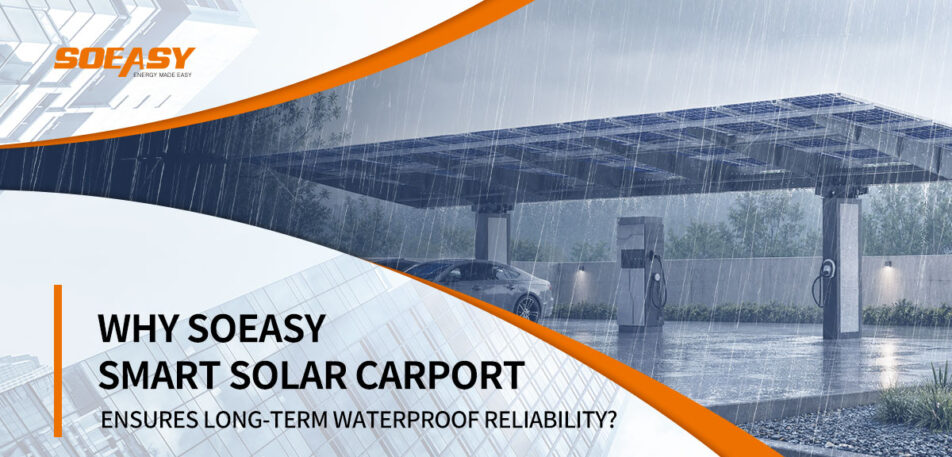
 商業・産業(C&I)分野における太陽光発電プロジェクトの開発において、ソーラーカーポートは、工場、工業団地、ショッピングセンター、オフィスビルなどが化石燃料を代替し、二酸化炭素排出量を削減するための中心的な役割を担うようになりました。ソーラーカーポートは、上部でクリーンエネルギーを発電すると同時に、下部で日陰と駐車スペースを提供するという、優れた二重の価値を提供します。
しかし、1~2年の運用後、プロジェクトオーナーやEPC請負業者は、屋根からの雨漏りが止まらないという、厄介な技術的問題に直面することが多い。
プロジェクトの実施と長期的な運用・保守(O&M)を担当する構造エンジニアにとって、ソーラーカーポートは単なる太陽光発電所以上のものです。具体的には、雨や日差しから車両を守るために設計された機能的な建物です。ソーラーカーポートの防水システムが故障すると、顧客からの苦情が頻繁に発生し、プロジェクトの投資収益率(ROI)に深刻な影響を与えます。
本稿では、構造工学および現場の運用・保守の観点から、ソーラーカーポートの防水に関するメカニズムを詳細に分析します。従来のシーリング材による防水が失敗する理由を検証し、科学的な機械的防水がいかにして25年間メンテナンスフリーの耐用年数を実現するのかを解説します。
ソーラーカーポートにとって防水が重要な理由とは?
従来の駐車場用キャノピーは、主に基本的な日陰と雨よけを提供します。対照的に、ソーラーカーポートは、太陽光発電モジュール、電気機器、エネルギー管理システムを統合しており、はるかに複雑なアプリケーション要件を伴います。ソーラーカーポートの場合、水漏れは複数の関係者に損害を与える連鎖反応を引き起こします。
1. 車両の損傷と潜在的な賠償請求
太陽光発電モジュールの隙間から漏れる雨水は、決してきれいな水ではありません。むしろ、表面の埃、油分、酸性の大気成分が混ざった汚れた水です。この酸性の泥が車の塗装面に滴り落ちると、塗装の腐食、頑固な水垢、窓ガラスの損傷などを引き起こしやすくなります。高級オフィスビルや商業施設では、これが車の所有者からのクレームや管理会社との紛争につながることが少なくありません。
2.駐車体験の悪さと利用者からの苦情
ソーラーカーポートの重要な販売ポイントは、顧客と従業員に優れた駐車体験を提供することです。しかし、大雨で大きな雨漏りが発生し、小雨で小さな雨漏りが発生すると、運転手は乗り降りしたり、荷物を積み込んだり、車両を充電したりする際にずぶ濡れになってしまいます。結果として、施設の本来の目的が損なわれ、不動産管理会社の満足度スコアが大幅に低下することになります。
3.運用・保守コストの上昇と構造上の安全性の危険性
頻繁な漏水により、運用・保守チームは技術者を繰り返し高所作業に派遣し、漏水箇所を特定して新たなシーリング材を塗布する必要に迫られます。高所作業は安全上のリスクが高く、人件費も高額になります。さらに、長期にわたる水の浸入は、下部の鋼製接続部、配管、電気機器を腐食させ、構造物の錆を加速させ、電気系統の短絡リスクを高めます。
従来のシーラント防水が必ず失敗する理由
太陽光発電モジュール間の隙間を塞ぐため、初期の低コストカーポートプロジェクトの多くは、従来型のシーリング材に頼っていました。具体的には、設置業者はシリコンシーラントを塗布したり、モジュールの継ぎ目に標準的なゴムストリップを敷設したりしていました。しかし、実際の運用環境では、このような化学的・物理的な遮断方法は、ほぼ例外なく12~24ヶ月以内に機能しなくなります。
構造力学と材料科学によれば、従来のシーリング材の破損は不可逆的で避けられない結果である。
| 故障次元 | 従来のシーラントとゴムストリップの不具合の根本原因 |
|---|---|
| 熱膨張とせん断応力 | 太陽光発電モジュール(ガラスとアルミニウムのフレーム)と鋼鉄/アルミニウム製の架台構造は、熱膨張係数が大きく異なります。昼夜の温度変化によって微細な動きが生じ、シーリング材が損傷し、ひび割れや剥離につながります。 |
| 紫外線照射と材料の劣化 | ソーラーカーポートの上面は、常に強い紫外線に直接さらされます。一般的な化学シーラントや低品質のゴムは、紫外線によって急速に硬化し、黄変し、脆くなり、弾力性を失います。 |
| 水たまりと重力による圧力 | 従来のシーリング方法は、受動的な遮断手段に過ぎません。カーポートの傾斜角度が低い場合(例えば5°)、平らなゴム製のストリップは微細な水の溜まり場を作り出します。継続的な水浸し状態と重力圧により、水分は小さな隙間から容易に浸透します。 |
| 不可逆的なオンサイトメンテナンス | シーラントにひび割れが生じた場合、技術者は古い材料を完全に削り取り、隙間を清掃してから接着剤を再塗布する必要があります。現場の状況は、埃のない工場環境とはかけ離れているため、新しく塗布したシーラントは通常、数週間以内に再び剥がれてしまいます。 |
ソーラーカーポート防水システムの科学的評価方法
高額な「毎年修理が必要で、毎年漏水する」という運用・保守の落とし穴に陥らないようにするためには、EPC請負業者とプロジェクトオーナーは、構造ソリューションを検討する際に、5つの主要な側面について厳格な評価基準を確立する必要があります。
- 防水原理(パッシブシール vs. 構造排水): この設計は、パッシブな遮断のために化学シーラントに依存していますか、それとも能動的な排水のために物理的な金属チャネルを使用していますか?
- 排水管理: このシステムは、主雨樋、副雨樋、縦樋を備えた完全な排水ネットワークを備えていますか? 50 mm/h を超える豪雨にも対応できますか?
- 接続部の信頼性:排水路、主要構造物、モジュールクランプ間の固定方法は防水層を損傷しませんか?取り付けボルトは自己密閉性および緩み防止設計になっていますか?
- 材料の耐久性: 厚手のAL6005-T6アルミニウム合金や溶融亜鉛めっき鋼などの部品材料は、耐紫外線性、耐熱性、25年の耐用年数に関する厳しい基準を満たしていますか?
- メンテナンスの利便性:排水構造にはセルフクリーニング機能がありますか?落ち葉やゴミが溜まったときに、雨どいを簡単に掃除できますか?
SOEASYスマート機械防水:シーラント不要のソリューション
従来のシーリング材の不具合という問題点を解決するため、SOEASYスマートソーラーカーポートは、特許取得済みのBIPV機械防水システムを採用することで、化学シーリング材を完全に排除しています。
「水を遮断するのではなく、導く」という構造工学の理念に基づき、このシステムは精密な機械成形によって水の流れを制御し、あらゆる気象条件下でソーラーカーポートの確実な防水性を実現します。SOEASYシステム内の自然な排水経路は、以下の4つの段階を経て機能します。
- ステージ1:表面集水: PVモジュールの表面に降り注いだ雨水は、自然な重力勾配によってモジュールの隙間にスムーズに流れ込みます。
- ステージ2:縦方向の主雨樋による雨水遮断: 縦方向の主雨樋は、垂直方向の隙間から落ちる雨水を即座に遮断して収集します。
- ステージ 3: 横断サブガター支流の流れ: メインガターからの水は横断サブガターに流れ込み、完全な相互連結 3D 排水ネットワークを形成します。
- ステージ4:集中排水: 集められた水は柱の中に隠された雨樋に排出され、地下排水システムにきれいに流れ込みます。
1. 二層構造独立型雨樋システム
SOEASY社は、カスタム押出成形されたAL6005-T6高強度アルミニウム合金または溶融亜鉛めっき鋼製の雨樋を、モジュールの縦方向および横方向の継ぎ目の下に設置します。
- 縦方向のメイン雨樋: 垂直モジュールフレームの真下に配置されたこれらの雨樋は、垂直の隙間から流れ落ちる雨水を捕捉する最初の防衛線として機能します。
- 横方向のサブガター: 水平方向の隙間に設置されるこれらのサブガターは、メインチャネルとシームレスに重なり合い、水平方向の雨水を主要な排水路に導き、完全な 3D ネットワークを形成します。
2. 科学的な流量管理と飛沫防止設計
このシステムは、カーポートに組み込まれた最適な5°の傾斜角度を利用し、重力によって雨水を縁の集水樋へと導きます。雨水は、内部または外部の柱状排水管を通って直接地面の溝に流れ込みます。そのため、突然の豪雨時でも、大容量の雨樋断面により、水たまりや溢れを防ぎます。
3. 溶接不要、シーラント不要の高速ボルト固定
SOEASYの機械式防水コンポーネントは、標準化されたモジュール設計を採用しています。排水路は専用のガイドクランプを使用して太陽光発電パネルのメイン架台に直接固定されるため、シーリング材、溶接、切断を一切使用しない現場での組み立てが可能です。その結果、現場での設置効率が50%以上向上し、手作業による接着のばらつきによる漏水リスクを排除できます。
4. 25年間持続する工業グレードの防錆性能
排水路および接続金具はすべて、工業グレードの陽極酸化処理されたAL6005-T6アルミニウム合金または溶融亜鉛めっき鋼を使用しています。そのため、このシステムは塩水噴霧や強い紫外線にも耐え、太陽光発電モジュールの25年の耐用年数に匹敵する性能を発揮し、「一度設置すればメンテナンス不要」という真のソリューションを実現します。
より優れた機械的防水にアップグレード
効果的なソーラーカーポートの防水は、モジュール間の隙間を接着剤で埋めるだけの単純な作業ではありません。むしろ、材料科学、構造力学、流体力学を組み合わせた体系的な技術です。老朽化した化学シーラントを廃止し、耐久性に優れたシーラント不要の機械的防水を採用することは、高品質な商業・産業用ソーラーカーポートを実現するための明確な業界トレンドとなっています。
SOEASYスマートソーラーカーポートは、特許取得済みのBIPV(建材一体型太陽光発電)技術による機械的防水処理に加え、風速45m/s、積雪荷重1.0kN/m²という優れた性能を誇ります。当社は、世界中のEPC(設計・調達・建設)請負業者やプロジェクト開発者が、安全で魅力的、かつ高い投資収益率(ROI)を実現する太陽光発電インフラを構築できるよう支援します。