English

 Post by
 Aluminium‑based solar roof mounting systems have long been a proven, widely‑adopted solution for commercial‑industrial metal‑roof PV projects, valued for reliable mechanical performance, mature supply chains and broad field‑proven track‑records.
Today’s global PV stakeholders — large distributors, international EPCs and racking brand operators — keep seeking additional well‑engineered alternatives to diversify product portfolios, balance project‑level cost, manage supply‑chain shifts driven by evolving trade policy, and address varied site requirements around corrosion resistance and installation efficiency.
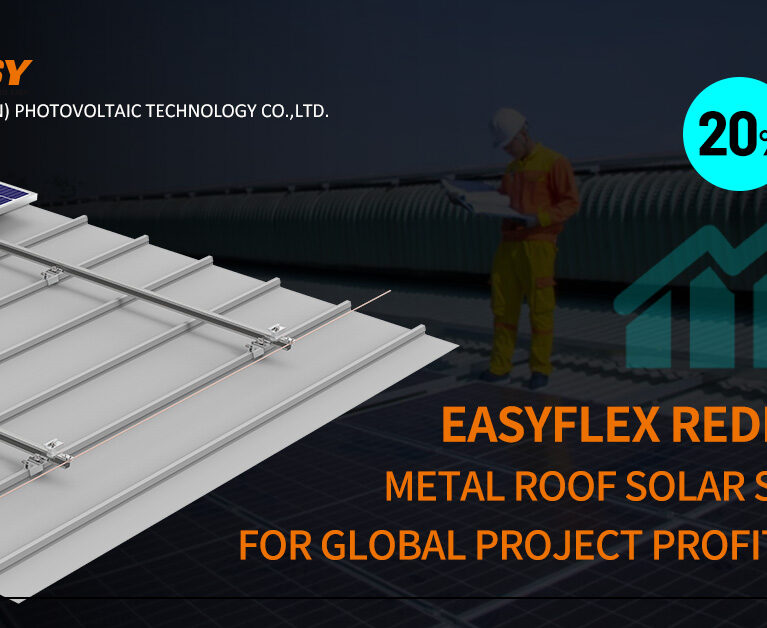
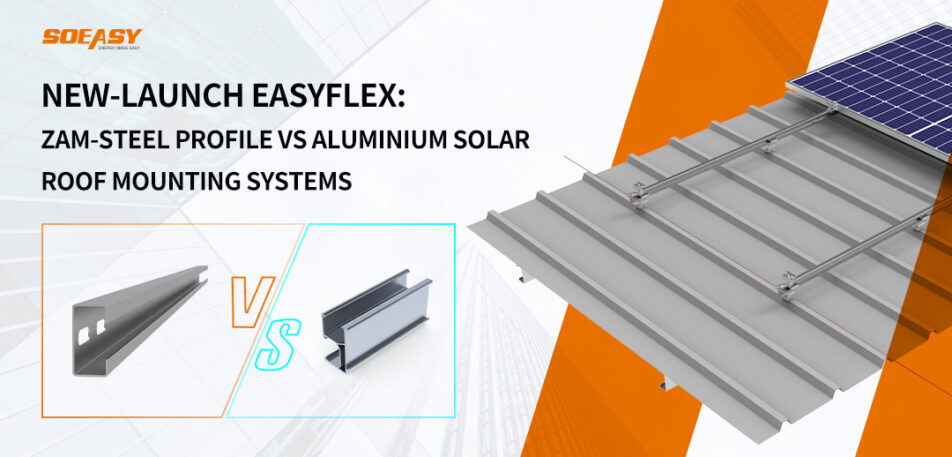
Marking its official market launch, EASYFLEX introduces an optimised ZAM‑steel‑centric solar roof mounting platform. Rather than positioning as a full replacement for aluminium solutions, this new‑release system delivers a carefully engineered alternative: high‑strength zinc‑aluminum‑magnesium steel profiles that achieve total‑system weight comparable to conventional aluminium roof mounting, opening new decision points for rooftop project specification.
This article provides a neutral, fact‑based comparison between established aluminium systems and the newly‑launched EASYFLEX ZAM‑steel solution across core evaluation criteria: mechanical profile strength, system‑level weight performance, corrosion resistance, total project cost, installation efficiency, and adaptability under shifting trade policy. It also outlines OEM & private‑label opportunities for volume partners.
1. Mechanical Strength & Optimised Profile Design: High‑Strength Steel with Tuned Weight Performance
Aluminium 6005‑T5, the mainstream grade for solar roof mounting, delivers balanced strength and stiffness well‑suited for rooftop racking applications and has been validated across decades of global deployments.
Steel substrates inherently offer higher yield and tensile strength properties; however conventional standard steel racking often comes with higher unit‑weight, creating constraints for aged or lightweight metal rooftops.
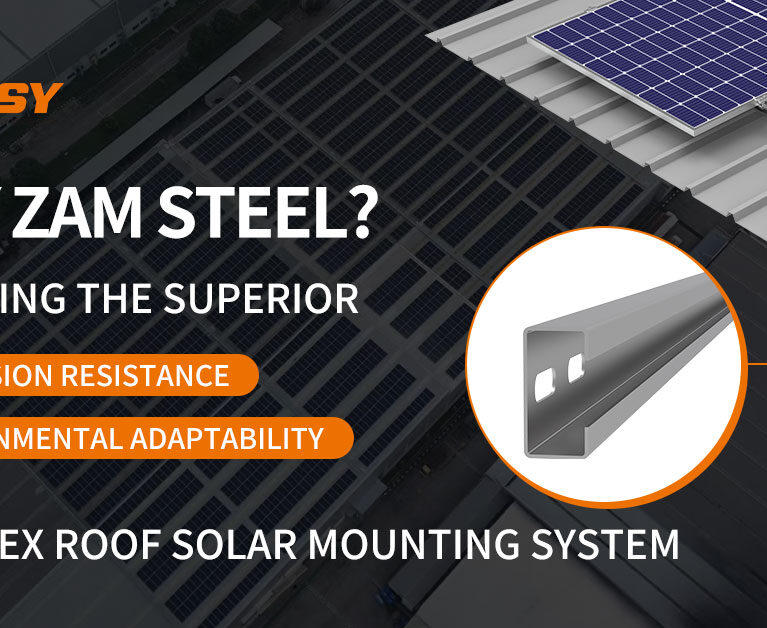
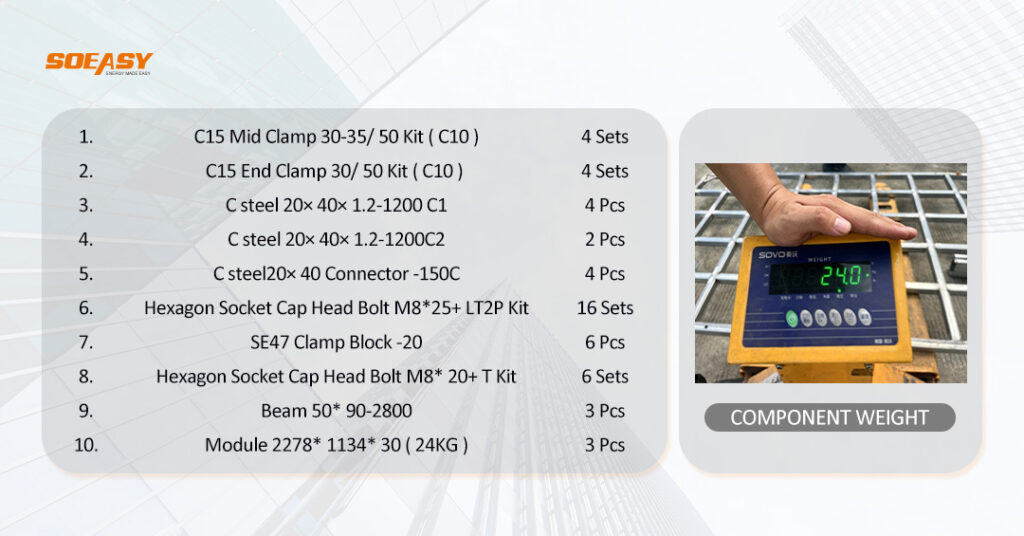
EASYFLEX new‑launch engineering focus: leverage the intrinsic high strength of ZAM‑steel material, and optimise rail profile cross‑section, wall‑thickness and component layout. The outcome: the complete assembled solar roof mounting system reaches weight performance comparable to standard aluminium‑rail configurations, while retaining steel‑grade profile mechanical strength.
This is a system‑level achievement instead of a single‑component metric. By utilising higher material strength, designers can tune profile geometry to avoid the heavy dead‑load typical of generic steel racking. For project specifiers, this means one key practical benefit: lightweight metal rooftops which historically favoured aluminium solutions can now consider this ZAM‑steel alternative without mandatory heavy roof‑structure reinforcement.
Important note: Aluminium remains a strong fit for many rooftop scenarios where its material‑specific properties align best with project priorities. EASYFLEX offers an additional option rather than a universal replacement.
2. Corrosion Resistance: Material‑Level Performance for Long‑Term Rooftop Durability
Long‑term corrosion resistance directly governs bankability and warranty risk for any solar roof mounting asset designed for 25‑year service life.
Anodised aluminium provides stable natural anti‑corrosion performance for most inland and moderate‑humidity environments, and is widely trusted across global rooftop portfolios.
ZAM‑coated steel features a self‑healing protection mechanism for cut‑edges and minor surface scratches, an advantage for sites where field cutting or installation‑related abrasion occurs. Under salt‑spray and high‑humidity coastal or industrial atmospheric conditions, the coating delivers robust corrosion resistance validated by accelerated lab testing.
With EASYFLEX, the full mounting system adopts qualified ZAM‑steel substrates with consistent coating specification, aiming to deliver long‑term durability for C&I rooftop deployments. For distributors and OEM brand partners, this creates an alternative offering for projects exposed to aggressive ambient conditions.
3. Cost: System‑Level TCO Optimisation for Project Portfolio Management
Hardware and total BOS cost pressures continue to shape global solar roof mounting procurement decisions. Aluminium extrusion pricing is closely linked to global commodity cycles, creating margin variability for large‑volume distributors and EPC contractors.
Generic steel racking can show low component unit price yet may trigger extra indirect cost, such as structural roof‑reinforcement required by higher dead‑load.
The newly‑launched EASYFLEX system targets total‑system‑level savings of 20 %+ versus comparable aluminium‑based solar roof mounting. Because the overall system weight matches aluminium benchmarks, it largely removes the extra CAPEX spend for roof‑strengthening frequently associated with traditional steel racking.
From a commercial standpoint for distributors and brand owners: this new offering enables you to serve cost‑sensitive tender pipelines while maintaining acceptable margin profiles, without forcing full migration away from existing aluminium product lines. Aluminium solutions still remain appropriate for projects where other priorities outweigh total‑system‑cost targets.
4. Installation Efficiency: Workflow Compatibility with Proven Rooftop Practices
Labour expense represents a major share of total installed cost for distributed PV, so installation efficiency is a critical practical KPI for EPC field teams.
Aluminium‑rail solar roof mounting has developed well‑standardised site‑installation workflows familiar to crews worldwide.
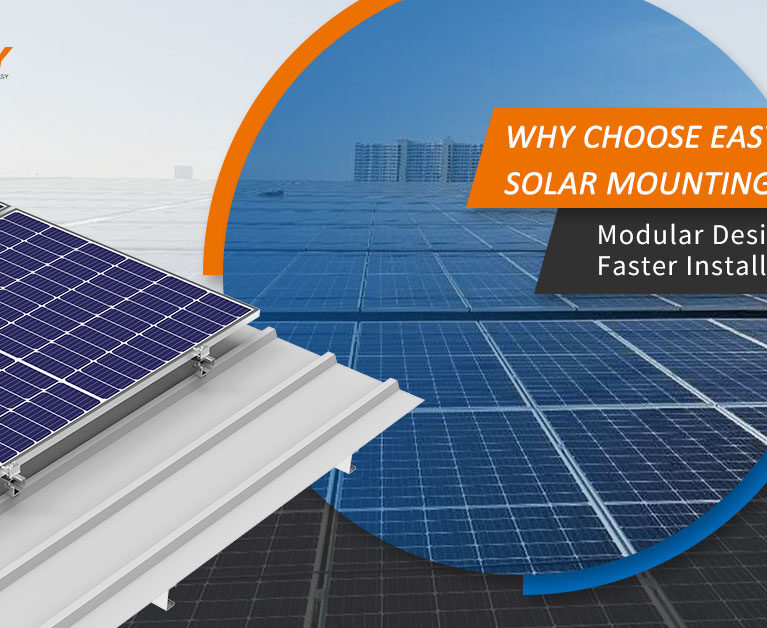
EASYFLEX adopts innovative snap‑fit mid‑clamp and side‑clamp hardware design, intentionally engineered to mirror the familiar assembly logic of mainstream aluminium‑rail systems. The resulting installation efficiency reaches parity with aluminium‑based racking. Field technicians do not require extensive retraining, labour‑hour budgets remain predictable, and project scheduling stays stable.
Additionally, this new‑launch platform natively supports large‑format high‑power PV modules, aligning with current industry hardware trends for modern rooftop deployments.
5. Trade Policy & Supply‑Chain Resilience: Expand Your Solar Roof Mounting Product Mix
Shifting regional trade policy, commodity price cycles and extrusion‑capacity bottlenecks create ongoing supply‑chain complexity for cross‑border solar hardware business. Many leading distributors and racking brands adopt multi‑material portfolio strategies to mitigate single‑material dependency risks.
Aluminium‑based solar roof mounting will keep its vital position in global markets, yet stakeholders benefit from having qualified alternative material pathways within their product lineup.
As a newly‑available ZAM‑steel‑based platform, EASYFLEX gives volume‑scale partners an additional technical option to enrich their offering. Flexible OEM and private‑label manufacturing support enables custom marking, project‑specific documentation and region‑oriented certification packages, helping you respond faster to market changes brought by evolving trade policy.
Side‑by‑Side Reference Table
表格
| 評価の次元 | Established Aluminium Solar Roof Mounting | New‑Launch EASYFLEX ZAM‑Steel Solar Roof Mounting |
|---|---|---|
| Profile & System Weight | Proven lightweight system performance for rooftop projects | High‑strength ZAM‑steel profiles; total assembled system weight comparable to aluminium |
| 耐腐食性 | Reliable anodised anti‑corrosion performance for broad‑range environments | Excellent ZAM coating performance with cut‑edge self‑healing capability for harsh‑condition sites |
| Cost | Mature supply chain; subject to aluminium commodity volatility | Target 20 %+ total‑system saving; minimises roof‑reinforcement cost thanks to weight‑optimised design |
| 設置効率 | Standardised global field installation workflows | Snap‑fit clamp design, installation speed matches aluminium‑rail workflows; supports large‑format modules |
| Trade policy & supply‑chain | Well‑established global supply base | Provides an alternative material pathway for diversified product portfolios |
| Best‑fit scenarios | Projects prioritising aluminium‑specific material properties | Cost‑optimised rooftop projects, high‑corrosion‑risk sites; OEM‑ready for distributor / brand private‑label |
Note: Neither material represents a universal one‑size‑fits‑all solution. Final specification shall always be based on local codes, site load conditions, project budget and commercial requirements.
Opportunities for Distributors, EPCs & OEM Brand Partners
With this official product launch, EASYFLEX opens cooperation pathways for large‑volume market participants:
- Global Distributors: Add a new ZAM‑steel solar roof mounting option to complement existing aluminium product portfolio; target cost‑competitive and high‑corrosion‑risk rooftop projects.
- International EPC Contractors: Evaluate this newly‑released system for your C&I rooftop pipeline; benefit from aluminium‑comparable weight, predictable installation efficiency and optimised total‑system cost.
- Solar Racking Brand Owners: Access OEM / private‑label manufacturing, with customisable marking and regional certification packages to expand your racking product lineup without heavy upfront R&D investment.
Conclusion: New‑Launch EASYFLEX Brings an Additional Choice for Solar Roof Mounting
Aluminium solar roof mounting will continue as a trusted, mainstream solution for global rooftop PV projects. At the same time, market demands keep growing for well‑engineered alternatives that balance strength, weight, corrosion resistance, total cost, installation efficiency and adaptability to changing trade policy.
The newly‑launched EASYFLEX platform is built around optimised ZAM‑steel profiles. Its core engineering achievement lies in delivering steel‑grade profile strength while reaching total‑system‑weight performance comparable to aluminium racking. It is designed not to replace aluminium solutions, but to expand the project‑specification toolbox for distributors, EPCs and brand owners across worldwide distributed solar markets.
Call‑to‑action: Request EASYFLEX new‑launch technical datasheet, weight‑performance test summary, TCO comparison report, OEM cooperation introduction or sample evaluation for your solar roof mounting product roadmap.