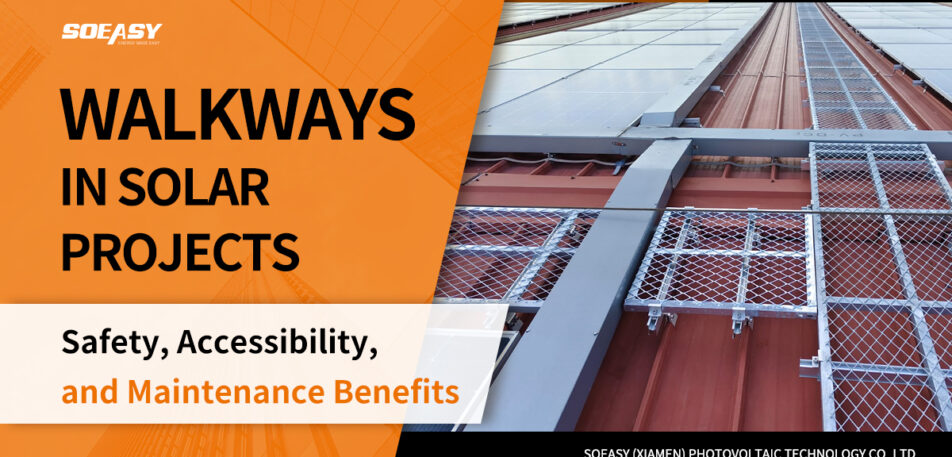
在大型地面光伏电站和商业屋顶光伏项目中,走道在设计阶段往往被忽视。然而,这种疏忽会直接影响运维安全、维护效率和系统长期可靠性。随着光伏电站的扩张,标准化的走道系统已成为行业标准,而非可选配置。本文将探讨走道在光伏项目中的设计价值及其在各种光伏场景下的实际应用。
太阳能光伏系统中的过道板是什么?
太阳能项目中的过道板是安装在光伏阵列内的专用通道结构。它们方便维护人员安全通行、检查设备以及进行清洁或维修作业。这些走道系统通常设置在地面安装的阵列之间、屋顶检修区、电气设备周围以及高密度组件布局中。
设计良好的走道提供稳定防滑的表面,从而保护工作人员和工厂内精密的电气元件。
过道板在太阳能项目中的重要性
太阳能项目中的走道不仅仅是便利设施,更是至关重要的基础设施。它们能够提升安全性、提高效率并保护系统。
1. 增加安全性
过道板可防止工人直接踩踏模块或裸露的电缆,从而降低触电和人身伤害的风险。在屋顶上,走道通过提供带有适当边缘防护的安全通道,防止工人坠落。此外,防滑设计确保即使在雨雪天气下也能安全通行。
2. 提升维护效率
凭借布局合理的通道,技术人员可以快速到达阵列的任何部分。这种速度优势缩短了日常检查和紧急维修所需的时间。因此,更快的检修速度降低了整体运维成本,并最大限度地减少了系统停机时间。
3. 系统保护
人为直接踩踏是导致太阳能组件出现微裂纹的主要原因之一。人行道可以避免人员直接接触太阳能电池板,从而消除这种风险。人行道还能保护支撑结构,固定电缆,降低意外断开连接的风险。
Types of Solar Walkway Systems
Selecting the right walkway depends on the specific environmental and structural demands of the site. Below are the three primary types of walkways in solar projects.
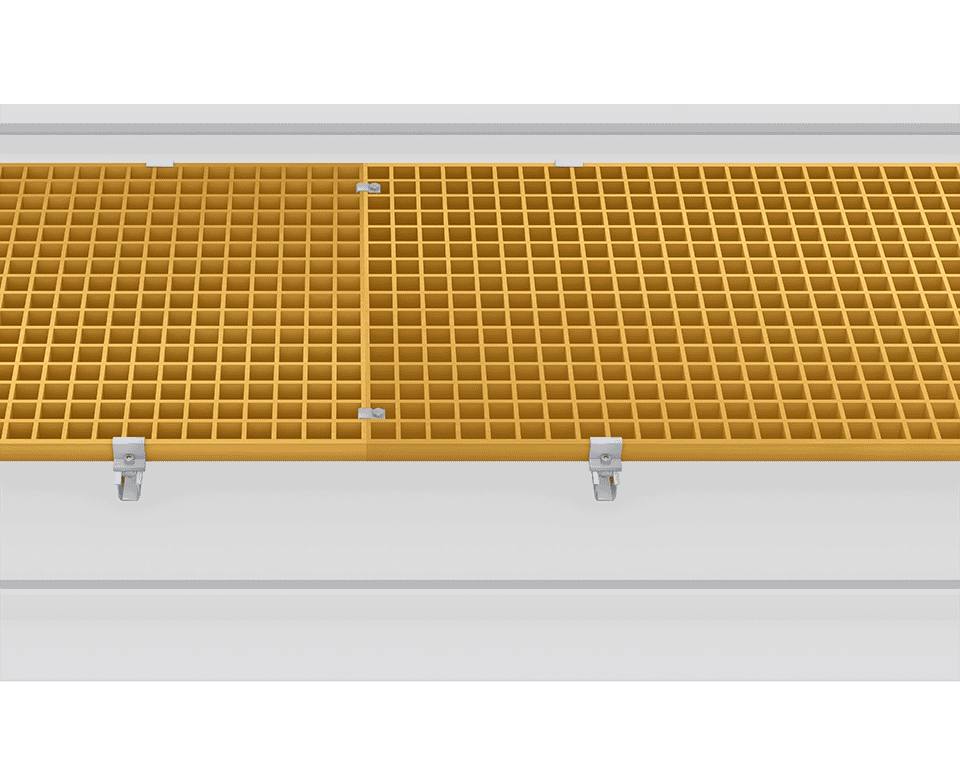
Fiberglass Grating Walkway (FRP Walkway)
FRP walkways are made from glass fiber-reinforced composites. They offer a unique combination of properties:
- Lightweight: Easy to transport and install on any structure.
- Corrosion Resistance: Ideal for coastal and high-humidity zones.
- Electrical Insulation: Enhances overall plant safety.
- Anti-Slip Surface: Excellent for rainy or snowy regions.
Thus, they are perfect for coastal solar plants, chemical facilities, and projects with strict safety requirements.

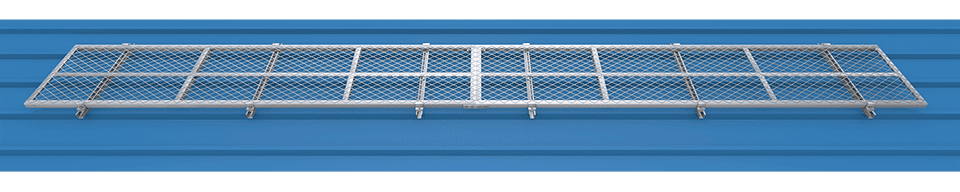
钢格栅检修过道板
Steel grating walkways are typically hot-dip galvanized or coated with Zn-Al-Mg.
- High Strength: Capable of supporting heavy equipment.
- Structural Stability: Maintains integrity under high winds.
- Drainage: Open design prevents water and snow buildup.
- Cost-Effective: Economical for large-scale applications.
These walkways are ideal for large-scale power plants, high-wind regions, and industrial projects.
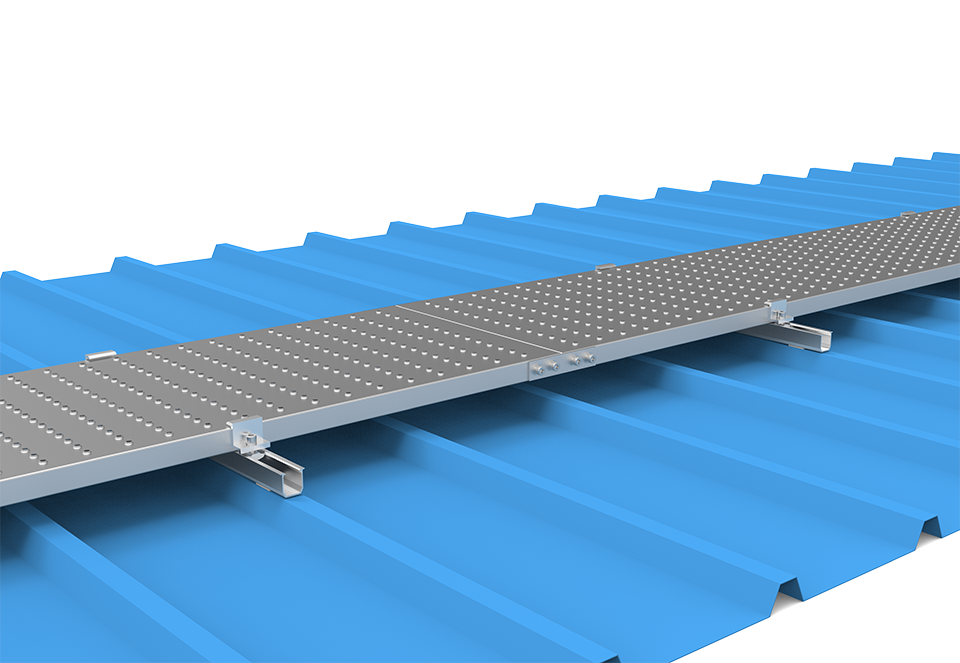
Aluminium Alloy Walkway
Aluminium walkways utilize high-strength aluminum to provide a premium solution.
- Ultra-Light: Reduces load on roof structures.
- Corrosion Resistance: Naturally withstands harsh weather.
- Maintenance-Free: Requires minimal upkeep.
- Aesthetic: Provides a clean, professional look.
Therefore, they are the preferred choice for commercial rooftops, distributed generation, and weight-sensitive structures.
For detailed specifications on materials and integration, explore the SoEasy Solar walkway product page.

Design Considerations for Solar Walkways
To be effective, walkways in solar projects must meet strict engineering standards. Designers must evaluate the following factors:
Load-Bearing Capacity
The walkway must support the weight of workers and their tools. Furthermore, it must withstand snow accumulation and wind forces. The structure must also resist long-term fatigue to ensure safety over the plant’s 25-year lifespan.
Anti-Slip Performance
Safety depends on traction. The surface texture must be designed to prevent slipping, even in icy conditions. Proper drainage holes are also necessary to avoid water pooling.
Integration with Mounting Systems
Walkways should connect seamlessly with pillars and rails. This ensures structural continuity and prevents interference with module layout. The best designs incorporate walkways as integral parts of the mounting structure.
耐腐蚀性
Exposure to moisture and UV rays demands robust materials. Hot-dip galvanizing protects steel, while Zn-Al-Mg coatings offer enhanced edge protection. Additionally, we recommend stainless steel fasteners to prevent galvanic corrosion.
Width and Layout Design
The walkway width must accommodate passage for single or two-person teams. For equipment transport, wider sections are required. Space for cleaning operations should also be included in the layout.
Walkways in Different PV Scenarios
Different sites require different access strategies. Here is how walkways in solar projects function across various applications:
Utility-Scale Ground Mount Systems
In large plants, walkways create long corridors through the arrays. These channels enable efficient O&M inspections across extensive areas. They reduce travel time and boost inspection productivity.
Rooftop Solar Systems
Walkways are essential for roofs to ensure safe access. They protect the waterproof membrane from traffic and prevent workers from stepping on low-tilt modules.
Agrivoltaic Systems
In agrivoltaics, walkways must accommodate farm machinery. They must avoid interfering with crops and maintain high ground clearance for both workers and equipment.
Installation Benefits of Walkway Systems
Implementing walkways in solar projects offers significant immediate and long-term advantages. Firstly, they enable faster maintenance by providing direct routes to any component. Consequently, technicians can quickly locate and fix issues without navigating obstacles. Secondly, they prevent system damage by stopping foot traffic on modules. This reduces replacement costs and preserves power output. Finally, they help meet international safety standards, which is crucial for project financing and insurance.
Common Mistakes in Walkway Design
Many projects suffer from poor walkway planning. Here are the most frequent errors:
- Inadequate Width: Failing to reserve enough space for safe movement.
- No Anti-Slip Features: Creating hazardous conditions in wet weather.
- Structural Conflicts: Designing walkways that clash with mounting components.
- Wrong Materials: Choosing materials that corrode quickly in the specific environment.
- Poor Drainage: Allowing water to accumulate, which speeds up deterioration.
Material Selection for Long-Term Durability
Choosing the right material is critical for long-term performance. Here is a quick guide:
- Aluminium Alloy: Best for rooftops due to its light weight and corrosion resistance.
- Hot-Dip Galvanized Steel: Excellent for large ground mounts due to its strength and moderate cost.
- Zn-Al-Mg Coated Steel: Ideal for high-corrosion environments like coastal zones and agricultural projects due to its self-healing properties.
Integration with O&M Strategy
Integrating walkways into the O&M plan maximizes their value. They support predictive maintenance by allowing frequent access for condition monitoring. This reduces unplanned downtime. Moreover, they improve cleaning efficiency by providing paths for cleaning equipment. Cleaner modules generate more power, boosting revenue. Finally, they facilitate emergency planning, allowing rapid response to faults and minimizing production losses.
Frequently Asked Questions: Walkways in Solar Projects
Are walkways mandatory for all solar projects?
Not all, but they are highly recommended for large ground mounts and commercial rooftops with regular maintenance needs.
What is the best material for rooftop walkways?
Aluminium alloy is usually preferred due to its lightweight and corrosion-resistant properties.
How wide should a walkway be?
Typically, 400-600mm for a single person. For two-person traffic or equipment, 800mm or more is necessary.
Can I retrofit walkways to an existing plant?
Yes. Most systems can be attached to existing structures using compatible brackets.
Does SoEasy Solar provide walkway solutions?
Yes. We offer ground mount systems, rooftop maintenance paths, and anti-slip modular designs.
Walkways as a Core Part of PV System Design
Walkways in solar projects are far more than simple accessories. They are essential components that drive safety, efficiency, and longevity. Whether you choose FRP for corrosion resistance, steel for heavy loads, or aluminum for lightweight roofs, the right system protects your investment.
SoEasy Solar provides integrated mounting and maintenance access solutions. We offer ground mount walkways, rooftop maintenance paths, and anti-slip modular designs. Our goal is to help you build safer and more efficient power plants.
Click here to contact our engineering team for designs that meet your project requirements.
English