English

 Post by
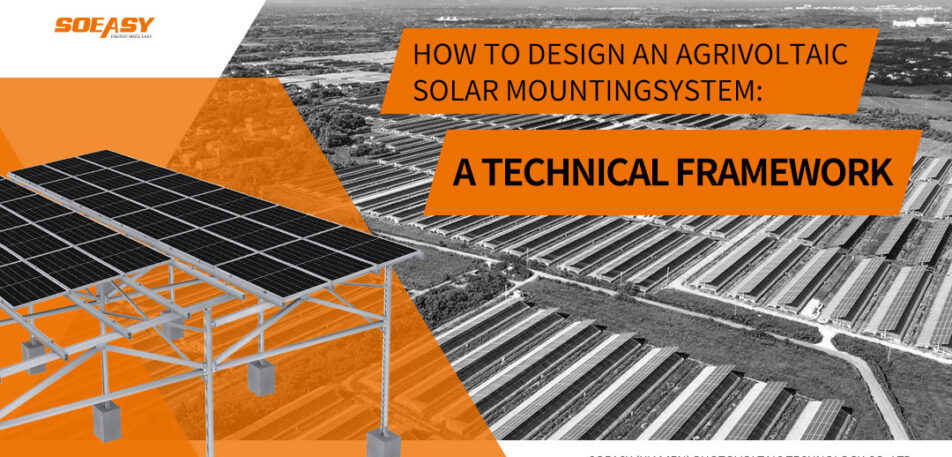
 农光一体安装结构是任何双用途项目的基础。与传统的地面安装架不同,一种提升式太阳能安装系统必须同时完成两项任务:它需将太阳能阵列牢固地固定住,同时还要在下方创造一个有利于作物生长的环境。为实现这一目标,你需要采用一种结构化的设计方法。以下六个工程领域定义了一套成功的农光一体支撑系统
1.农业兼容性设计
作物需求驱动整个设计过程。在优化能源产量之前,你必须首先了解以下植物的生物学和操作要求。
1.1垂直间隙要求
作物形态和农场机械决定了您高架太阳能安装系统的最小高度。
- 蔬菜和旱地作物:保持最低模块边缘至少高出成熟植株冠层2.5米。这可防止潮湿、滞留的空气积聚,从而抑 制病害发生。 Keep the lowest module edge at least 2.5 meters above the mature plant canopy. This prevents humid, stagnant air pockets that encourage disease.
- 果园和葡萄园:将树冠高度及收获设备的可达范围提高到3.5-4.0米或更高。 Raise the clearance to 3.5–4.0 meters or higher to accommodate tree height and the reach of harvesting equipment.
- 机械化农业:当拖拉机、收割机或喷雾器作业时,应保持结构头部空间大于3.5米,并在最高设备上方增加安全余量。 Where tractors, harvesters, or sprayers operate, maintain a structural headroom of ≥3.5 meters, adding a safety margin above the tallest machine.
1.2光线分布与遮阳管理
农光互补安装结构绝不能投射出一片完整的阴影。相反,应谨慎调节光线。
- 间距策略:在模块或模块串之间引入有意的间隙,以达到目标光合有效辐射(PAR)透射率。 Introduce intentional gaps between modules or module strings to achieve your target Photosynthetically Active Radiation (PAR) transmittance.
- 倾斜角度决策:将面板的倾斜角度略微降低几度,使其远离最大能量角度,以便让更多的漫射光照射到作物上。你 还可以使用季节可调倾斜装置或单轴跟踪器来改变全天内的遮荫模式。 Reduce the panel tilt a few degrees from the maximum-energy angle to let more diffuse light reach the crops. You can also use seasonal adjustable tilt or single-axis trackers to alter the shading pattern throughout the day.
- 双面模块:捕捉地面和作物反射的光线有助于改善,但必须重新评估最终的阴影与光照比,以保持对农作物友好的效果。 Capturing ground and crop-reflected light helps, but you must reassess the resulting shade-to-light ratio to keep it crop-friendly.
1.3列表网格和农场机械访问
The layout of the agrivoltaic support system must integrate smoothly with daily farm logistics.
- 行距:将南北堆垛间距设置为大于最大农用机械的工作宽度和转弯半径。 Set the north-south pile spacing wider than the working width and turning radius of the largest farm machine.
- 柱子布置:将每根立柱与种植床、灌溉管线和温室通风口对齐,以避免永久性障碍。 Align every post with the planting beds, irrigation lines, and greenhouse ventilation openings to avoid permanent obstructions.
- 协作设计:在浇筑任何基础之前,尽早将农艺师和农场操作员纳入规划过程。 Bring agronomists and farm operators into the planning process early, before you pour any foundation.
2.结构工程与荷载确定
将面板抬高离地会使其暴露在更强的风力下。因 此,你不能简单地重复使用标准地面安装方案来 适用于这种提升式太阳能支架系统。
2.1风雪荷载
- 风荷载分析:由于高度增加且暴露面积增大,需通过风洞试验或计算流体动力学(CFD)模拟方法获取压力系数,而非依赖通用的建筑规范。需特别注意阵风效应和涡流脱落现象。 Because of the increased height and open exposure, obtain pressure coefficients from wind tunnel tests or Computational Fluid Dynamics (CFD) simulations rather than generic building codes. Pay close attention to gust effects and vortex shedding.
- 积雪管理:除了静态载荷之外,积雪从倾斜的模块上滑落还会造成另一重隐患。您需要将积雪防护装置或固定导轨融入 农业电压安装结构中,以保护农作物和温室薄膜免受突如其来的积雪滑落的影响。 Beyond static weight, snow sliding from tilted modules creates a second hazard. You need to integrate snow guards or retention rails into the agrivoltaic mounting structure to protect crops and greenhouse films from sudden snow slides.
2.2基础选择与土壤保护
你的基础必须在保护可耕地的同时提供结构稳定性。
- 推荐的基础类型:使用预应力混凝土打入桩或螺旋钢桩。 Use prestressed concrete driven piles or helical steel piles.
- 安装深度:将桩帽置于活跃耕作层以下。这可最大限度减少表土扰动,并为后续完全土地恢复提供可能。 Drive the pile cap below the active cultivation layer. This minimizes topsoil disturbance and makes full land restoration possible later.
- 水文安全:所有柱基和电气连接应位于历史最高地下水位或洪水位之上。 Position all column bases and electrical connections above the historical maximum groundwater or flood level.
3.在腐蚀性农业环境中的防腐保护
农场环境对钢铁的侵蚀方式,是典型太阳能电站从未经历过的。肥料雾气、杀虫剂喷洒、动物排泄物以及持续的湿度共同构成了一个具有腐蚀性的化学混合物。因此,你必须相应地制定相应的防护措施。
3.1涂层与材料规格
- 腐蚀性类别:至少选择IS012944C4(高腐蚀性),在密集畜牧业或热带湿度条件下升级至C5。 Select at least ISO 12944 C4 (High Corrosivity), and upgrade to C5 for intensive livestock operations or tropical humidity.
- 热浸镀锌:规定平均锌涂层厚度大于85微米 Specify an average zinc coating thickness of ≥85 µm.
- 紧固件选择:所有螺栓、垫圈、夹具和张力线应使用不锈钢(A2或A4等级)。这可防止接头处发生电化学腐蚀 Use stainless steel (A2 or A4 grade) for all bolts, washers, clamps, and tension wires. This prevents galvanic corrosion at the joints.
3.2 Condensate Management
Galvanized steel runoff can cause leaf burn when it drips onto crops. To solve this, your elevated solar mounting system design should incorporate dedicated drip channels or deflector profiles. Route the condensate away from the plant canopy, for example by aligning drip edges above a service path rather than a crop row.
4. Electrical Safety and Lightning Protection
People and machinery move under live DC circuits every day, so safety demands a zero-tolerance approach.
- Equipotential bonding: Connect all metallic components—the agrivoltaic support system frame, cable trays, inverter housings—into a single continuous grounding grid.
- Lightning protection: You can use the metal framework as a natural down conductor, but first verify its continuity and current-carrying capacity. This prevents dangerous side-flashing to crop structures or personnel.
- Cable management: Route all DC cables inside protective conduits or elevated trays well above the human reach envelope. Never leave an exposed connector at an accessible height.
5.运营与维护集成
一个提升的太阳能安装系统必须能够安全、高效地进行服务工作,同时不干扰农业日历。
- 维护通道:在结构网格中建造专用人行道或通道。这些通道允许机器人或人工进行面板清洁,而不会踩踏作物。 Build dedicated walkways or access alleys into your structural grid. These allow robotic or manual panel cleaning without trampling the crops.
- 设备定位:将组合箱和线束逆变器沿周边区域或置于中央服务通道内进行布置。这样,技术人员便可以从地面或轻 型移动平台上执行大部分常规操作。 Place combiner boxes and string inverters along the perimeter or in central service alleys. That way, technicians can perform most routine tasks from the ground or a lightweight mobile platform.
6.法规合规与土地使用政策
农光互补项目面临严格的用地规则,旨在保护粮食生产。您的农光互补支持系统设计必须清晰展示合规性。
- 常见要求:应满足最小面板高度(例如,2.5米)、最小行距(例如,8米)以及最大土地覆盖率。 Expect requirements for a minimum panel height (e.g., 2.5 m), a minimum row spacing (e.g., 8 m), and a maximum land coverage ratio.
- 文档:工程图纸应清晰显示达到的净空高度、柱距以及计算出的透光率数值。 Engineering drawings should clearly show the achieved clearance heights, column spacing, and calculated light transmittance figures.
- 早期协调:在概念阶段就应使结构设计团队、农艺学家和当地审批官员保持步调一致。一种旨在阻碍实际农业作业的结构,并不符合合规农业光伏系统的标准一一它只不过是在不毛之地搭建的一排高太阳能支架而已。 Align the structural design team, agronomists, and local permitting officers during the concept phase. A structure that prevents real farming does not qualify as a compliant agrivoltaic installation—it is simply a high solar rack on unproductive land.
结论
一种农业光伏安装结构远不止是一个高架架;它是一种集能源与农业于一体的工程界面。若要构建一个成功的升高的太阳能安装系统,你需要遵循一个明确的层级结构:首先,通过足够的高度和智能化的光照调节来确保农业的可行性;其次,确保结构完整性和电气稳定性,以应对严酷的环境和运行负荷。当你将这种有条理、跨领域整合的方法应用于你的农业光伏支撑系统时,你便创造出了一项真正的双重用途资产一一在同一片土地上既能够产生清洁能源,又能收获丰硕的农作物。
农业光伏支架制造: SOEASY SOLAR