English

 Post by
 When people think of ground-mounted solar systems, they often picture large, neatly arranged tilted arrays stretching across open land. This traditional model has dominated the global solar market for years.
However, as solar applications continue to expand, photovoltaic systems are no longer viewed solely as power generation equipment. They are increasingly integrated with infrastructure, agriculture, transportation, and urban development.
In this context, solar fence systems are emerging as an innovative solution. By combining photovoltaic modules with fencing structures, they provide both energy generation and functional boundary protection.
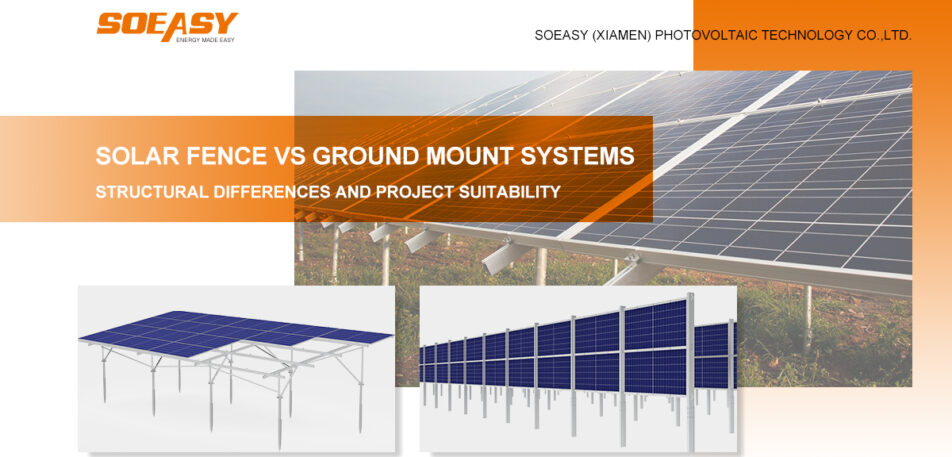
Understanding the structural differences and application scenarios between solar fences and traditional ground-mounted systems is essential for making the right project decision.
What Is a Solar Fence System?
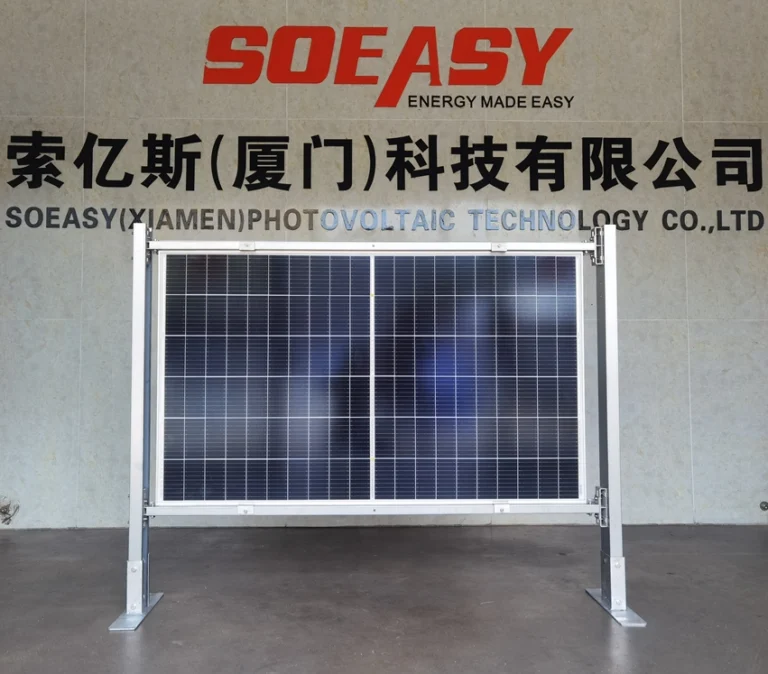
A solar fence is a photovoltaic system installed in a vertical or near-vertical configuration, forming a continuous barrier structure.
主要特征
| 特征 | 说明 |
|---|---|
| Installation angle | Vertical or near-vertical (80–90°) |
| 方向 | East–West bifacial or single-sided |
| Height | Typically 1.5–2.5 meters |
| 结构: | Continuous posts + horizontal supports |
| Post spacing | 2–3 meters |
Core Functions
- Power generation: Produces renewable electricity
- Boundary protection: Defines space, prevents intrusion, and provides separation
典型应用
- Farm and livestock boundaries
- Industrial park perimeters
- Highways and railway corridors
- Residential and commercial properties
- Infrastructure facilities (substations, water plants, landfills)
What Is a Traditional Ground Mount System?
A traditional ground-mounted system installs solar modules at an optimal tilt angle (typically 15–35°) to maximize energy production.
主要特征
| 特征 | 说明 |
|---|---|
| Installation angle | Tilted (15–35° depending on latitude) |
| 方向 | South-facing (Northern Hemisphere) |
| 结构: | Multi-row arrays with beams and purlins |
| Layout | Large-scale continuous deployment |
Core Purpose
- Maximize total energy yield
- Utilize large, contiguous land areas
典型应用
- Utility-scale solar farms
- Commercial and industrial ground projects
- Agricultural PV (elevated structures)
- Mountain and sloped terrain projects
Structural Differences: Solar Fence vs Ground Mount
1. Installation Orientation
| 方面 | Solar Fence | Ground Mount |
|---|---|---|
| 倾斜角度 | 80–90° | 15–35° |
| 方向 | East–West / vertical | South-facing |
| Generation pattern | Higher in morning & evening | 中午时分达到高峰 |
Insight:
Solar fences require higher lateral stability, while ground mounts must manage row spacing and shading.
2. Structural Configuration
| 方面 | Solar Fence | Ground Mount |
|---|---|---|
| Post layout | Continuous, dense (2–3 m) | Array-based, wider spacing |
| Structural type | Continuous “wall-like” system | Framed array system |
| Stability | Depends on post embedment | Depends on structural frame |
3. Load Distribution
| 方面 | Solar Fence | Ground Mount |
|---|---|---|
| Main load | Lateral wind load | Wind + snow load |
| Load direction | Side pressure | Perpendicular to modules |
| 倾覆风险 | 更高 | 降低 |
| Snow impact | 简单 | Significant |
Key point:
Solar fence design focuses on wind resistance and overturning stability, while ground mounts require combined load analysis.
4. Foundation Design
| 方面 | Solar Fence | Ground Mount |
|---|---|---|
| Foundation type | Screw piles, driven piles, concrete | Driven piles, concrete, strip foundations |
| Spacing | Dense (2–3 m) | Wider (3–6 m) |
| Depth requirement | Higher (anti-overturning) | 中等 |
| 数量 | More foundations | Fewer foundations |
Power Generation Performance Comparison
Energy Output Characteristics
| 方面 | Solar Fence | Ground Mount |
|---|---|---|
| Daily curve | Strong morning/evening | Midday peak |
| Annual yield | 70–85% of optimal tilt | Maximum |
| Bifacial gain | 高 | 中等 |
| Seasonal variation | 降低 | 更高 |
Insight:
Solar fences align better with distributed consumption profiles, while ground mounts maximize total annual output.
Land Use Efficiency
| 方面 | Solar Fence | Ground Mount |
|---|---|---|
| Land usage | Boundary-only | Large continuous area |
| Land reuse | 高 | 一般 |
| Shadow impact | 简单 | 复杂 |
| Suitable land | Edges, corridors | Open land |
Core difference:
Solar fences use boundaries, while ground mounts occupy core land.
应用场景
When to Choose a Solar Fence
- Boundary protection is required
- Core land must remain usable
- Land is narrow, linear, or fragmented
- Dual-function (power + fencing) is desired
When to Choose Ground Mount Systems
- Large, continuous land is available
- Maximum energy yield is the goal
- Utility-scale or large C&I projects
- Lowest LCOE is required
Engineering Considerations
Wind Load Design
Solar Fence:
- Dominated by lateral wind loads
- Requires deeper foundations
- CFD or wind tunnel analysis recommended
Ground Mount:
- Complex wind pressure distribution
- Edge zones require reinforcement
- Row spacing affects load
结构稳定性
Solar Fence:
- Post stiffness and embedment are critical
- Bracing recommended at ends and corners
Ground Mount:
- Frame stability is key
- Requires beam, purlin, and bracing integration
材料选择
| 成分 | Solar Fence | Ground Mount |
|---|---|---|
| 主要材料 | HDG steel, ZAM, aluminum | HDG steel, ZAM |
| 紧固件 | SS304/316 | SS304/316 |
| Priority | Lateral stiffness | Overall strength |
Cost and Installation Comparison
| Cost Factor | Solar Fence | Ground Mount |
|---|---|---|
| 材料 | Higher per meter | Lower per watt |
| 基础 | More quantity | Larger size |
| 安装 | Linear process | Scalable |
| Electrical | Longer cable routes | Optimized layout |
| Land cost | 简单 | Significant |
Economic Insight
- Solar fence: Higher cost per kW but added functional value
- Ground mount: Lower cost per kW with strong economies of scale
Common Misconceptions
1. Solar Fence Can Replace All Ground Systems
❌ Incorrect — lower energy yield
2. Ignoring Efficiency Differences
❌ Vertical systems produce only 70–85%
3. Underestimating Wind Loads
❌ Major risk for vertical systems
4. Using Ground Mount Logic for Solar Fence
❌ Different structural behavior
Conclusion: Choosing the Right System
Solar fences and ground-mounted systems are complementary, not competing solutions.
Quick Selection Guide
| Project Condition | 推荐解决方案 |
|---|---|
| Boundary + land reuse | Solar Fence |
| Utility-scale + LCOE focus | Ground Mount |
| Agricultural boundary | Solar Fence |
| Large solar farm | Ground Mount |
SOEASY Ground Solar Solutions
SOEASY provides a full range of ground-mounted solar solutions:
- Solar Fence Systems: Vertical mounting optimized for boundary applications with enhanced wind resistance
- Ground Mount Systems: Fixed tilt, adjustable, and tracking systems for various terrains
- Material Options: Hot-dip galvanized steel, ZAM steel, and aluminum
- Foundation Solutions: Screw piles, driven piles, concrete foundations
- Customization: Tailored designs based on site conditions and load requirements
- Technical Support: From structural calculation to installation guidance
Contact SOEASY for a customized ground solar solution.
常见问题
What is the main difference between solar fence and ground mount systems?
Solar fences are vertical and multifunctional, while ground mounts are optimized for maximum energy generation.
Is a solar fence less efficient?
Yes, typically 70–85% of a tilted system, but it offers additional functional value.
Which system is better for farms?
Solar fences are ideal for boundaries, while ground mounts are better for large-scale generation.