English

 Post by
 With increasing pressure from both global energy transition and food security, land resources are becoming more limited. Traditional solar farms and agricultural production often compete for land use.
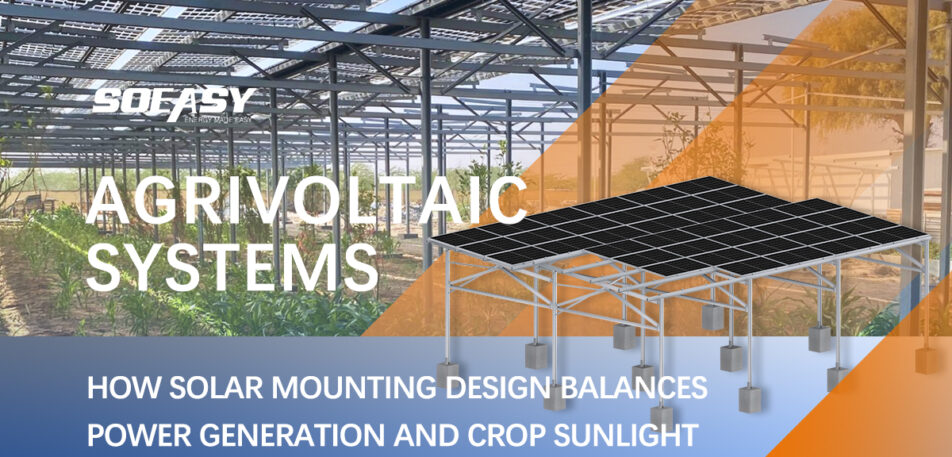
Agrivoltaics offers a practical solution by combining solar power generation with agricultural production on the same land. By installing solar panels above farmland, this system enables dual land use—generating clean energy while supporting crop growth.
However, agrivoltaic systems differ fundamentally from conventional ground-mounted solar projects. The key challenge lies in achieving the optimal balance between power generation efficiency and crop light availability.
In this balance, the mounting system plays a critical role. It is not just a structural support—it acts as a light management system that directly influences crop growth conditions.
What Is an Agrivoltaic Mounting System?
System Components
A complete agrivoltaic system includes:
- Solar panels – generate electricity and provide shading
- Mounting structure – determines height, tilt, and spacing
- Crop cultivation area – located beneath and between panels
Key Differences from Traditional Solar Farms
| 方面 | Conventional PV | Agrivoltaics |
|---|---|---|
| Objective | Maximize energy output | Balance energy + agriculture |
| Height | 0.5–1.5 m | 2–5 m or higher |
| 行间距 | Maximize density | Ensure light & machinery access |
| Design priority | Panel efficiency | Crop light requirements |
Role of Mounting Systems
The mounting system determines:
- Light intensity reaching crops
- Light distribution and uniformity
- 农业机械的无障碍性
It is essentially a tool for controlling the ground light environment.
Crop Light Requirements: The Starting Point
Crop Categories by Light Demand
- Full-sun crops (>80% sunlight)
Wheat, corn, rice, cotton, grapes - Partial-shade crops (50–80%)
Soybeans, potatoes, tea - Shade-tolerant crops (<50%)
Ginger, mushrooms, leafy vegetables
Impact of Light on Crops
- Yield directly depends on photosynthesis
- Moderate shading may improve quality (e.g., tea)
- Light intensity affects growth cycles
Design must always be crop-oriented to avoid reduced agricultural output.
Key Mounting Design Parameters
1. Panel Coverage Ratio
- Determines overall shading level
- Typical strategies:
- Full-sun crops: 30–50%
- Shade-tolerant crops: 60–80%
2. Tilt Angle
- Affects both energy yield and shadow movement
- Larger tilt → longer shadows
- Optimization depends on latitude and season
3. Row Spacing
- Balances light penetration and land use
- Recommended: 4–6 meters for machinery access
4. Mounting Height
- Critical for light distribution and farm operations
- Typical recommendations:
- Manual farming: 2–2.5 m
- Small machinery: 2.5–3.5 m
- Large machinery: 3.5–5 m
Types of Agrivoltaic Mounting Systems
1. Fixed Elevated Structures
- Simple and stable
- Lower cost
- Suitable for large-scale projects
2. Adjustable Tilt Systems
- Seasonal angle adjustment
- Improves both yield and crop conditions
3. Solar Tracking Systems
- Tracks sun position dynamically
- 20–40% higher energy output
- More complex and higher cost
Balancing Energy and Agricultural Benefits
Successful agrivoltaic projects optimize total system value, including:
- Energy revenue
- Crop yield and quality
- Water savings and microclimate benefits
- Government incentives
Project Priorities
- Energy-focused → higher coverage, optimized tilt
- Agriculture-focused → wider spacing, higher structures
- Balanced → moderate design with optimization
Site-Specific Design Considerations
- Solar radiation and climate
- Land topography (flat vs. sloped)
- Crop types and farming methods
- Irrigation systems and access roads
Common Design Challenges
- Uneven shading → uneven crop growth
- Insufficient height → limits machinery
- Ignoring seasonal sun changes
- Lack of coordination between agriculture and PV design
Engineering Optimization Methods
- Use simulation tools (PVsyst, SketchUp, Helios 3D)
- Apply modular design for flexibility
- Customize solutions based on crops
- Integrate agricultural and engineering expertise early
Designing for Long-Term Agrivoltaic Success
The essence of agrivoltaics lies in balance—not compromise, but optimization.
A well-designed mounting system can:
- Maximize clean energy production
- Maintain or improve crop performance
- Enhance overall project profitability
As demand for efficient land use grows, agrivoltaics will play a key role in sustainable development.
SOEASY Agrivoltaic Solutions
As a professional solar mounting system provider, SOEASY offers:
- Comprehensive product portfolio
Fixed, adjustable, and tracking systems - Advanced engineering capabilities
Structural design and shading analysis - Customized solutions
Tailored to site conditions and crop requirements
👉 Partner with SOEASY to develop efficient and reliable agrivoltaic projects.