English

 Post by
 为什么导轨的选择对屋顶太阳能系统至关重要
在屋顶太阳能系统中,导轨是连接光伏组件和屋顶结构的核心结构部件。它们在将荷载(包括恒载、风荷载和雪荷载)传递到建筑结构方面发挥着关键作用。
轨道系统的选择直接影响三个关键的项目指标:
- 安装效率:影响人工成本和项目工期
- 系统成本:取决于材料用量和安装复杂程度。
- 结构安全:定义系统在 25 年生命周期内的可靠性
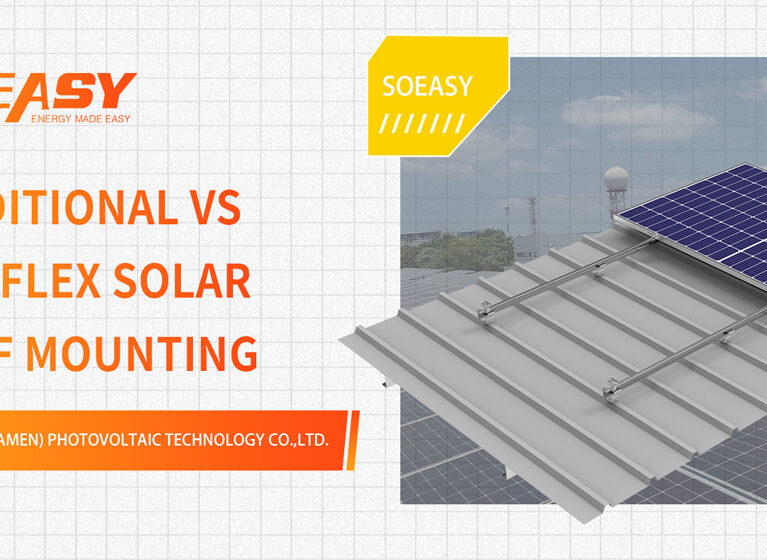
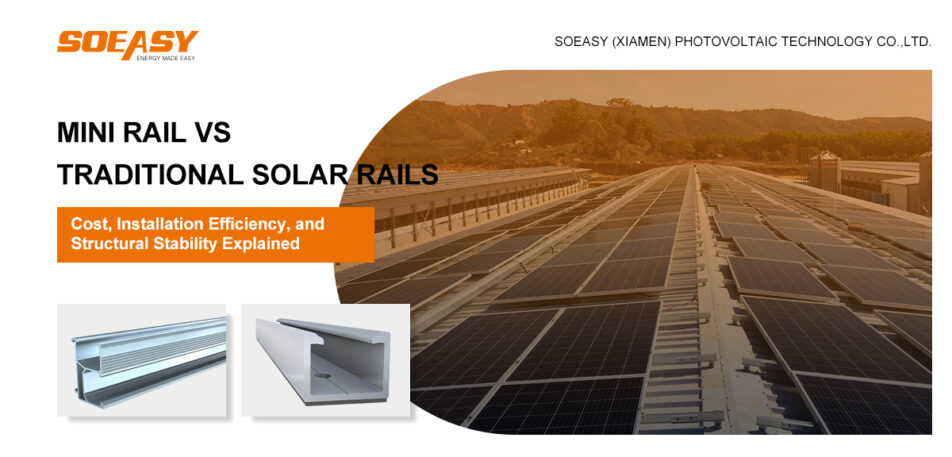
近年来,迷你轨道系统(短轨道系统)在分布式屋顶工程中得到了迅速应用。尤其是在梯形金属屋顶上,迷你轨道系统在成本和安装效率方面具有明显的优势。
然而,迷你轨道交通能否完全取代传统的长轨道交通系统? 每种方案又分别适用于哪些场景?
本文对迷你轨道和传统太阳能轨道进行了系统比较,涵盖结构、成本、安装效率、结构性能和应用场景。
什么是传统太阳能导轨?
定义
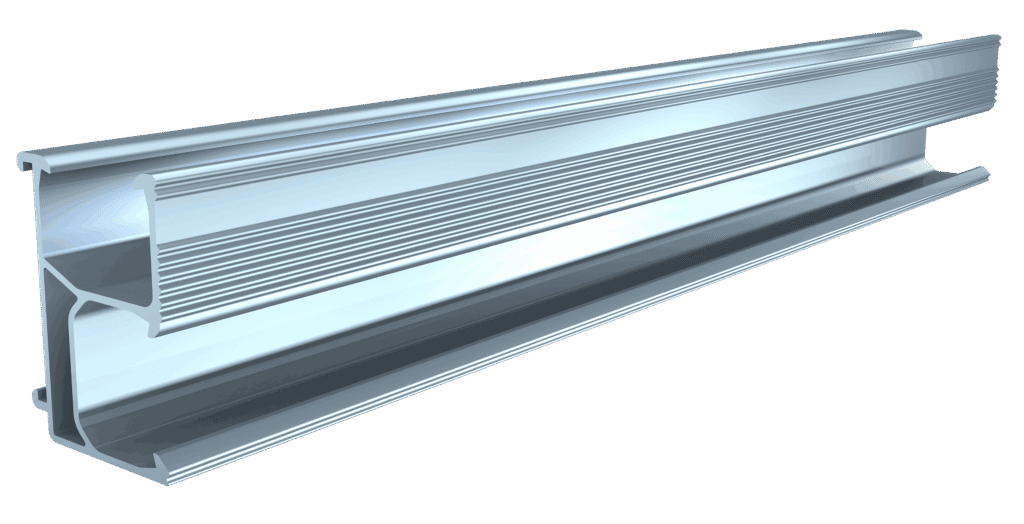
传统的太阳能轨道系统采用贯穿整个组件阵列的连续长轨道。这些轨道通常是铝型材(每段2-4米),连接成一个连续的结构。
典型组成
| 成分 | 功能 |
|---|---|
| 轨道 | 持续支持光伏组件 |
| 轨道连接件 | 连接轨道 |
| L 型脚/屋顶挂钩 | 将栏杆固定到屋顶结构上 |
| 中压块和侧压块 | Secure modules to rails |
主要特征
- 结构连续性高:形成连续梁系统
- 清晰的载荷路径:模块 → 轨道 → 底座 → 屋顶结构
- 成熟的技术:数十年的工程验证
- 适用范围广:适用于所有类型的屋顶
什么是迷你轨道?
定义
迷你轨道系统采用短的分段式轨道(通常为 300–600 毫米)来支撑模块。每个模块由多根短轨道支撑,而不是由连续的长轨道支撑。
典型组成
| 成分 | 功能 |
|---|---|
| Mini Rails | Short segmented support (300–600 mm) |
| Integrated Base | Combined rail + mounting base |
| 中压块和侧压块 | Fix modules to rails |
主要特征
- 结构简化:无需连续轨道
- 安装灵活:轻松避开屋顶障碍物
- 轻量化设计:铝材用量减少 30-50%
- 主な用途:金属屋根(特に台形屋根)

核心区别:迷你轨道与传统轨道
1. 结构配置
| 方面 | 传统轨道 | 迷你轨道 |
|---|---|---|
| 轨道连续性 | 连续的 | 分段的 |
| 组件 | 更多(轨道+接头+底座) | 较少(集成设计) |
| 结构逻辑 | 连续梁 | 点支撑 |
| 屋顶平整度要求 | 更高 | 较低(独立水平) |
荷载分布
| 方面 | 传统轨道 | 迷你轨道 |
|---|---|---|
| 载荷分布 | 均匀分布 | 集中于固定点 |
| 结构冗余 | 高 | 降低 |
| 应力集中 | 低 | 更高 |
成本比较
1. 材料成本
| 成本项目 | 传统轨道 | 迷你轨道 | 区别 |
|---|---|---|---|
| 铝的使用 | 基线 | 减少30-50% | 无连续轨道 |
| 拼接连接件 | 需要 | 无需 | 减少组成 |
| 基本组成 | 需要 | 集成 | 成本转移 |
| 包装 | 更高 | 降低 | 短轮廓优势 |
结论: 迷你轨道可降低材料成本约 20%–35%。
2. 安装成本
| 成本项目 | 传统轨道 | 迷你轨道 | 区别 |
|---|---|---|---|
| 安装时间 | 基线 | 减少30-50% | 步骤更少 |
| 工具 | 需要切割设备 | 基本工具 | 更简单 |
| 技能要求 | 中等 | 降低 | 安装更简便 |
结论: 迷你轨道可降低约 30% 至 50% 的安装成本。
3. 物流成本
| 成本项目 | 传统轨道 | 迷你轨道 | 区别 |
|---|---|---|---|
| 包装体积 | 大 | 小 | 短轨 |
| 运输效率 | 降低 | 更高 | 每个集装箱可容纳更多 |
| 处理 | 多人 | 单人 | 轻的 |
结论: 小型铁路可降低约 20%–30% 的物流成本。
4. 总成本汇总
| 成本类别 | 传统轨道 | 迷你轨道 |
|---|---|---|
| 材料 | 基线 | ↓ 20–35% |
| 安装 | 基线 | ↓ 30–50% |
| 物流 | 基线 | ↓ 20–30% |
| 项目总成本 | 基线 | ↓ 25–40% |
安装效率比较
迷你轨道的优势
| 优势 | 说明 |
|---|---|
| 无需远距离对准 | 独立安装 |
| 无需裁剪 | 标准短轨 |
| 无需拼接 | 连接数减少 |
| 单人安装 | 轻的 |
| 灵活布局 | 轻松避开障碍物 |
典型结果: 安装时间缩短 30%–50%。
Characteristics of Traditional Rails
| 特征 | 说明 |
|---|---|
| Precise alignment required | Entire row must be level |
| Cutting required | On-site adjustment |
| Splicing required | Multiple rail connections |
| Multi-person handling | Long rails |
Structural Performance Comparison
1. Strength and Stability
| 方面 | 传统轨道 | 迷你轨道 |
|---|---|---|
| Overall stiffness | 更高 | 降低 |
| Bending resistance | 优秀 | Depends on rail |
| Torsional resistance | 好 | 降低 |
| 结构冗余 | 高 | 降低 |
Conclusion:
Traditional rails offer better performance in high-load and large-span scenarios.
2. Wind Load Performance
| 方面 | 传统轨道 | 迷你轨道 |
|---|---|---|
| Uplift resistance | 优秀 | 好 |
| High wind suitability | ✅ Yes | ⚠️ Reinforcement needed |
| 振动 | 降低 | 更高 |
Design recommendation:
- Normal wind → Both suitable
- High wind → Increase fixing points for Mini Rail
- Typhoon zones → Prefer traditional rails
3. Snow Load Performance
| 方面 | 传统轨道 | 迷你轨道 |
|---|---|---|
| Load capacity | 优秀 | 好 |
| 大雪地区 | ✅ Suitable | ⚠️ Reinforced design |
4. Long-Term Reliability
| 方面 | 传统轨道 | 迷你轨道 |
|---|---|---|
| Design maturity | Very high | 高 |
| Engineering validation | Decades | Recent |
| Failure predictability | 高 | Requires precision |
应用场景
When to Choose Mini Rail
- Trapezoidal metal roofs
- Small to medium projects (<500 kW)
- Cost-sensitive projects
- Fast installation requirements
- Roofs with obstacles
When to Choose Traditional Rails
- Large-scale projects (>1 MW)
- High wind or snow regions
- High structural reliability requirements
- Regular, unobstructed roofs
设计考虑因素
Fixing Point Layout
| System | Recommendation |
|---|---|
| Traditional | 2–3 fixing points per side |
| 迷你轨道 | 3–4 fixing points per side |
Roof Structure
All fixing points must align with purlins.
防水
| System | 解决方案 |
|---|---|
| Penetrating systems | EPDM + sealant |
| 立缝 | Non-penetrating clamps |
Load Calculation
- Always calculate wind and snow loads
- Increase fixing density in extreme conditions
- Pay attention to vibration in Mini Rail systems
Common Misconceptions
Here’s a more concise version while keeping it professional:
Misconception 1: Mini Rail Can Replace Traditional Rails
Fact: Mini Rail has advantages in some cases, but traditional rails perform better in large projects and high wind/snow areas. They are complementary, not replacements.
Misconception 2: Ignoring Roof Structure
Fact:Mini Rail requires accurate purlin positioning. Poor layout can prevent proper installation. A roof survey is essential.
Misconception 3: Focusing Only on Low Cost
Fact: Cost savings depend on proper design. In harsh conditions, insufficient fixing points can cause structural risks.
Misconception 4: Mini Rail Is Always Faster
Fact: Mini Rail is faster for small or complex roofs, but on large, regular roofs, the efficiency gap is smaller.
Industry Trends
- Shift toward lightweight and fast-install systems
- Growth of pre-assembled Mini Rail solutions
- Development of rail-free systems
- Increasing focus on installation efficiency
Choosing the Right Rail System
Mini Rail and traditional rails are complementary solutions, not competitors.
Quick Selection Guide
| Project Condition | Recommended System |
|---|---|
| Trapezoidal roof + small project | 迷你轨道 |
| Large, regular roof | 传统轨道 |
| High wind/snow | 传统轨道 |
| Tight schedule | 迷你轨道 |
| Complex roof | 迷你轨道 |
| 高可靠性 | 传统轨道 |
SOEASY Rail System Solutions
SOEASY provides complete rooftop mounting solutions:
- Mini Rail System:
Designed specifically for trapezoidal metal roofs, featuring a lightweight structure, fast installation, and optimized cost, with support for rail-free solutions. - Traditional Rail System:
A mature and reliable continuous rail solution, suitable for all roof types and capable of meeting high-standard project requirements. - Material Selection:
Made from AL6005-T6 aluminum alloy with anodized surface treatment, offering excellent corrosion resistance. - Complete Accessories:
Full range of components including L feet, roof hooks, mid & end clamps, and waterproof sealing washers. - Technical Support:
Comprehensive services covering load calculation, system design, and installation guidance.
常见问题
Is Mini Rail better than traditional rails?
It depends on the project. Mini Rail is better for small, cost-sensitive projects, while traditional rails are better for high-load scenarios.
Can Mini Rail be used in high wind areas?
Yes, but additional fixing points and reinforcement are required.
Which system is more cost-effective?
Mini Rail generally reduces total project cost by 25–40%.