English

 Post by
 Metal roof solar mounting systems are widely used in commercial and industrial solar projects around the world. Because metal roofs are lightweight, durable, and easy to install on, they have become one of the most common roof types for distributed photovoltaic systems.
From industrial factories to logistics centers, businesses are increasingly installing solar systems on metal roofs to reduce energy costs and improve sustainability.
Compared with concrete roofs or tile roofs, metal roofs offer several important advantages for solar installation. First, their structure is relatively lightweight, which reduces the load on the building. Second, metal roofs often have large spans, providing flexible space for PV module layout. In addition, the roof surface is usually uniform, making installation faster and more efficient.
However, choosing the right metal roof solar mounting system is critical. Depending on the roof structure and project requirements, installers generally use two types of solutions: penetrating mounting systems and non-penetrating mounting systems.
This guide explains the differences between these two metal roof solar mounting solutions, including roof compatibility, installation methods, advantages, and selection considerations.
Types of Metal Roof Solar Mounting Applications
Before selecting a metal roof solar mounting system, it is essential to identify the roof type. Different metal roofs require different mounting methods.
Trapezoidal Metal Roof
Trapezoidal metal roofs are the most common type used in commercial and industrial buildings such as factories, warehouses, and logistics facilities.
These roofs feature a trapezoidal wave profile with clear ridges and valleys. The roof sheets are usually fixed directly to purlins, which creates a clear structural load path.
Because of this structure, penetrating metal roof solar mounting systems are commonly used on trapezoidal roofs. Self-tapping screws can easily fix the mounting brackets to the purlins beneath the roof sheet.
As a result, trapezoidal metal roofs provide a stable and reliable base for solar installations.
Standing Seam Metal Roof
Standing seam metal roofs are widely used in Europe and North America. In recent years, they have also become popular in modern commercial buildings.
These roofs feature vertical seams that connect the roof panels through mechanical locking. This design creates a continuous waterproof surface without visible fasteners.
Therefore, non-penetrating metal roof solar mounting systems are the preferred solution. Special clamps can attach directly to the standing seam without drilling holes.
Because no penetration is required, the roof structure and waterproof layer remain intact.
Corrugated Metal Roof
Corrugated metal roofs are another common roof type. They are often used in agricultural buildings, older warehouses, or utility structures.
The roof sheets have continuous curved waves with relatively low height. Compared with trapezoidal roofs, the structural stiffness is slightly lower.
In most cases, penetrating metal roof solar mounting systems are used. Installers typically fix mounting brackets through the roof sheet using self-tapping screws.
However, special attention must be paid to waterproof sealing due to the lower wave height.
Penetrating Metal Roof Solar Mounting Systems
Penetrating installation is one of the most widely used metal roof solar mounting solutions for commercial and industrial solar projects.
How Penetrating Mounting Works
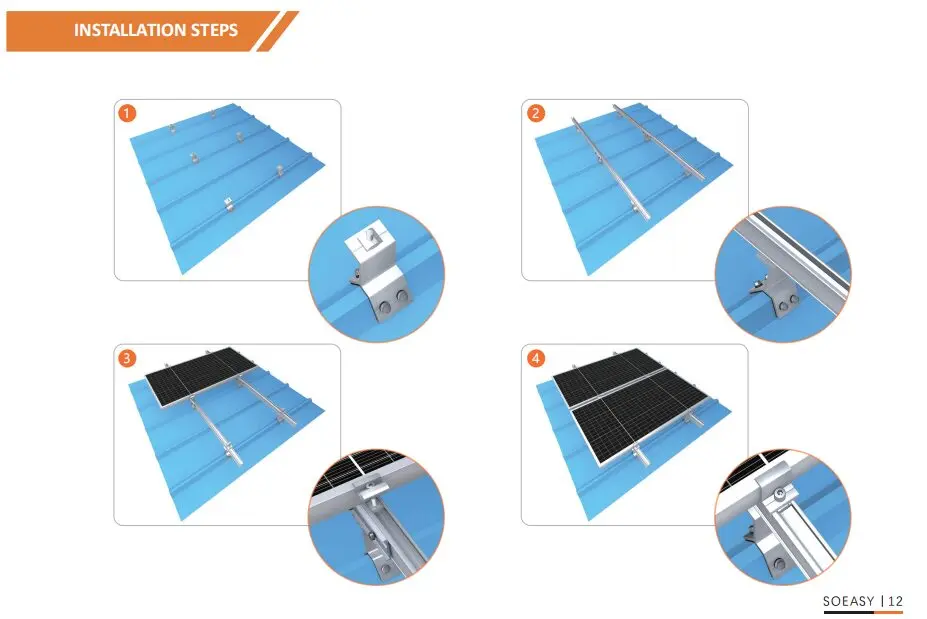
In a penetrating metal roof solar mounting system, bolts or self-tapping screws pass through the roof sheet and connect directly to the structural purlins below.
This method creates a strong load transfer path from the solar modules to the building structure. Therefore, the system can effectively handle wind loads and structural forces.
Because of its reliability, penetrating mounting systems are commonly used in large-scale industrial projects.
Common Mounting Components
Several components are typically used in penetrating metal roof solar mounting systems.
L Foot Bracket
L Foot brackets are widely used on trapezoidal and corrugated metal roofs. Their simple L-shaped design allows installers to easily fix them to the roof using self-tapping screws.
These brackets connect directly to aluminum rails that support the solar modules. As a result, they are cost-effective and easy to install.
吊りボルト
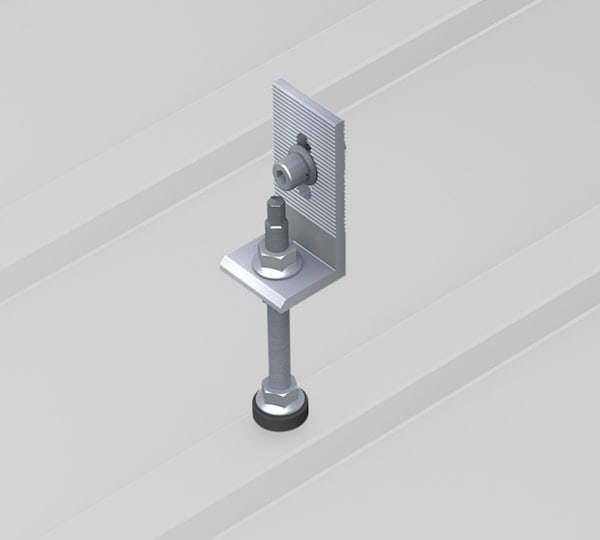
Hanger bolts are often used when the roof structure includes steel or wooden purlins.
One end of the bolt is anchored into the purlin, while the other end connects to the mounting rail above the roof surface. Sealing washers and waterproof caps are usually included to ensure proper waterproofing.
Trapezoidal Roof Bracket
Some mounting systems are specifically designed for trapezoidal roofs. These brackets match the shape of the roof ridge, increasing the contact area and improving structural stability.
In addition, many trapezoidal brackets include pre-installed waterproof pads.
Advantages of Penetrating Mounting
浸透する metal roof solar mounting systems offer several advantages.
First, the structural connection is very strong because the system is fixed directly to the purlins. This provides excellent resistance to wind uplift.
Second, the components are relatively simple, which reduces material costs. Therefore, penetrating systems are often more economical.
Finally, penetrating systems are highly versatile and can be used on many different metal roof types.
Waterproof Design Considerations
Because penetrating systems require drilling holes, waterproof design is extremely important.
First, installers typically place EPDM rubber gaskets between the mounting bracket and the roof sheet. These gaskets create the first waterproof barrier.
Second, sealing washers should be used on all screws to prevent water infiltration around the fastener.
In addition, weather-resistant sealant can be applied around mounting points to provide additional protection.
With proper installation and sealing, penetrating metal roof solar mounting systems can maintain reliable waterproof performance for more than 25 years.
Non-Penetrating Metal Roof Solar Mounting Systems
Non-penetrating systems are specifically designed for standing seam roofs. Their main purpose is to install solar modules without drilling holes in the roof.
How Non-Penetrating Mounting Works
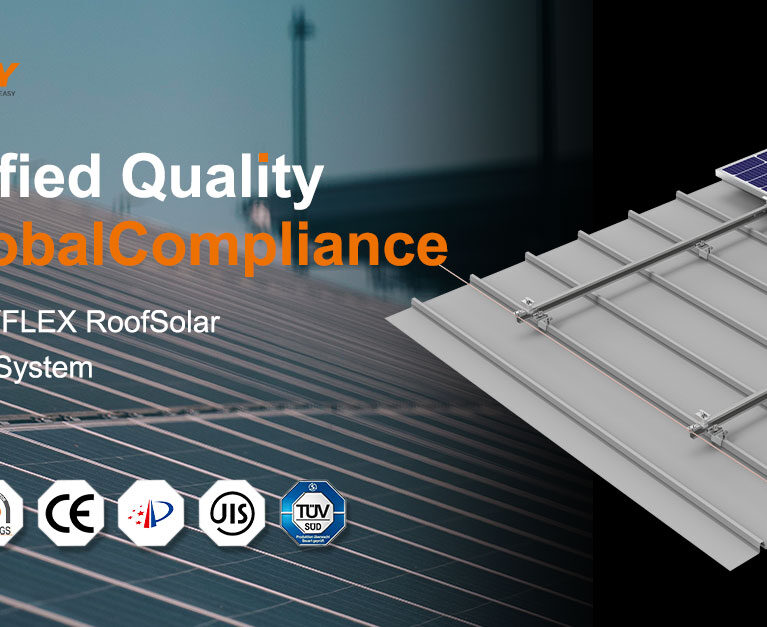
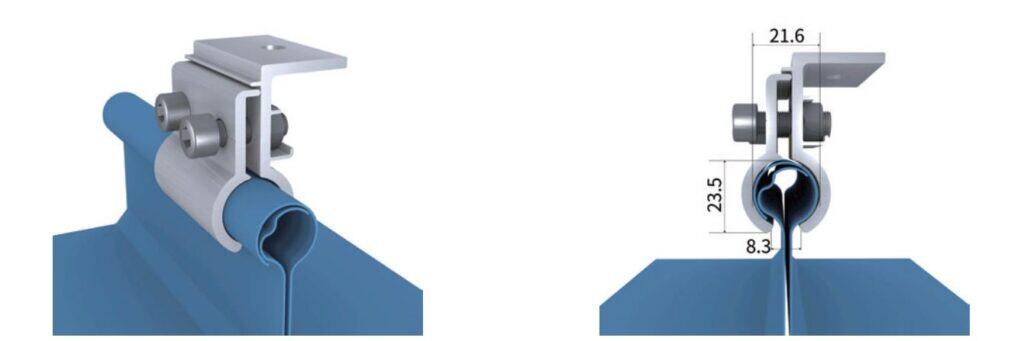
In a non-penetrating metal roof solar mounting system, specialized clamps attach directly to the standing seams of the roof.
These clamps use mechanical grip and friction to hold the mounting rails securely. As a result, the system can support the solar modules without penetrating the roof panel.
This installation method protects the original roof structure and waterproof layer.
Standing Seam Clamps
Standing seam clamps are the core component of non-penetrating metal roof solar mounting systems.
These clamps are usually made from aluminum alloy or stainless steel, providing excellent corrosion resistance.
Some clamp designs are fixed, while others allow adjustment to improve rail alignment. In addition, clamps can be installed quickly without drilling or welding.
Because of these advantages, non-penetrating systems are widely used in modern commercial buildings.
Advantages of Non-Penetrating Mounting
Non-penetrating metal roof solar mounting systems offer several important benefits.
First, they do not damage the roof surface. Therefore, the waterproof performance of the roof remains unchanged.
Second, installation is faster because drilling and sealing steps are not required.
Third, this method often helps maintain the original roof warranty, which can be important for newer buildings.
However, these systems are typically used only on standing seam roofs.
Penetrating vs Non-Penetrating Metal Roof Solar Mounting
When comparing the two metal roof solar mounting solutions, several factors should be considered.
Penetrating systems provide stronger structural connections because they are fixed directly to the purlins. Therefore, they are often used in industrial buildings.
On the other hand, non-penetrating systems protect the roof surface and eliminate the risk of leakage from drilling holes.
In terms of installation speed, non-penetrating systems are generally faster. However, their clamp components can be more expensive.
Ultimately, the best metal roof solar mounting solution depends on the roof type, structural design, and project requirements.
| 比較係数 | Penetrating Mounting | Non-Penetrating Mounting |
|---|---|---|
| Applicable roof types | Trapezoidal and corrugated metal roofs | Standing seam roofs |
| Structural stability | Direct connection to purlins with strong uplift resistance | Depends on clamp strength and seam compatibility |
| 防水性能 | Requires careful sealing of each penetration point | No penetrations, eliminating leakage risks |
| 設置効率 | Requires drilling, cleaning, and sealing | Faster installation with clamps |
| Roof protection | Permanent roof penetrations | Roof remains intact |
| Material cost | Lower component cost | Clamp systems typically cost more |
| Maintenance | Requires inspection of sealant aging | Mainly checking clamp tightness |
| Typical markets | Widely used globally in industrial projects | Common in Europe and North America |
How to Choose the Right Metal Roof Solar Mounting System
Selecting the correct metal roof solar mounting system requires careful evaluation of several factors.
First, the roof type must be identified. Trapezoidal and corrugated roofs usually require penetrating systems, while standing seam roofs are better suited for non-penetrating clamps.
Second, environmental conditions such as wind load and snow load must be considered. In high-wind regions, structural strength and mounting spacing are particularly important.
Third, the roof structure must be evaluated to ensure it can support the additional load of the solar system.
Finally, project requirements such as waterproof protection and roof warranties should also be considered.
For best results, it is recommended to work with an experienced solar mounting system supplier who can provide structural calculations and professional recommendations.
Metal Roof Solar Mounting Solutions Provider
Metal roof solar mounting systems are an essential component of commercial and industrial solar installations. Depending on the roof structure, installers can choose between penetrating and non-penetrating solutions.
Penetrating metal roof solar mounting systems are commonly used on trapezoidal and corrugated roofs because they provide strong structural connections and cost-effective installation.
Meanwhile, non-penetrating metal roof solar mounting systems are ideal for standing seam roofs because they preserve roof integrity and eliminate drilling.
By selecting the right mounting method and ensuring proper system design, solar installations on metal roofs can operate safely and reliably for more than 25 years.
For project-specific solutions, professional engineering support, or structural calculations, you can contact the technical team at SOEASY Solar for expert guidance.