English

 Post by
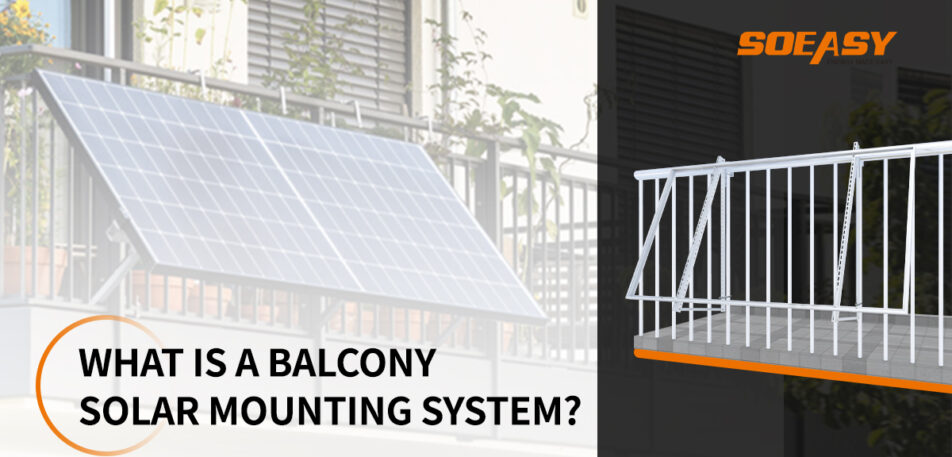
 A Balcony Solar Mounting System provides a practical way to install photovoltaic (PV) modules on residential balconies, railings, or exterior walls. This system allows urban households to generate solar power while maintaining building safety, structural integrity, and visual consistency. By adjusting module orientation and tilt, balcony solar mounts help users capture sunlight more effectively, even in limited spaces.
1. What Is a Balcony Solar Mounting System?
A balcony solar mounting system is specifically designed for residential buildings where rooftop access is unavailable or restricted. Instead of relying on shared roofs, apartment residents can install PV modules directly on their balconies and produce electricity on-site.
Role in Distributed Solar PV Systems
Within distributed solar systems, balcony solar mounting solutions fill a critical gap for users without roof ownership. In most cases, these systems combine one or two PV modules (300W–800W) with plug-and-play microinverters or power optimizers.
As a result, users can supply electricity directly to household appliances. In many regions, these systems operate in a self-consumption mode with no or limited power export. Therefore, balcony solar systems offer a low-cost, low-intervention entry point into residential solar energy.
Key Advantages of Balcony Solar Systems
- Lower household electricity bills, as appliances consume solar power directly
- Fast and simple installation, since pre-assembled systems only require basic fixing to the balcony
- Long-term durability, thanks to 6005-T5 aluminum alloy and 304 stainless steel with multiple anodizing options
- Increased property appeal, because improved energy efficiency enhances long-term residential value
2. Typical Types of Balcony Solar Mounting Systems
Hanging Balcony Mount (Railing-Mounted Type)
This is the most common balcony solar mounting solution. Installers attach the structure to the outer side or top of the balcony railing using clamps or brackets. Since the PV modules face outward, the system minimizes visual impact inside the apartment while maximizing solar exposure.
Moreover, this design works well with most metal, glass, and concrete railings.
Adjustable-Angle Balcony Mount
This type includes adjustable hinges or sliding slots that allow users to change the module tilt angle, typically between 15° and 60°. By adjusting the angle seasonally, users can increase annual energy output by 10–25%.
However, adjustable systems introduce slightly higher structural complexity. Therefore, they suit users who prioritize energy performance over installation simplicity.
Fixed-Angle Balcony Mount
Fixed-angle balcony mounts use a predefined tilt angle, usually based on local latitude. Because the structure remains simple and stable, this option reduces cost and installation time.
For this reason, fixed-angle systems work best in locations with stable sunlight conditions or where users prefer minimal adjustment.
Learn more about balcony mounting solutions: SOEASY Balcony Mount
3. Structural Components and Material Selection
Main Supporting Structure
The main structure includes support arms, brackets, and connectors that carry the weight of PV modules as well as wind and snow loads. Designers must ensure sufficient strength and stiffness to maintain long-term stability.
Rails and Module Fixing System
Aluminum rails support framed PV modules through clamps or fastening blocks. At the same time, the rail system must remain compatible with mainstream module sizes and frame designs.
Railing Connection and Adaptability
The connection to the balcony railing plays a decisive role in overall safety. Common solutions include:
- V-shaped clamps for round or square railing tubes
- Flat clamps with anti-slip pads for flat-top railings
- Anchor-bolt fixing, used only when property management allows drilling and the railing structure provides adequate strength
Common Materials
- Aluminum Alloy (Primary Choice): Lightweight, corrosion-resistant, and easy to process. Anodized surfaces further improve durability.
- Stainless Steel Fasteners: A2 or A4 grade fasteners prevent corrosion and ensure reliable long-term connections.
- Protective Accessories: Rubber or EPDM pads reduce vibration and protect railings, while plastic end caps prevent sharp-edge injuries.
4. Load Behavior and Safety Design Considerations
Balcony Load Limits and Structural Boundaries
Above all, the system must never exceed the original balcony design load. Most residential balconies support live loads of 2.5 kN/m² or more. Typically, the total weight of the mounting system and PV modules remains between 30 and 50 kg.
To avoid local overstress, installers should distribute loads evenly using multiple fixing points rather than concentrating force at a single location.
Wind Resistance and Fall Prevention
Because balcony systems operate in elevated wind environments, designers must address several risk factors:
- Wind pressure resistance, calculated according to local maximum wind speeds
- Anti-sliding measures, which prevent clamp loosening under vibration
- Anti-overturning design, achieved by positioning the center of gravity closer to the interior side of the balcony
As a result, the system remains stable even under strong wind conditions.
Balcony Railing Load Capacity Assessment
Before installation, installers must inspect the railing manually. Corroded, loose, or decorative-only railings cannot support balcony PV systems safely. In uncertain cases, consulting a structural engineer is strongly recommended.
Load Differences by Installation Method
- Hanging installation: Applies outward pulling forces to the railing
- Top-mounted installation: Introduces downward pressure and outward bending moments
- Wall-mounted installation: Transfers loads to the building wall, requiring verification of wall material and anchoring capacity
5. Installation Methods and Practical Guidelines
No-Drilling Installation and Minimal Invasiveness
SOEASY Solar prioritizes non-drilling installation whenever possible. High-quality clamps allow secure fixation without damaging railings or waterproof layers. Consequently, this approach reduces the risk of corrosion, leakage, and property disputes.
In addition, non-drilling systems make future removal or relocation much easier.
When Drilling May Be Considered
Drilling should only be considered if all the following conditions are met:
- Property management provides written approval
- The railing consists of solid concrete or thick metal
- Installers use professional tools and stainless steel anchors with proper sealing
- The user requires permanent installation
Common Installation Risks and Mitigation
- Fall hazards: Workers must use safety harnesses and tool lanyards
- Electric shock risks: Cover PV modules during wiring and assign electrical work to qualified electricians
- Overloading: Never climb on or hang objects from the mounting structure
- Loose connections: Inspect fasteners one month after installation and every six months thereafter, especially after strong winds
6. Suitable Users and Application Scenarios
Apartments and Multi-Story Residential Buildings
Balcony solar systems offer an ideal solution for residents without rooftop rights who still seek partial energy independence.
High-Density Urban Areas
By using vertical space efficiently, balcony PV systems help reduce grid pressure and contribute to mitigating urban heat island effects.
Rental Housing and Temporary Installations
Non-drilling designs allow tenants to install and remove systems without permanent damage. Therefore, these systems suit users with flexible living arrangements.
Typical Overseas Applications
- Europe: Germany, Austria, and Switzerland actively support “balcony power stations” through simplified grid procedures
- 欧州:風荷重はEurocode 1(EN 1991-1-4)に基づいて決定され、開放型の高層構造物および適切な地形粗度に応じた力係数が採用される。 日本:『建築基準法』およびJISC 8955(太陽光発電システム設計指針)には風荷重に関する規定が含まれており、併せて日本建築学会( AIJ)も日よけに関する補足指針を提供している。 中東:プロジェクトでは通常、ASCE 7(多くの場合、サウジアラビア建築基準またはUAEの実務を通じて)または欧州規格が採用され、厳しい砂漠の突風 条件を反映した、敷地固有の基本風速が使用される。 東南アジア:フィリピンのNSCP、インドネシアのSN1727、ベトナムのTCVN2737、タイのDPT規格などの国家規格は、いずれもASCE 7の枠組みに基づいている。風圧は、建築物の固有剛性比および風荷重係数に基づいて計算しなければならない。 タイのDPT規格は、ASCE 7の枠組みに基づいている。風圧は、アレイの剛性比および突風係数を考慮して計算しなければならない。 High electricity prices and small-scale PV policies encourage balcony installations
- North America: A growing DIY solar culture positions balcony systems as an accessible entry-level solution
7. Compliance and Regulatory Considerations
Building and Structural Safety Requirements
Installations must comply with local building codes. In some regions, larger or heavier systems require certification from a structural engineer.
Regulatory Differences by Region
- European Union: Generally permitted, provided systems meet CE certification, Low Voltage Directive requirements, and grid standards
- China: No dedicated balcony PV standard exists yet; general distributed PV rules apply, with strong emphasis on property coordination
- United States: Regulations vary by state, but compliance with NEC electrical codes and local permits is common
Grid Connection and Electrical Safety
- Microinverter systems: Often allow plug-in operation; however, dedicated circuits and RCD protection are recommended
- Grid connection: Some regions exempt systems under 800W from registration, while certified anti-islanding protection remains mandatory
- Metering: In certain cases, utilities require bi-directional meters or separate metering arrangements
Property Management and Community Coordination
Early communication remains essential. By providing installation drawings, product certifications, and safety documentation, users can gain approval more smoothly. At the same time, tidy installation helps maintain community aesthetics.
Balcony solar mounting systems create a realistic pathway toward energy independence for urban residents. However, long-term success depends on structurally sound design, reliable materials, and strict compliance with safety and regulatory requirements.