English

 Post by
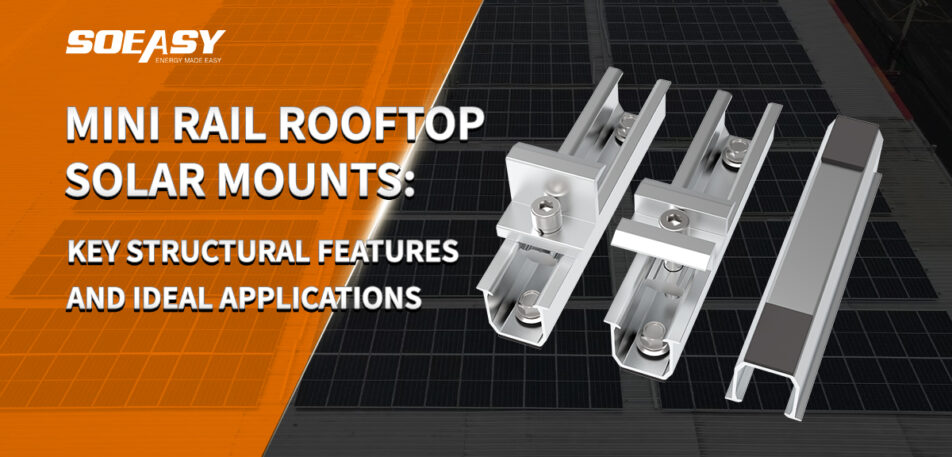
 As distributed photovoltaic installations continue to expand, the demand for lightweight and efficient rooftop mounting solutions has increased significantly. Among the various systems available for metal roofs, ミニレール structures have gained widespread adoption due to their compact design, simplified installation process, and ability to reduce overall project costs.
This blog provides a detailed analysis of the structural attributes of Mini Rail rooftop solar mounting systems and explores the scenarios in which they deliver optimal performance.
Core Structural Components of the Mini Rail System
1. Mini Rail (Short Rail)
The mini rail is a compact aluminum support profile designed for direct mounting on metal roofs.
Key attributes include:
- Short length and streamlined structure
- High-strength aluminum alloy with excellent corrosion resistance
- Direct mounting capability without the need for long rails
2. Roof Fixings (Clamps or Self-Tapping Screws)
Depending on the roof profile, different fixing methods are used, such as trapezoidal sheet clamps or self-tapping screws with EPDM washers.
These fixings ensure:
- Secure attachment to the roofing sheet
- Effective sealing to minimize water ingress
- Compatibility with various metal roof types
3. Module Mid and End Clamps
The clamps are designed to accommodate standard module frame heights (typically 30–40 mm).
Their quick-lock design supports:
- Faster module alignment
- Reduced labor time on site
- Stable and consistent clamping force
4. Fasteners and Anti-Corrosion Accessories
Stainless steel or zinc-coated bolts and nuts are commonly used to maintain long-term structural stability in outdoor environments.
Key Structural Features of Mini Rail Systems
1. Lightweight Configuration
Mini rail systems use significantly less aluminum than traditional long-rail systems.
メリットは以下のとおりです。
- Reduced roof load, ideal for lightweight industrial buildings
- Lower material and logistics costs
2. Simplified Installation
The system eliminates long rails and connectors, resulting in:
- Fewer components to handle
- Shorter installation time
- Reduced alignment and measurement tasks
This makes short rail especially suitable for large-scale rooftop projects that demand high installation efficiency.
3. Cost-Effective Transportation and Storage
Compact packaging enables:
- Lower shipping costs, especially for international deliveries
- Easier stocking for distributors and EPC contractors
- Improved warehouse utilization due to smaller volume
4. Adaptability to Various Metal Roof Types
Mini rail systems are compatible with multiple metal roof profiles, including:
- Trapezoidal metal sheets
- Corrugated sheets
- Standing seam roofs (with suitable adapters)
This adaptability enhances system flexibility across project types and regions.
5. Reliable Structural Stability
Despite its small size, the system maintains structural integrity through:
- Multi-point roof attachment
- Optimized distribution of wind and load forces
- Enhanced resistance in high-wind regions when fixation spacing is planned properly
Application Scenarios for Mini Rail Systems
1. Industrial and Commercial Metal Roofs
Factories and warehouses with trapezoidal or corrugated metal sheets commonly adopt short rail solutions due to:
- Minimal impact on normal production
- Fast installation on standardized roof surfaces
- Long-term reliability under continuous exposure
2. Logistics Centers and Large Commercial Buildings
These roofs usually have consistent metal panel profiles, allowing installers to achieve high installation productivity.
3. Metal Roofs with Good Surface Flatness
Mini rail performs best when the roofing surface is smooth and uniform, enabling:
- Consistent fastening points
- Optimal alignment of solar modules
4. International Markets with Lightweight Roof Structures
Mini rail is widely used in regions such as:
- 日本
- South Korea
- オーストラリア
- Southeast Asia
These markets favor lightweight, fast-deploy systems for distributed solar deployment on thin metal roofs.
Comparison with Traditional Long-Rail Systems
ミニレールの利点
- Lower material consumption
- Faster installation cycle
- Reduced logistics and handling costs
Advantages of Long Rails
- Better for uneven roofs or roofs that require larger spans
- Higher flexibility for module layout adjustments
- More suitable for complex rooftop geometries
In practice, project requirements determine which option is more suitable.
Key Considerations When Selecting a Mini Rail System
For optimal project performance, the following factors should be assessed:
- Type and thickness of the metal roofing sheet
- Local design wind speed and structural load requirements
- Fixation spacing and layout planning
- Waterproofing requirements for long-term roof protection
Proper engineering design ensures compliance with safety and system reliability standards.
Mini rail rooftop solar mounting systems represent a mature, efficient, and cost-effective solution for distributed photovoltaic projects on metal roofs.
Their lightweight structure, simplified installation process, and strong adaptability make them an excellent choice for industrial rooftops, logistics facilities, and international markets where speed and efficiency are manufacturing priorities.
As global demand for distributed solar continues to rise, Mini Rail systems are expected to play an increasingly important role in rooftop PV deployment.
To view more of Soeasy Solar rooftop mounting projects and solution cases, please click the link below:
View SOEASY Rooftop Mounting Projects