English

 Post by
 Introduction: Why Aluminum Alloy Selection Matters for Your Solar Project
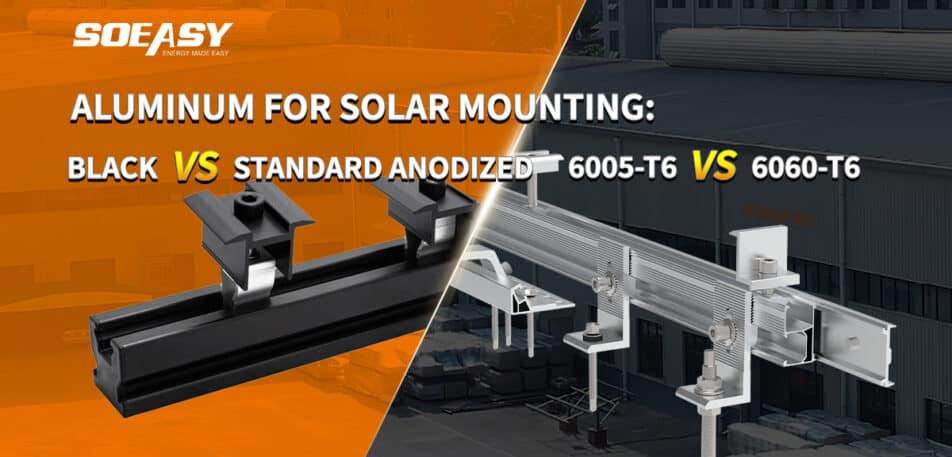
As a leading solar racking manufacturer, we understand that the durability, efficiency, and longevity of your photovoltaic (PV) installation depend heavily on material choice. Aluminum alloys dominate the solar mounting industry due to their strength-to-weight ratio, corrosion resistance, and sustainability. This guide will help you understand two critical decisions: black anodized vs standard anodized aluminum and the difference between 6005-T6 and 6060-T6 alloys for your solar panel mounting system.
Black Anodized Aluminum vs Standard Anodized Aluminum: A Detailed Comparison
What is Anodizing?
Anodizing is an electrochemical process that thickens the natural oxide layer on aluminum, enhancing corrosion resistance, durability, and surface adhesion for paint or sealant.
Standard (Clear) Anodized Aluminum
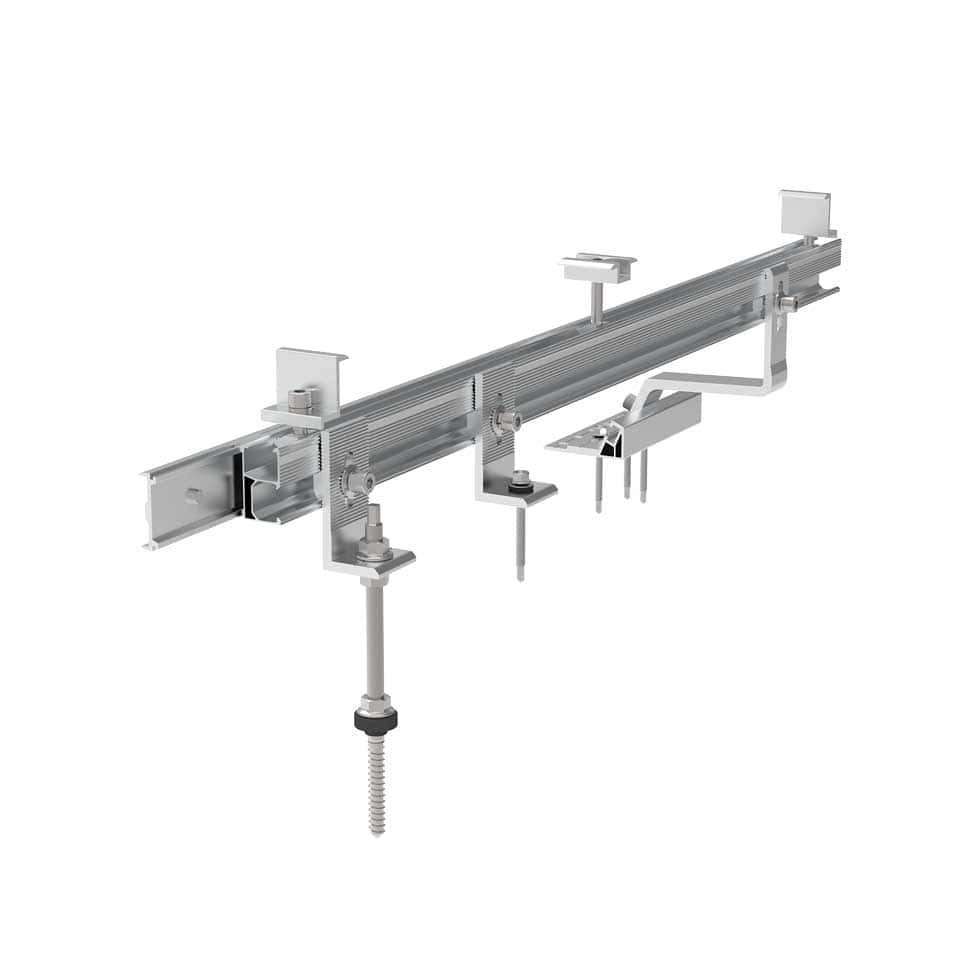
- Appearance: A clear, silver-metallic finish that maintains aluminum’s natural look.
- Performance: Provides excellent corrosion resistance, a hard surface layer, and good wear resistance.
- Solar Racking Application: Widely used for ground-mounted systems, roof mounts, and carport structures where appearance is secondary to function.
- Cost-Effectiveness: Generally more economical than black anodizing, offering robust protection for solar array frameworks.
Black Anodized Aluminum
- Appearance: Achieves a uniform, deep black finish through dye incorporation during or after the anodizing process.
- Enhanced Performance: Offers all the benefits of standard anodizing plus superior UV resistance. The black dye absorbs UV radiation, providing an extra layer of protection for the metal underneath.
- Solar Racking Advantage: The matte black finish reduces glare and blends aesthetically with solar panels, especially for commercial and residential applications. This aesthetic solar mounting solution is popular for architecturally sensitive projects.
- Thermal Considerations: While black surfaces absorb more heat, the anodized layer’s thermal properties and proper system design mitigate any significant impact on performance.
Key Takeaway for Solar Installers: Choose black anodized aluminum for superior UV protection and sleek aesthetics in visible installations. Opt for standard anodized for cost-sensitive or purely utility-focused projects like large-scale solar farms.
6005-T5/T6 vs 6060-T5/T6 Aluminum Alloys: Choosing the Right Strength for Your Solar Mount
Both 6005 and 6060 are extrudable, heat-treatable alloys common in photovoltaic support structures. The “T6” temper denotes solution heat-treated and artificially aged for maximum strength.
6005-T6 Aluminum Alloy
- Strength: Higher mechanical strength and yield strength compared to 6060. Better for load-bearing components.
- 特徴: Excellent structural integrity, good corrosion resistance, and weldability.
- Best For: Primary structural members in solar tracking systems, heavy-duty ground-mounted solar racking, and long-span solar carport structures where high strength is critical to withstand wind and snow loads.
6060-T6 Aluminum Alloy
- Strength: Slightly lower mechanical strength than 6005, but offers excellent extrudability and surface finish.
- 特徴: Superior corrosion resistance, very good formability, and is easier to extrude into complex shapes.
- Best For: Roof-mounted solar racking, clamps, connectors, and secondary framing elements. Its excellent anodizing quality makes it ideal for black anodized solar frames where aesthetics matter.
Comparison Table: Solar Mounting Alloy Selection
| Property | 6005-T6 Alloy | 6060-T6 Alloy |
|---|---|---|
| Tensile Strength | Higher (~260 MPa) | Good (~215 MPa) |
| Yield Strength | より高い | Slightly Lower |
| Extrusion Complexity | 良い | 優良 |
| 耐腐食性 | Very Good | 優良 |
| Typical Solar Use | Main beams, tracking posts | Rails, end clamps, aesthetic components |
How to Choose: Recommendations for Your PV Project
- For Large-Scale Utility Solar Farms: Prioritize cost and strength. Use standard anodized 6005-T6 for the main structure, ensuring maximum durability and load capacity for utility-scale solar mounting.
- For Commercial & Industrial Roofs: Balance strength, weight, and corrosion resistance. A mix of 6005-T6 for primary supports and 6060-T6 for rails and fittings is often optimal. Consider black anodized components for a low-profile look.
- For Residential Solar Installations: Aesthetics and corrosion resistance are key. Black anodized 6060-T6 is an excellent choice for roof-mounted systems, offering a clean look and long-term performance for residential solar panel mounts.
- For Solar Carports and Canopies: Requires high strength for wide spans. 6005-T6 alloy is typically specified for the main structure, with anodizing type (black or clear) chosen based on architectural design.
Conclusion: Partner with a Knowledgeable Solar Racking Manufacturer
Selecting the right aluminum alloy and finish is a critical step in ensuring a durable, efficient, and long-lasting solar power system. By understanding the nuances between black and standard anodizing, and the performance profiles of 6005-T6 vs. 6060-T6 alloys, you can make informed decisions that optimize both performance and cost.
SOEASY Solar has the R&D, design, and production capabilities for solar mounting systems in various materials and processes, providing OEM & ODM services as well as design and implementation capabilities for commercial and industrial solar projects, with a professional team to support your solar mounting projects.
As your trusted manufacturer of photovoltaic mounting systems, SOEASY Solar takes these material factors into account when designing solar mounts and installation solutions. Our expertise ensures that your installation meets all structural, environmental, and aesthetic requirements over a 25-year service life.
Ready to optimize your next solar project? Contact our technical team today for a customized recommendation on the ideal aluminum alloy and finish for your specific site conditions and requirements.お問い合わせ – soeasypv.com