English

 Post by
 As the global transition to renewable energy accelerates, the deployment of photovoltaic (PV) power plants continues to grow, accompanied by steadily increasing investment volumes. Modern PV systems are designed for long-term operation, typically exceeding 25 years, with many now targeting a 30-year lifecycle. Within these systems, the solar mounting structure plays a pivotal role in ensuring long-term reliability.
Functioning as the “skeleton” of the PV array, the mounting system directly affects structural stability, operational safety, and overall energy yield—factors that in turn influence the return on investment. Among the various elements that determine the lifespan of a mounting system, corrosion resistance is particularly critical. Corrosion can compromise material strength, loosen connections, and cause deformation, potentially resulting in safety hazards and substantial economic losses.
This article examines the impact of corrosion on PV mounting structures, evaluates the performance of commonly used anti-corrosion materials, and provides practical guidance for assessing corrosion-resistant systems. The insights offered aim to support investors, EPC contractors, and distributors in making evidence-based decisions regarding long-term PV infrastructure.
Why Corrosion Resistance Matters for PV Mounting Systems
For PV power plants designed to operate for 25–30 years, corrosion resistance is not an optional advantage—it is a foundational requirement. Its importance can be summarized as follows:
1. Corrosion weakens structural strength
Corrosion causes the metal surface to thin gradually, reducing mechanical strength.
Once the load-bearing capacity decreases beyond a safe threshold, the mounting structure may deform, crack, or collapse.
2. Corroded fasteners compromise system stability
A PV system includes rails, posts, beams, and a large number of bolts and clamps.
If any single connection point fails due to corrosion, the stability of the entire module row may be affected.
3. Harsh environmental conditions demand high corrosion resistance
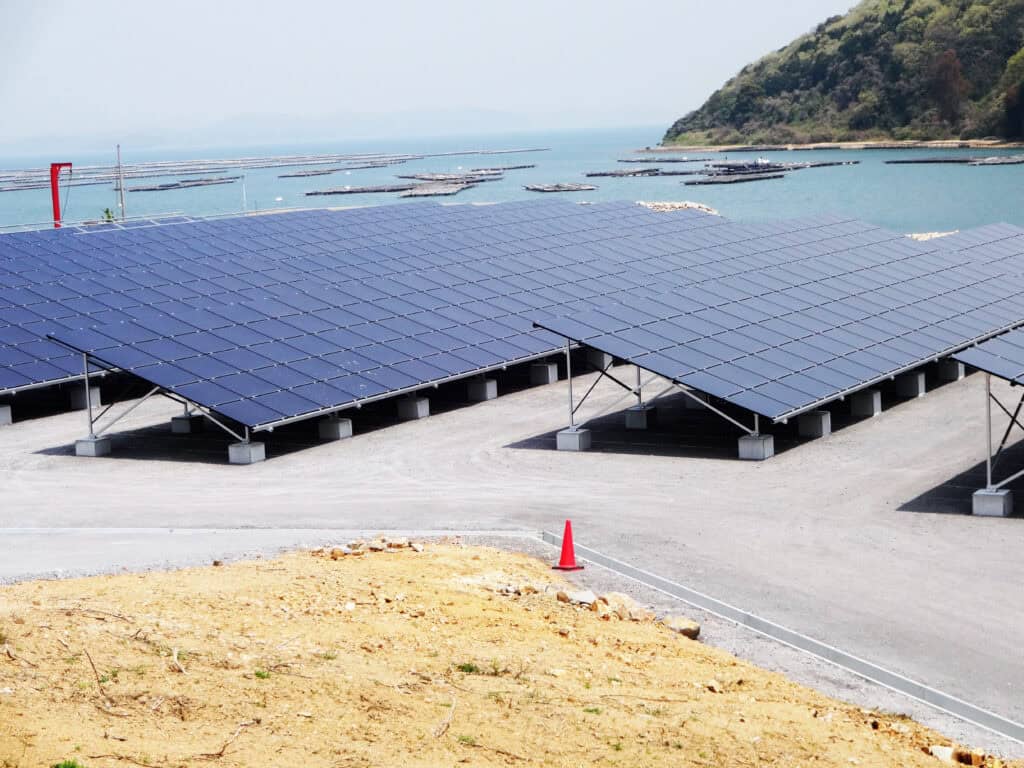
Locations such as coastal areas and wetlands require mounting systems with superior anti-corrosion performance.
If not, the system’s service life will be significantly reduced due to:
- Metal thinning
- Loss of load-bearing strength
- Weakening of connection points
- Increased risk of module slippage or system collapse
4. Corrosion resistance directly impacts LCOE
High-performance materials can significantly reduce:
- Maintenance costs
- Part replacement costs
- Downtime losses
- Safety and insurance risks
A corrosion-resistant mounting system contributes directly to a higher Levelized Cost of Energy (LCOE) return.
How Corrosion Impacts the Structural Safety of Solar Mounting Systems
1. Atmospheric corrosion
Caused by humidity, rain, and oxygen.
Common symptoms include surface oxidation, rust expansion, and metal thinning.
2. Salt-spray corrosion
Coastal winds contain a high concentration of chloride ions, making salt-spray exposure the most destructive corrosion environment in the PV industry.
Ordinary galvanized steel corrodes extremely quickly under such conditions.
3. Electrochemical corrosion
Occurs when two different metals come into contact.
The potential difference accelerates corrosion of the more active metal.
Example: carbon steel in contact with stainless steel is prone to galvanic corrosion.
4. Crevice corrosion
Found in bolt holes, clamp gaps, and areas where water accumulates.
Due to uneven oxygen availability, corrosion inside crevices progresses faster than on exposed surfaces.
Common Anti-Corrosion Materials and Surface Treatments for PV Mounting Systems
1. Aluminum Alloy (AL6005-T5)
- Naturally forms a dense oxide layer
- 優れた耐食性
- Lightweight and easy to install
优点: Long service life, ideal for humid and coastal regions
アプリケーション: Aluminum roof mounting systems, aluminum carport structures
2. Hot-Dip Galvanized Steel (HDG Steel)
- Protected by a molten-zinc coating
- Typical zinc layer: 80–100 μm
- Service life: 25–35 years
优点: Cost-effective, widely used for ground-mount systems
デメリット Cut edges must be properly treated to avoid pitting corrosion
3. Zinc-Aluminum-Magnesium (Zn-Al-Mg) Coated Steel
- Offers 5–10 times the corrosion resistance of standard galvanized steel
- Self-healing capability allows cut edges to form a protective film
- Ideal for high-salt, high-corrosion environments
优点: Top-tier corrosion resistance, significantly longer lifespan
アプリケーション: Coastal ground-mount systems, high-corrosion rooftop installations
4. Stainless Steel (304 / 316)
- Used primarily for bolts, fasteners, and clamps
- 316 stainless steel performs far better than 304 in salt-spray environments
优点: High strength and excellent durability
デメリット High cost; unsuitable as the main structural material
Material Comparison Overview
| 材料 | Service Life | Corrosion Protection Needs | Overall Cost | Recommendation |
|---|---|---|---|---|
| Standard Galvanized Steel | 5–10 years | Frequent maintenance | Low upfront, high long-term | ★ |
| 溶融亜鉛めっき鋼 | 25–35 years | 適度 | 中くらい | ★★★★ |
| 亜鉛アルミニウムマグネシウム鋼 | 30–40 years | Strong self-healing ability | Medium-high | ★★★★★ |
| アルミニウム合金 | 25–40 years | メンテナンスの手間が少ない | より高い | ★★★★ |
How to Evaluate the Corrosion Resistance of Solar Mounting Systems
Industry professionals typically inspect corrosion resistance using the following methods:
1. Salt-spray testing (ISO 9227)
Evaluates material durability under simulated salt-spray exposure.
The longer a material withstands testing, the better its corrosion resistance.
2. Coating thickness inspection
For materials such as hot-dip galvanized (HDG) steel, coating thickness plays a critical role in corrosion resistance.
Standard HDG coatings typically range between 80–100 μm, though coastal or industrial applications may require thicker coatings.
Thickness is measured using conductivity meters or magnetic gauges to ensure compliance with design standards.
3. Field-environment testing
For example:
- Coastal 500-hour salt-spray simulation
- Ammonia corrosion testing for agricultural PV applications
- High-humidity tests: Evaluate material stability in tropical regions or wet climates.
4. Material composition analysis
Verifies whether materials come from certified suppliers and comply with international standards.
Third-party certifications may include:
- TÜV: Product safety and performance validation
- SGS: Material quality, coating uniformity, and corrosion resistance testing
- ISO quality management systems: Ensures consistent production quality and traceability
5. Engineering design verification
Ensures compatibility between materials and environmental conditions, including:
- Grounding design
- Drainage design
- Avoiding crevice accumulation
- Matching fastener materials with structure materials
Different installation environments require specific material recommendations—for example, aluminum or Zn-Al-Mg steel for coastal projects, and enhanced drainage design for rooftop systems.
Your Trusted Partner for Solar Mounting Solutions
A photovoltaic power plant is a long-term investment of at least 25 years. As the backbone of the system, the mounting structure’s corrosion resistance determines the plant’s safety, reliability, and economic performance.
Selecting materials with superior corrosion resistance not only reduces maintenance needs but also ensures stable operation in complex environments such as high humidity, salt spray, high temperatures, or ammonia exposure.
As a professional manufacturer and supplier of PV mounting systems, Soeasy Solar maintains strict control over materials, surface treatments, and structural design—delivering reliable, long-lasting mounting solutions for global projects.
learn more about our solar mounting solutions worldwide: Soeasy Solar Projects