English

 Post by
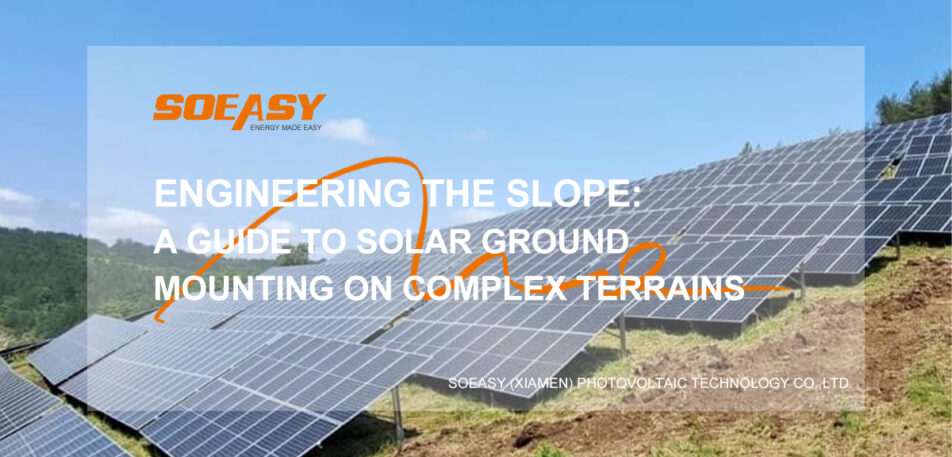
 For EPC contractors and solar project teams developing photovoltaic installations on challenging landscapes, selecting the appropriate solar mounting system is critical for structural integrity, economic viability, and long-term performance. Complex terrains—including steep slopes, undulating hillsides, rocky ground, and uneven surfaces—demand specialized engineering and equipment. This guide provides key considerations and recommendations for hillside solar mounting solutions and terrain-specific solar racking.
1. Site Assessment and Geotechnical Analysis
Before selecting a mounting system, conduct a thorough topographical and geotechnical survey. Key factors include:
- Slope gradient and uniformity – Measured in degrees or percentage.
- Soil composition and bearing capacity – Critical for foundation design.
- Water drainage and erosion risks – Impacts foundation stability and stormwater management.
- Access and logistics – Affects material transport and installation feasibility.
2. Mounting System Types for Sloped and Rugged Terrain
a. Ground-Screw Foundations with Adaptive Racking
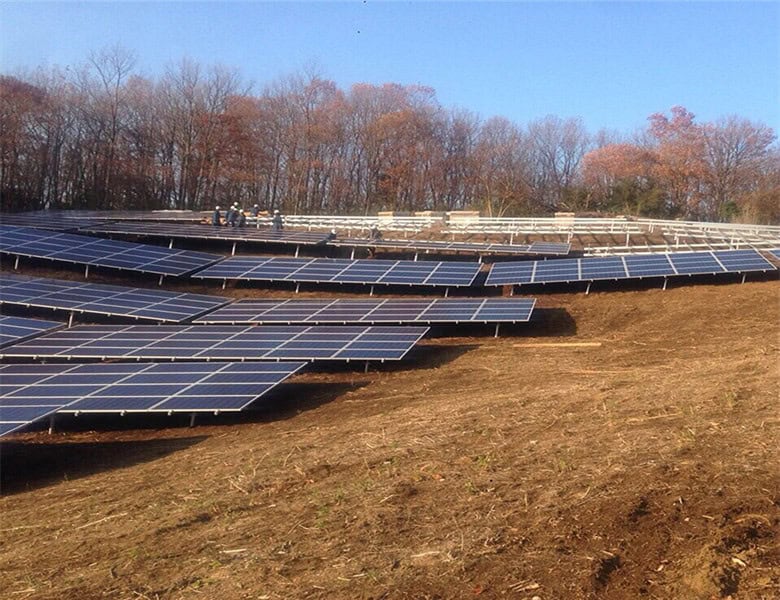
Ideal for softer soils and moderate slopes, ground screws offer quick installation and minimal site disturbance. Systems with adjustable tilt legs and variable-length posts accommodate slope changes. Look for slope-adapting solar racking systems that allow sequential height adjustment across rows.
b. Drilled Pier Foundations with Customized Bracing
For rocky or unstable hillsides, drilled concrete piers provide robust anchoring. Pair with terrain-following solar mount structures that use hinged connections or multi-point bracing to follow natural contours. This approach supports high-wind and seismic-resistant solar structures.
c. Rail-Based vs. Rail-Less Systems
- Rail-based systems: Offer flexibility in module placement and easier string alignment on undulating land.
- Rail-less systems: Reduce material and installation time, but require more precise planning on variable slopes.
3. Engineering and Design Considerations
a. Slope-Specific Load Calculations
Wind uplift, snow loads, and shear forces behave differently on slopes. Ensure systems comply with ASCE 7, IBC, and local codes. Steep-incline photovoltaic mounting often requires additional lateral bracing and backward framing.
b. Corrosion Resistance and Material Selection
Hillside sites may have microclimates with higher moisture or chemical exposure. Hot-dip galvanized steel or aluminum alloy solar mounts are recommended for corrosion-resistant hillside solar installation.
c. Drainage and Environmental Integration
Design should incorporate natural water flow paths. Retaining walls or terraces may be needed for severe slopes. Erosion-controlled solar mounting designs help maintain site stability.
4. Installation and Logistics Tips
- Pre-assembled modules: Reduce onsite labor in difficult-to-access areas.
- Terrain-specific installation equipment: Mini excavators, tracked carriers, or cable lifts may be necessary.
- Phased installation plans: Align work with weather windows and site conditions.
5. Recommended Systems for Specific Scenarios
| Terrain Type | Recommended Mounting System | 主要优势 |
|---|---|---|
| Moderate, even slopes | Adjustable ground screw system | Quick installation, moderate slope adaptation |
| Rocky, uneven hillsides | Drilled pier with hinged racking | High stability, custom pier depths |
| Rolling, irregular terrain | Rail-based with variable post heights | Continuous contour following |
| Steep slopes (>20°) | Engineered terraced system with retaining structures | Step-like design, integrated drainage |
Featured Product: SOEASY Solar Ground Mount Systems
For projects on sloped and complex terrain, SOEASY Solar offers specialized ground-mounted solutions. The Sloping Terra FLEX system is an adaptive, versatile solar mounting system engineered to tackle the challenges of uneven landscapes, including slopes and flat areas. Whether deploying a solar PV plant in hilly regions or open fields, this innovative system ensures seamless installation and optimal performance across diverse environments.
A key advantage of the Sloping Terra FLEX is its pre-assembled design, which increases on-site construction efficiency by 35%-45%. This feature significantly reduces installation time and labor costs by minimizing the need for complex component assembly in the field. The system arrives ready for swift, straightforward deployment, even in hard-to-access locations.
The Sloping Terra FLEX is more than a mounting system—it’s an intelligent, adaptive solution that empowers solar projects to thrive in any terrain. By delivering unmatched flexibility, durability, and efficiency, it brings your solar vision to life, ensuring robust performance and a strong return on investment for projects on challenging topography.
结论
Choosing the right solar mounting structure for complex topography requires balancing engineering rigor, cost, and environmental factors. Collaborate with manufacturers experienced in customized solar mounting for rugged landscapes early in the design phase. A well-selected system not only ensures safety and compliance but also optimizes energy yield and project ROI over the system’s lifetime.