English

 Post by
 The Growing Importance of Agri-PV Systems
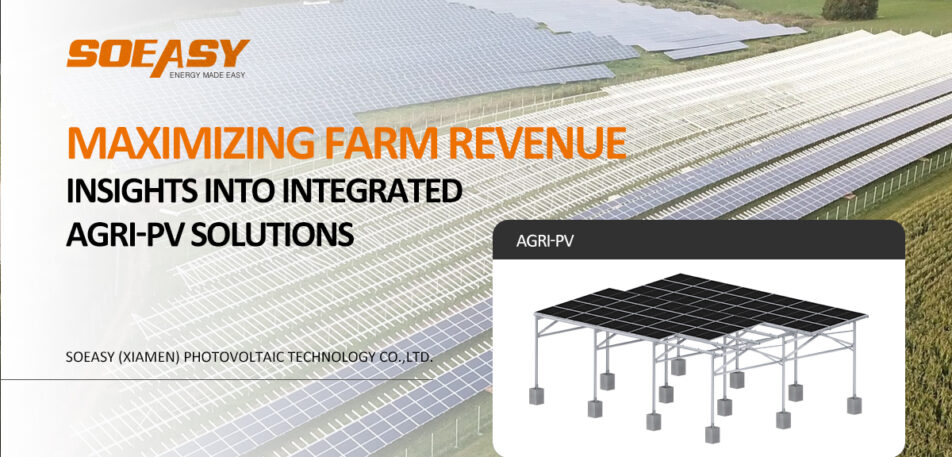
The combination of agriculture and photovoltaics, known as Agri-PV or agrivoltaics, is becoming a major global trend in farming. Agri-PV not only generates clean electricity but also improves overall land use efficiency. Facing rising energy costs and fluctuating agricultural income, more farms are now exploring the “agriculture plus solar” model. This article explores how Agri-PV helps farms increase long-term revenue and highlights key factors in mounting system design.
What Are Integrated Agri-PV Solutions?
Agri-PV refers to the practice of growing crops and generating solar power on the same agricultural land, achieving dual use of a single plot. Typical system structures include high-ground-clearance fixed mounts, adjustable tilt systems, single-axis tracking Agri-PV arrays, and greenhouse-style structures. Common agricultural applications range from vegetable farming and tea or fruit orchards to pasture grazing and medicinal herb cultivation.
How Agri-PV Systems Increase Farm Revenue
Agri-PV systems boost farm revenue through multiple channels. Farms can generate additional solar power income either by consuming the electricity on-site to reduce utility bills or by selling excess power to the grid. Land utilization improves significantly because the same acreage now produces both food and energy, raising the economic value per unit of land.
Operating costs also decrease. Solar power can run irrigation systems, refrigeration equipment for harvest storage, and greenhouse climate controls. Beyond direct savings, the steady electricity revenue helps smooth out seasonal income fluctuations common in agriculture. This stability makes farms more resilient to market risks and commodity price volatility.
The Role of Mounting System Design in Agri-PV Projects
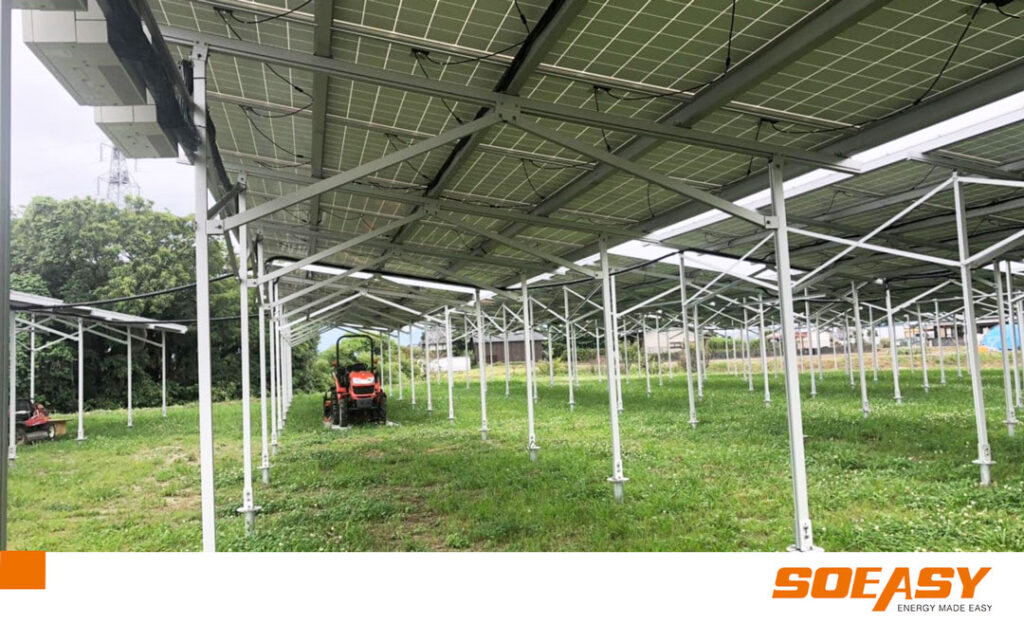
Mounting system design is critical to Agri-PV success. Ground clearance must be high enough for farm machinery to pass underneath, workers to move freely, and crops to grow properly. Typical clearances range from 2.5 to 5 meters depending on the equipment used.
Sunlight distribution requires careful balancing. The mounting layout must satisfy both PV power generation efficiency and crop light needs. Engineers often adjust panel spacing and orientation to create optimal shading patterns. Structural stability is another concern because open farm fields often experience stronger winds than urban or forested areas. Mounting systems need high wind resistance and stable foundation designs.
Corrosion resistance cannot be overlooked. Agricultural environments have high humidity and exposure to fertilizers, which accelerate metal corrosion. Recommended materials include Zn-Al-Mg coated steel, hot-dip galvanized steel, and stainless steel connectors for critical joints.
Crop Compatibility and Solar Shading Strategies
Not all crops thrive under solar panels. Shade-loving or semi-shade crops such as lettuce, spinach, strawberries, and tea are most suitable for Agri-PV systems. Managing shade ratios is essential. Different shading percentages affect crop growth differently, and common designs target a 30 to 50 percent light transmittance rate.
Seasonal optimization adds another layer of complexity. By adjusting panel angles and layouts according to the season, farmers can balance summer shade to reduce heat stress with winter light access to support continued growth.
Foundation and Terrain Considerations
Ground screw foundations work very well for Agri-PV because they minimize land disturbance and install quickly, preserving soil structure for farming. Terrain-adaptive structures are necessary for mountain farms, where arrays must follow changing slopes while maintaining stability and proper drainage. Water drainage and soil protection must also be considered. Mounting systems should never block natural drainage patterns or accelerate soil erosion.
Challenges in Agri-PV Projects
Balancing agriculture and energy generation remains the central challenge. Maximizing power output often conflicts with maximizing crop yield. Higher structural requirements add complexity because Agri-PV mounts are typically taller and more robust than standard ground-mounted systems. This increases material and engineering costs. Project customization complexity is another hurdle. Different crops and farm environments require tailored designs, and no single solution fits all situations.
Future Trends in Integrated Agri-PV Solutions
Smart agriculture integration is already emerging. Combining IoT sensors, smart irrigation controls, and AI-based farm management with Agri-PV systems allows real-time optimization of both energy and crop production. Bifacial modules and tracking systems are gaining popularity because they boost power generation while improving light distribution to crops below. Government incentives and sustainable farming policies in many countries continue to drive Agri-PV adoption, making it a key direction for low-carbon agriculture.
Frequently Asked Questions: Common Agri-PV Design Questions
What is the ideal ground clearance for Agri-PV?
Between 2.5 and 5 meters, depending on the farm machinery used.
Which crops work best under solar panels?
Semi-shade crops like lettuce, spinach, strawberries, and tea.
What shade ratio is recommended?
Between 30 and 50 percent light transmittance.
Are tracking systems worth the cost for Agri-PV?
Yes, for larger farms. They improve both energy yield and crop light distribution.
What foundations are best for agricultural land?
Ground screws, because they minimize soil disturbance and install quickly.
Agri-PV as a Long-Term Revenue Strategy
Agri-PV is not just an energy solution. It is a farm revenue upgrade strategy. Proper mounting system design determines the long-term stability and economic value of any agricultural photovoltaic project. SoEasy Solar provides professional Agri-PV mounting solutions featuring high-strength structures, terrain adaptability, and corrosion-resistant materials. We help farmers and landowners achieve dual returns from agriculture and clean energy.