English

 Post by
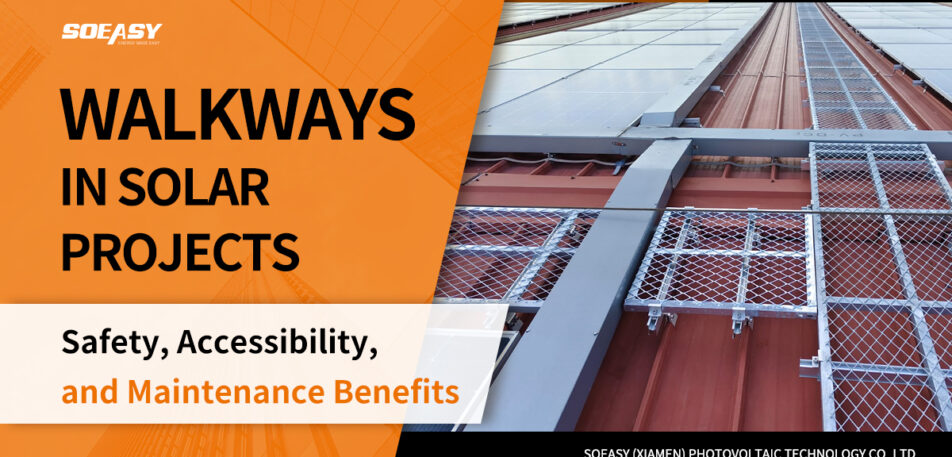
 In large-scale ground-mounted plants and commercial rooftops, walkways are often overlooked during the design phase. However, this oversight directly impacts O&M safety, maintenance efficiency, and long-term system reliability. As solar farms expand, standardized walkway systems have become an industry standard rather than an optional feature. This blog explores the design value of walkways in solar projects and their practical applications across various PV scenarios.
What Are Walkways in Solar PV Systems?
Walkways in solar projects are dedicated access structures installed within PV arrays. They allow maintenance personnel to walk safely, inspect equipment, and perform cleaning or repair operations. These systems are typically placed between ground-mounted arrays, on rooftop access zones, around electrical equipment, and in high-density module layouts.
A well-designed walkway provides a stable and anti-slip surface. Consequently, it protects both the staff and the sensitive electrical components of the plant.
Why Walkways Are Essential in Solar Projects
Walkways in solar projects are not merely convenience items; they are critical infrastructure. They enhance safety, boost efficiency, and protect the system.
1. Safety Improvement
Walkways prevent workers from stepping directly on modules or exposed cables. This reduces the risk of electric shock and physical injury. On rooftops, they prevent falls by providing secure paths with proper edge protection. Furthermore, the anti-slip designs ensure safe passage even during rain or snow.
2. Maintenance Efficiency
With well-placed walkways, technicians can quickly access any array section. This speed reduces the time needed for routine inspections and emergency repairs. Consequently, faster access lowers overall O&M costs and minimizes system downtime.
3. System Protection
Direct foot traffic is a leading cause of micro-cracks in solar modules. Walkways eliminate this risk by keeping personnel off the panels. They also protect support structures and keep cables secured, reducing the risk of accidental disconnections.
Types of Solar Walkway Systems
Selecting the right walkway depends on the specific environmental and structural demands of the site. Below are the three primary types of walkways in solar projects.
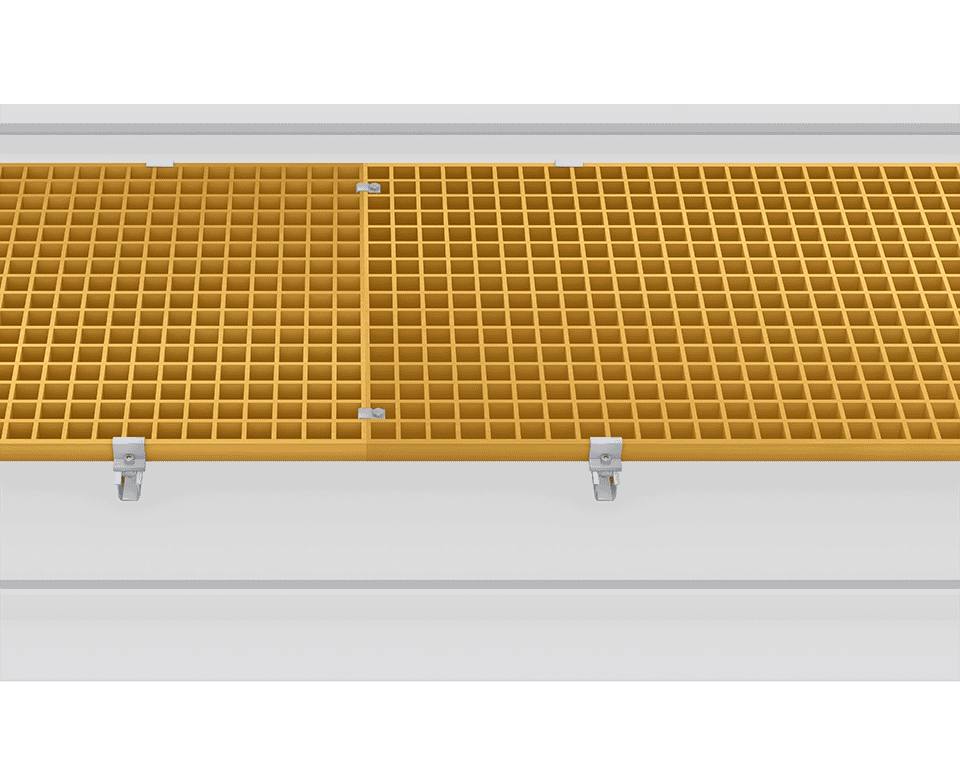
Fiberglass Grating Walkway (FRP Walkway)
FRP walkways are made from glass fiber-reinforced composites. They offer a unique combination of properties:
- Lightweight: Easy to transport and install on any structure.
- Corrosion Resistance: Ideal for coastal and high-humidity zones.
- Electrical Insulation: Enhances overall plant safety.
- Anti-Slip Surface: Excellent for rainy or snowy regions.
Thus, they are perfect for coastal solar plants, chemical facilities, and projects with strict safety requirements.
Steel Grating Walkway
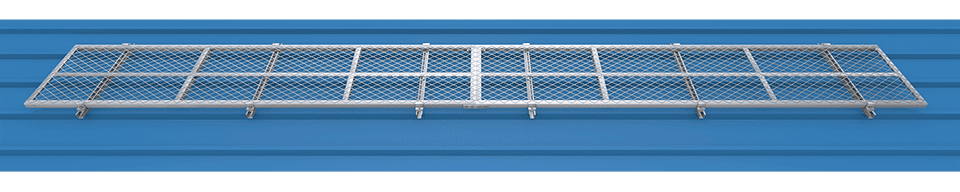
Steel grating walkways are typically hot-dip galvanized or coated with Zn-Al-Mg.
- High Strength: Capable of supporting heavy equipment.
- Structural Stability: Maintains integrity under high winds.
- Drainage: Open design prevents water and snow buildup.
- Cost-Effective: Economical for large-scale applications.
These walkways are ideal for large-scale power plants, high-wind regions, and industrial projects.
Aluminium Alloy Walkway
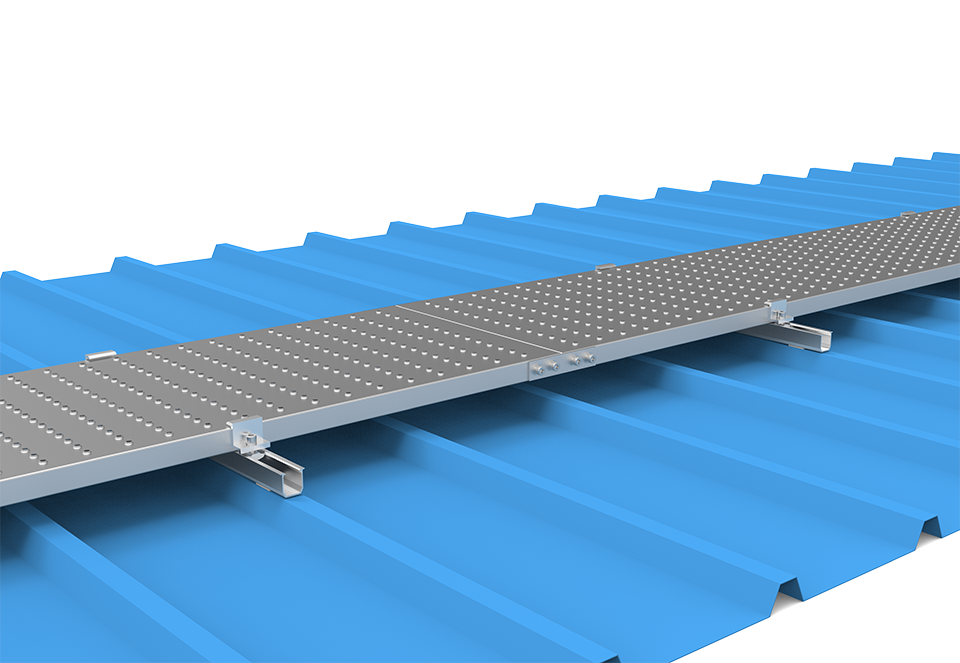
Aluminium walkways utilize high-strength aluminum to provide a premium solution.
- Ultra-Light: Reduces load on roof structures.
- Corrosion Resistance: Naturally withstands harsh weather.
- Maintenance-Free: Requires minimal upkeep.
- Aesthetic: Provides a clean, professional look.
Therefore, they are the preferred choice for commercial rooftops, distributed generation, and weight-sensitive structures.
For detailed specifications on materials and integration, explore the SoEasy Solar walkway product page.
Design Considerations for Solar Walkways
To be effective, walkways in solar projects must meet strict engineering standards. Designers must evaluate the following factors:
Load-Bearing Capacity
The walkway must support the weight of workers and their tools. Furthermore, it must withstand snow accumulation and wind forces. The structure must also resist long-term fatigue to ensure safety over the plant’s 25-year lifespan.
Anti-Slip Performance
Safety depends on traction. The surface texture must be designed to prevent slipping, even in icy conditions. Proper drainage holes are also necessary to avoid water pooling.
Integration with Mounting Systems
Walkways should connect seamlessly with pillars and rails. This ensures structural continuity and prevents interference with module layout. The best designs incorporate walkways as integral parts of the mounting structure.
Corrosion Resistance
Exposure to moisture and UV rays demands robust materials. Hot-dip galvanizing protects steel, while Zn-Al-Mg coatings offer enhanced edge protection. Additionally, we recommend stainless steel fasteners to prevent galvanic corrosion.
Width and Layout Design
The walkway width must accommodate passage for single or two-person teams. For equipment transport, wider sections are required. Space for cleaning operations should also be included in the layout.
Installation Benefits of Walkway Systems
Implementing walkways in solar projects offers significant immediate and long-term advantages. Firstly, they enable faster maintenance by providing direct routes to any component. Consequently, technicians can quickly locate and fix issues without navigating obstacles. Secondly, they prevent system damage by stopping foot traffic on modules. This reduces replacement costs and preserves power output. Finally, they help meet international safety standards, which is crucial for project financing and insurance.
Common Mistakes in Walkway Design
Many projects suffer from poor walkway planning. Here are the most frequent errors:
- Inadequate Width: Failing to reserve enough space for safe movement.
- No Anti-Slip Features: Creating hazardous conditions in wet weather.
- Structural Conflicts: Designing walkways that clash with mounting components.
- Wrong Materials: Choosing materials that corrode quickly in the specific environment.
- Poor Drainage: Allowing water to accumulate, which speeds up deterioration.
Material Selection for Long-Term Durability
Choosing the right material is critical for long-term performance. Here is a quick guide:
- Aluminium Alloy: Best for rooftops due to its light weight and corrosion resistance.
- Hot-Dip Galvanized Steel: Excellent for large ground mounts due to its strength and moderate cost.
- Zn-Al-Mg Coated Steel: Ideal for high-corrosion environments like coastal zones and agricultural projects due to its self-healing properties.
Integration with O&M Strategy
Integrating walkways into the O&M plan maximizes their value. They support predictive maintenance by allowing frequent access for condition monitoring. This reduces unplanned downtime. Moreover, they improve cleaning efficiency by providing paths for cleaning equipment. Cleaner modules generate more power, boosting revenue. Finally, they facilitate emergency planning, allowing rapid response to faults and minimizing production losses.
Frequently Asked Questions: Walkways in Solar Projects
Are walkways mandatory for all solar projects?
Not all, but they are highly recommended for large ground mounts and commercial rooftops with regular maintenance needs.
What is the best material for rooftop walkways?
Aluminium alloy is usually preferred due to its lightweight and corrosion-resistant properties.
How wide should a walkway be?
Typically, 400-600mm for a single person. For two-person traffic or equipment, 800mm or more is necessary.
Can I retrofit walkways to an existing plant?
Yes. Most systems can be attached to existing structures using compatible brackets.
Does SoEasy Solar provide walkway solutions?
Yes. We offer ground mount systems, rooftop maintenance paths, and anti-slip modular designs.
Walkways as a Core Part of PV System Design
Walkways in solar projects are far more than simple accessories. They are essential components that drive safety, efficiency, and longevity. Whether you choose FRP for corrosion resistance, steel for heavy loads, or aluminum for lightweight roofs, the right system protects your investment.
SoEasy Solar provides integrated mounting and maintenance access solutions. We offer ground mount walkways, rooftop maintenance paths, and anti-slip modular designs. Our goal is to help you build safer and more efficient power plants.
Click here to contact our engineering team for designs that meet your project requirements.