English

 Post by
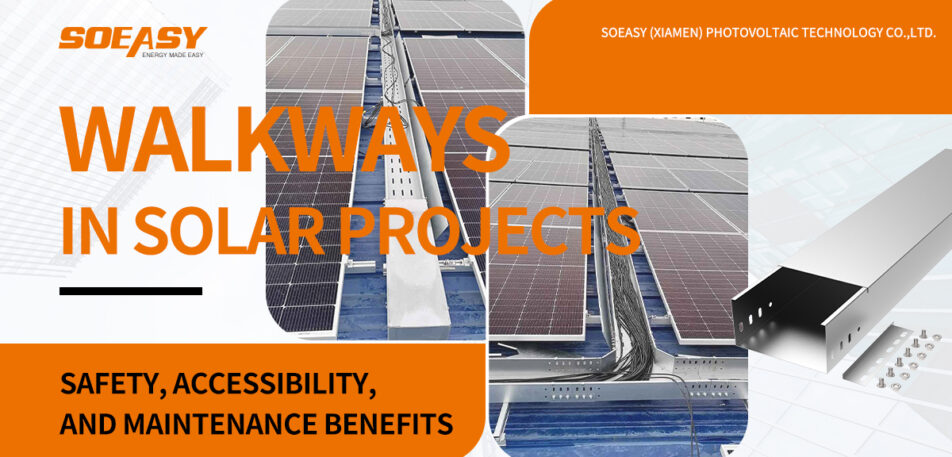
 In photovoltaic systems, solar modules, inverters, and mounting structures usually receive the most attention. However, the cable management system is equally critical to project success. Cable trays play an essential role in large-scale ground-mounted power plants and commercial and industrial rooftop projects. They directly affect electrical safety, overall system reliability, and long-term operation and maintenance efficiency. This article systematically explains the role and value of cable trays in solar PV systems.
What Are Cable Trays in Solar PV Systems?
A cable tray is a structural system designed to support, guide, and protect photovoltaic cables. These trays are typically installed on ground mounting structures, rooftop mounting systems, and between inverters and combiner boxes. The main functions of cable trays include supporting both DC and AC cables, protecting cables from mechanical damage such as abrasion or crushing, providing organized and clearly defined cable routing paths, and improving overall system aesthetics and maintainability. Without proper cable trays, even the best-designed solar array can suffer from electrical faults and difficult maintenance.
Types of Cable Trays Used in Solar Projects
Ladder Type Cable Tray
Ladder type cable trays are the most common variety used in solar projects. The open structure provides excellent heat dissipation, which is important for high-current DC cables. These trays are particularly well suited for large-scale ground-mounted power plants where long cable runs are typical.
Perforated Cable Tray
Perforated cable trays feature a series of holes across the bottom surface. This design balances cable support with partial protection against falling objects. Perforated trays are commonly used in commercial and industrial rooftop installations where cable routing flexibility is valued.
Wire Mesh Cable Tray
Wire mesh cable trays offer lightweight construction with remarkable installation flexibility. The mesh design allows cables to enter and exit at any point along the tray, making these trays ideal for complex or irregular cable routing paths. However, mesh trays provide less mechanical protection than solid alternatives.
Solid Bottom Cable Tray
Solid bottom cable trays feature a fully enclosed bottom surface that offers the highest level of cable protection. These trays are specified for demanding environments where cables face risks from debris, moisture, or chemical exposure. They are less common in standard solar projects but may be required for specialized industrial applications.
Why Cable Trays Are Critical in PV Systems
Electrical Safety Protection
Cable trays protect cables from abrasion against sharp edges on mounting structures. They prevent insulation damage that could lead to short circuits or ground faults. By keeping cables securely in place, trays significantly reduce electrical fire risks.
System Reliability Improvement
Stable cable support prevents sagging or tension that could pull connections loose over time. Trays also shield cables from environmental factors such as wind-induced movement, temperature changes, and physical impacts. This protection directly translates to higher system availability.
Organized Cable Management
Proper cable separation is essential. DC cables from the solar array must be routed separately from AC cables going to the grid. Cable trays provide physical separation that reduces electromagnetic interference between power circuits and communication cables. Organized routing also simplifies troubleshooting when issues arise.
Easier Maintenance and Inspection
When cables are neatly arranged in trays, maintenance teams can quickly locate specific circuits. Inspection becomes faster and safer because cables are accessible without crawling through dense equipment. This efficiency reduces both scheduled maintenance time and emergency repair duration.
Integration of Cable Trays with Mounting Systems
Ground Mount Systems Integration
In ground-mounted projects, cable trays are typically fixed to front pillars, rear pillars, or horizontal beams. This integration creates a unified structural system where cables follow the same support network as the modules themselves. Proper integration reduces material costs and installation time.
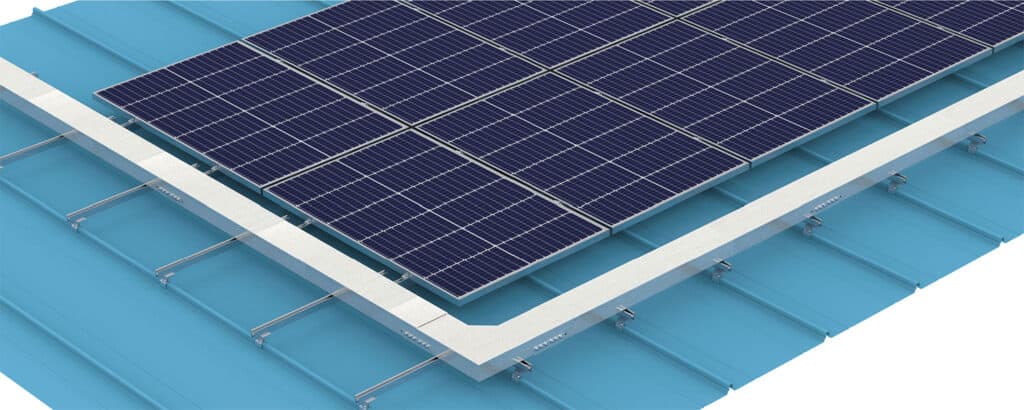
Rooftop System Integration
On rooftops, cable trays run along roof rails or support structures. The trays must be positioned to avoid interfering with roof waterproofing membranes. Careful routing prevents concentrated loads that could damage roofing materials.
Floating PV Applications
Floating photovoltaic systems present unique challenges for cable trays. Water exposure requires waterproof and corrosion-resistant designs. Specialized floating cable management systems keep cables elevated above water levels while maintaining flexibility for wave-induced movement.
Material Selection for Cable Trays
The table below compares the most common cable tray materials used in solar PV applications.
| Material | Key Characteristics | Best Applications |
|---|---|---|
| Hot-Dip Galvanized Steel | High strength, economical, durable | Large-scale ground-mounted power plants |
| Aluminum Alloy | Lightweight, excellent corrosion resistance | Rooftop systems, coastal installations |
| Stainless Steel (304/316) | Superior corrosion resistance, high durability | High-humidity, high-salt, or chemical environments |
Hot-Dip Galvanized Steel
Hot-dip galvanized steel cable trays offer excellent strength at an economical price point. The thick zinc coating provides reliable corrosion protection for most inland and suburban environments. These trays are the standard choice for large-scale ground-mounted projects where cost and strength are primary considerations.
Aluminum Alloy
Aluminum cable trays weigh significantly less than steel equivalents. The natural oxide layer on aluminum provides excellent corrosion resistance without additional coating. Aluminum is particularly well suited for rooftop installations where dead load must be minimized, and for coastal regions where salt spray is present.
Stainless Steel (304 / 316)
Stainless steel cable trays deliver the highest level of corrosion resistance. Grade 316 stainless steel is recommended for aggressive environments such as coastal zones with salt spray, industrial areas with chemical emissions, and floating PV installations. The higher material cost is justified by extended service life and reduced maintenance.
Design Considerations in Solar Cable Tray Systems
Load Capacity
Cable trays must support the weight of all installed cables without excessive deflection. Wind loads and snow loads acting on the cables themselves must also be considered, particularly for exposed tray runs in open terrain. Undersized trays can deform under load, damaging cables and creating safety hazards.
Cable Separation Design
Proper separation between DC and AC cables reduces the risk of electromagnetic interference. Communication cables for monitoring and control systems require additional separation to maintain signal integrity. Design standards typically specify minimum separation distances between different circuit types.
Expansion and Flexibility
Cable trays must accommodate thermal expansion and contraction. Long tray runs require expansion joints to prevent buckling or separation. On uneven terrain, tray systems need flexibility to follow ground contours while maintaining cable support continuity.
Corrosion Protection
Corrosion protection is critical for long-term performance. Zn-Al-Mg coated steel offers superior edge protection compared to traditional galvanizing. Hot-dip galvanizing provides reliable protection for standard environments. Stainless steel eliminates corrosion concerns entirely for the most demanding applications.
Installation Best Practices
Proper Support Spacing
Support spacing must be close enough to prevent cable sagging between supports. Typical spacing ranges from 1.5 to 3 meters depending on cable weight and tray type. Excessive spacing allows cables to droop, creating stress points at connection terminations.
Secure Fastening Systems
Trays must be securely fastened to their supports using appropriate clamps and brackets. Wind-induced vibration can loosen fasteners over time if they are not properly torqued and secured with locking mechanisms. Loose trays create noise and abrasion points that damage cable insulation.
Grounding and Bonding
All cable trays should be properly grounded to create an equipotential bonding system. This grounding protects against electric shock hazards and provides a safe path for fault currents. Ground continuity must be maintained across all tray sections and connections.
Weather Protection
Cable trays in exposed outdoor locations face sun, rain, and temperature extremes. UV-resistant materials and coatings protect plastic components. Drainage holes prevent water accumulation in solid-bottom trays. Heat dissipation must be sufficient to prevent cable overheating in direct sunlight.
Common Mistakes in Cable Tray Design
Ignoring wind loads on cable trays is a frequent oversight. Trays in open areas can deform or detach under high winds if not adequately supported. Mixing DC and AC cables in the same tray without separation increases the risk of electromagnetic interference and complicates fault tracing. Using inappropriate materials for the environment leads to premature corrosion and costly replacement. Failing to plan maintenance access routes around trays makes inspections difficult and time-consuming.
Benefits of Well-Designed Cable Tray Systems
A well-designed cable tray system delivers multiple benefits. System safety improves through reduced fire and shock risks. Cable service life extends by eliminating abrasion, overheating, and environmental degradation. Maintenance costs decrease because organized cables are faster to inspect and repair. Overall power plant reliability increases through the elimination of cable-related faults. Construction efficiency improves because structured cable routing simplifies installation sequencing.
Frequently Asked Questions: Cable Trays in Solar PV Systems
Do all solar projects need cable trays?
Not all, but most large-scale ground-mounted and commercial rooftop projects benefit significantly from cable trays.
What is the best cable tray material for coastal projects?
Stainless steel (316 grade) or high-quality aluminum alloy with appropriate surface treatment.
Can cable trays be installed on existing mounting structures?
Yes. Cable trays can be retrofitted to most ground mount and rooftop systems using compatible brackets.
Do cable trays require grounding?
Yes. Proper grounding and bonding are essential for electrical safety and fault protection.
Does SoEasy Solar provide cable tray solutions?
Yes. We offer integrated cable management systems compatible with our ground mount and rooftop mounting solutions.
Small Component, Big Impact
Cable trays are not the most visible components of a solar PV system, but they are essential infrastructure for long-term stable operation. Properly designed cable management systems significantly improve power plant safety and maintenance efficiency. From ladder trays for large ground mounts to lightweight aluminum trays for rooftops, each type serves specific project requirements.
SoEasy Solar provides integrated photovoltaic mounting and cable management solutions, including ground mount cable tray systems, rooftop integrated cable solutions, and corrosion-resistant cable support systems. We help customers build safer, more efficient, and more reliable solar power systems.
For inquiries about custom cable management designs or project-specific support, contact the SoEasy Solar team for expert assistance tailored to your project needs.