English

 Post by
 In rooftop photovoltaic mounting systems, the connection method directly determines structural safety and waterproofing performance. Hanger bolts, also known as double-end bolts or suspension bolts, are a common and critical fastening component widely used in solar installations on metal roofs and wooden roof structures. These bolts serve as a bridge between structural fixation, rail support, and waterproof sealing. This article explores the typical applications and key design considerations for hanger bolts in solar mounting systems.
What Are Hanger Bolts in Solar Mounting Systems?
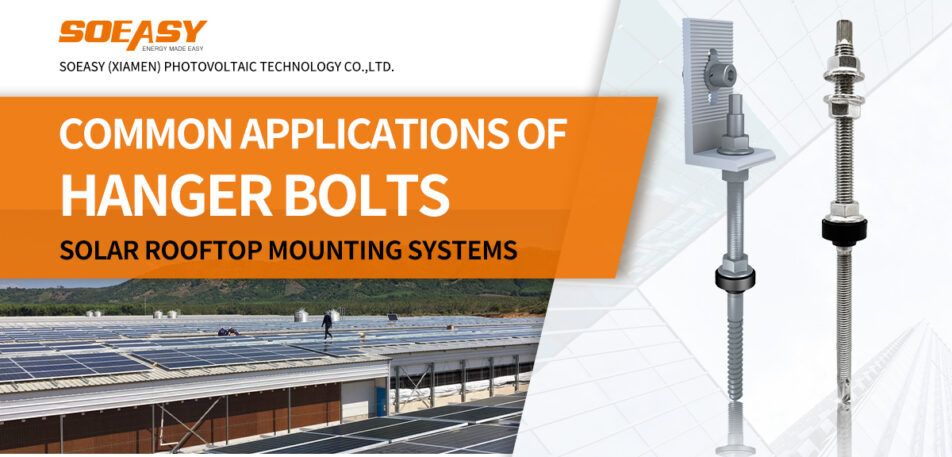
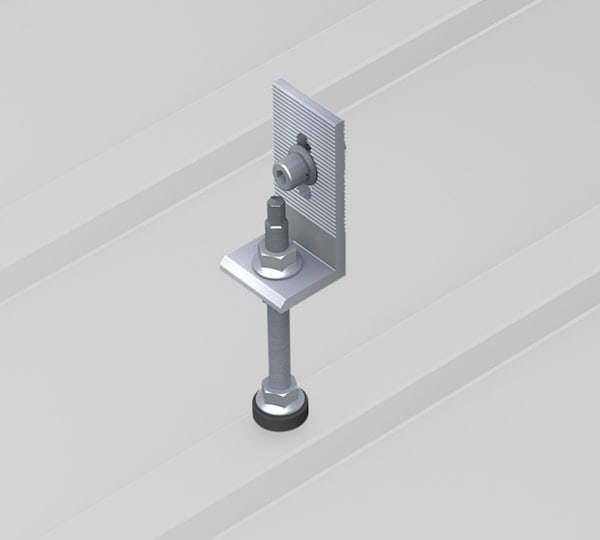
A hanger bolt is a fastener with different threads on each end. One end is designed for fixation to the roof structure—either wooden rafters or steel purlins—while the other end connects to the mounting system, typically to an L-Foot or support base . This dual-thread design is what makes hanger bolts uniquely suited for rooftop solar applications .
The main functions of hanger bolts are threefold. First, they securely anchor the PV mounting structure to the structural roof layer. Second, they provide both vertical load capacity and pullout resistance. Third, when paired with sealing components, they help maintain roof waterproofing integrity .
Typical Structure of Hanger Bolt Systems
A complete hanger bolt system consists of several components working together. The bolt body features an upper exposed thread for connecting to the mounting bracket and a lower self-tapping or wood thread for anchoring into the roof structure .
Sealing components include EPDM rubber washers that create a waterproof seal around the penetration point, along with metal washers that increase the load-bearing surface area . The mounting accessories typically include an L-Foot bracket for rail connection, rail connectors, and nut and washer kits .
Common Applications in Solar Rooftop Systems
Corrugated Metal Roofs
Hanger bolts are frequently used for penetrative fixation on corrugated metal roofs. They work in conjunction with L-Foot brackets and rail systems to provide high structural stability. This makes them particularly suitable for high-wind zone projects where secure anchoring is essential .
Trapezoidal Metal Roofs
On trapezoidal metal roofs, hanger bolts are used to reinforce attachment points, typically combined with waterproof sealing washers. The advantages include improved pullout resistance and maintained roof structural integrity. SoEasy Solar’s Solaris WAVE series offers a specialized Hanger Bolt Kit for trapezoidal metal roofs, providing enhanced structural stability for uneven or insulated roofs .
Wooden Roof Structures
In residential or older buildings, hanger bolts can be fixed directly into wooden beams. This application is common in retrofit projects and offers simple installation with reliable load capacity. The wood thread design allows for strong anchoring without complex tools .
Rooftop Retrofit Projects
For old roofs being retrofitted with solar systems, hanger bolts provide reliable structural anchoring points. They are especially valuable for irregularly shaped roofs where other mounting methods may not be feasible .
Advantages of Using Hanger Bolts
Hanger bolts offer several distinct advantages. They provide a strong structural connection with stable pullout resistance, ensuring long-term system safety. They are a cost-effective solution compared to complex clamp systems, making them suitable for large-scale projects . Their versatile compatibility allows them to work with various roof types and different rail structures. When properly installed with EPDM washers, they provide reliable waterproofing .
Design Considerations for Hanger Bolt Applications
Load Requirements
Designers must account for wind loads, snow loads, and the roof structure’s load-bearing capacity. Hanger bolts are available in thread sizes from M8 to M12 and lengths ranging from 100mm to 350mm, allowing engineers to select the right specification for each project’s load conditions .
Installation Depth and Anchoring
For wooden structures, sufficient embedment depth is critical. For steel purlins, proper thread engagement length must be ensured. The pullout safety factor must be verified through structural calculations. Pre-drilling is usually necessary before installation .
Waterproofing Design
The compression rate of the EPDM washer must be adequate to create a reliable seal. Penetration points require careful sealing treatment to prevent long-term leakage risks. Proper installation ensures the sealing washer is tightly fastened without damaging the roof cladding .
Material Selection
Stainless steel (304 or 316 grade) is recommended for high-corrosion environments such as coastal areas. Carbon steel with coating offers an economical solution for standard applications. Zinc-coated bolts suit standard rooftop projects. SOEASY’s hanger bolts are manufactured with SUS 304 stainless steel or Zinc-Nickel Alloy, ensuring long-term durability and corrosion resistance .
Installation Best Practices
Accurate drilling and positioning are essential to avoid structural偏移 and ensure even load distribution. Proper torque control prevents over-tightening or under-tightening, preserving thread integrity. The EPDM sealing layer must be fully seated against the roof surface without uneven compression. Alignment with the rail system keeps rails level and improves module installation accuracy .
Common Mistakes in Hanger Bolt Applications
Several errors frequently occur in hanger bolt applications. Using incorrect thread specifications leads to poor connections. Ignoring waterproofing treatment results in leaks. Insufficient installation depth causes loosening over time. Failing to account for wind loads leads to structural failure. Mismatching with the rail system creates compatibility issues that complicate installation .
Comparison with Other Rooftop Mounting Methods
The table below compares hanger bolts with other common rooftop mounting methods.
| Fixed Method | Hanger Bolt | Roof Hook | Clamp System |
|---|---|---|---|
| Applicable Roof | Metal/Wooden Structures | Tile Roofs | Standing Seam |
| Waterproofing | Moderate (Depends on Installation) | High | High |
| Pullout Resistance | High | Medium-High | Medium |
| Installation Efficiency | Medium | Medium | High |
| Cost | Low | Medium | Medium-High |
Hanger bolts are generally the most economical option and offer high pullout resistance for metal and wooden roofs. Roof hooks are better suited for tile roofs with superior waterproofing. Clamp systems provide the fastest installation but at a higher cost .
Frequently Asked Questions: Hanger Bolts in Solar Mounting
What is a solar hanger bolt?
A solar hanger bolt is a double-threaded fastener commonly used for metal and wooden roofs. It anchors into the purlin or rafter below and connects to mounting rails .
What roof types are suitable for hanger bolts?
Corrugated metal roofs, trapezoidal metal roofs, and wooden roof structures are all suitable for hanger bolt installations.
Do hanger bolts require pre-drilling?
Yes. Pre-drilling is usually necessary before installing hanger bolts into purlins or rafters .
What is the difference between hanger bolts and roof hooks?
Hanger bolts feature dual threads for anchoring into structure and connecting rails, while roof hooks are typically clamped or hooked onto tile roofs without penetration .
Does SoEasy Solar offer hanger bolt solutions?
Yes. SoEasy Solar provides Hanger Bolt Kits as part of the Solaris WAVE series for metal roof installations .
Small Component, Critical Role
Though small in size, hanger bolts play a critical structural connection role in rooftop photovoltaic systems. Proper selection and standardized installation significantly improve system safety and service life. Whether for corrugated metal roofs, trapezoidal metal roofs, or wooden structures, correct application of hanger bolts is essential for stable project operation.
SoEasy Solar provides complete rooftop mounting connection solutions, including hanger bolts, roof hooks, and various fastening systems. Our products are engineered and tested according to AS/NZS 1170.2, TÜV, and UL standards, ensuring compliance and smooth project approval . We help installers and EPC companies achieve safe and efficient solar installations.