English


 Post by
Introduction: Why Waterproofing & Corrosion Resistance Define Carport Bankability
For commercial and industrial (C&I) solar projects across Europe, a solar carport is far more than a steel rack holding photovoltaic modules—it is a permanent overhead architectural shelter expected to protect vehicles, EV chargers, and electrical infrastructure for 25 to 30+ years.
As commercial parking lot mandates accelerate across Germany, France, the Netherlands, and Southern Europe, EPC contractors and solar distributors face two primary technical failure points during long-term operation: water leakage through module gaps and premature structural corrosion in coastal or high-humidity zones.
Selecting a mounting system engineered with true structural waterproofing and high-grade anti-corrosion metallurgy eliminates costly post-installation callbacks, protects EV charging equipment underneath, and ensures long-term asset bankability.
Structural Waterproofing vs EPDM Gasket Sealing: Which System Lasts 25+ Years?
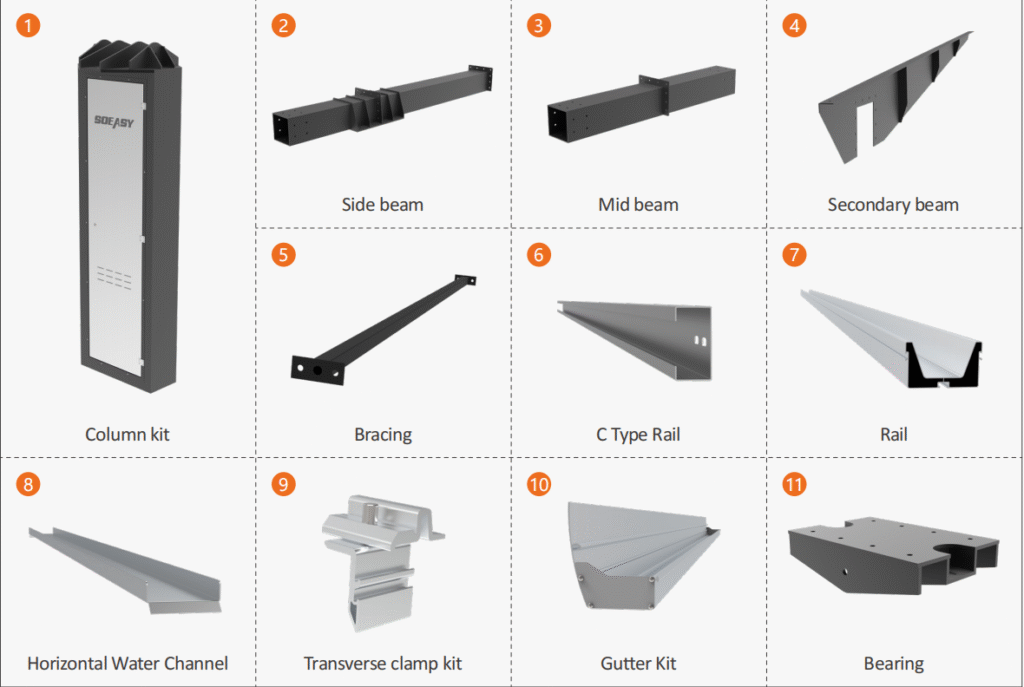
Quick Engineering Takeaway: Structural waterproofing uses interlocking W-shaped or U-shaped aluminum/steel drainage channels built directly into the purlins to divert rainwater mechanically without relying on perishable rubber seals. Unlike EPDM gasket-only systems that degrade under UV exposure after 5–8 years, structural drainage systems deliver permanent, maintenance-free leak protection suitable for commercial EV charging hubs.
When evaluating waterproof solar carport structures for commercial tenders, procurement teams generally encounter two engineering approaches:
1. Rubber / EPDM Gasket Sealing (Traditional Gap-Filling)
In basic carport designs, installers insert EPDM rubber strips or apply silicone sealant into the 15–20 mm gaps between adjacent solar panels.
- The Limitation: Continuous exposure to UV radiation, freezing-thawing cycles, and thermal expansion causes rubber strips to shrink, crack, or detach within 5 to 8 years—leading to water dripping onto vehicles and electrical junction boxes below.
2. Mechanical Structural Waterproofing (Integrated Drainage Channels)
Advanced commercial carports—such as SOEASY’s engineered waterproof canopy systems—integrate interlocking drainage rails and concealed gutters directly beneath module seams.
- How It Works: Rainwater passing between solar panels falls directly into precision-extruded longitudinal water channels, flows down sloped purlins (typically 3°–10°), and exits cleanly through internal column downspouts.
- Bifacial Module Compatibility: Modern structural drainage channels can be engineered with narrow profiles or reflective coatings, preserving rear-side irradiance gains for bifacial solar panels while maintaining 100% overhead weather protection.
Comparison: Waterproofing Technologies for Commercial Solar Carports
| Evaluation Metric | EPDM Rubber / Silicone Sealing | Integrated Structural Drainage System |
| Waterproofing Mechanism | Friction-fit rubber strips or chemical sealants | Mechanical gravity-fed water channels & gutters |
| Effective Leak-Free Lifespan | 5–8 years (requires periodic seal replacement) | 25+ years (matches PV module lifecycle) |
| UV & Thermal Resistance | Prone to hardening, cracking, and shrinkage | Unaffected by thermal expansion or UV exposure |
| Installation Labor Speed | Slow; requires manual strip insertion on-site | Fast; pre-engineered rails snap/bolt together |
| Suitability for EV Charging Hubs | Moderate risk of moisture ingress near chargers | High protection for EV wallboxes & wiring |
Anti-Corrosion Metallurgy: Choosing the Right Material for European Climate Zones
Commercial parking lots span diverse microclimates—from North Sea coastal wind corridors with high salt-spray salinity to industrial zones and alpine snow regions using road de-icing salts. Choosing the wrong metal grade or coating thickness leads to red rust and structural weakening.
1. Anodized Aluminum Alloy (AL6005-T5 / AL6063-T5)
- Best For: Architectural EV carports, coastal installations, and premium corporate or hospitality sites (such as the SOEASY Smart Carport).
- Protection Standard: High-thickness anodization (15–25 μm) creates a hard, non-oxidizing aluminum oxide layer that resists salt mist, acid rain, and coastal humidity while maintaining a sleek, modern silver or custom RAL finish.
2. Hot-Dip Galvanized (HDG) & ZAM-Coated Structural Steel
- Best For: Large-span commercial parking lots, high-ROI industrial projects, and heavy snow/wind load zones (such as ST Cantilever: Titan PRO and ST Cantilever: Titan MAX).
- Protection Standard:
- Hot-Dip Galvanization (HDG): Immersion in molten zinc producing a 65–85+ μm metallurgical barrier compliant with ISO 1461, preventing rust even under minor surface scratches.
- ZAM (Zinc-Aluminum-Magnesium) Alloy Steel: Offers 3x to 5x higher corrosion resistance than standard galvanization, featuring self-healing cut-edge protection that prevents rust at drilled bolt holes and cut ends.
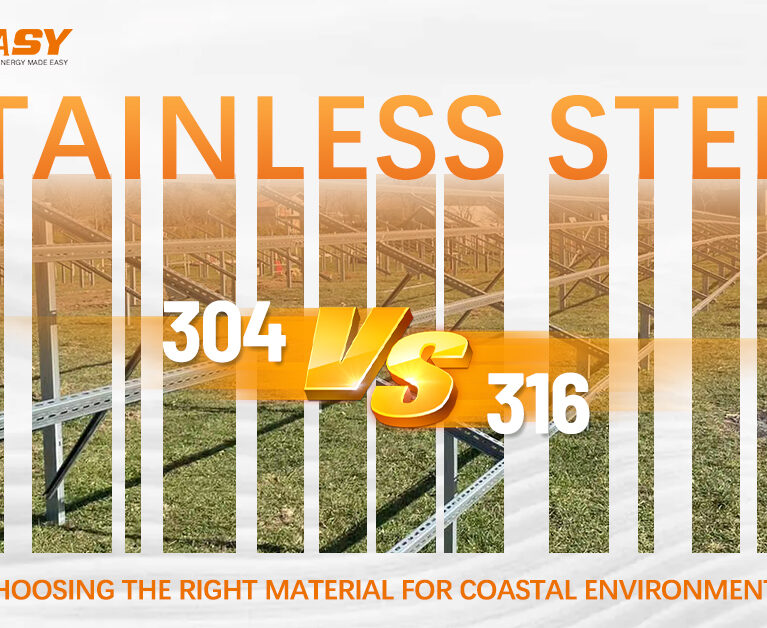
3. SUS304 / SUS316 Stainless Steel Fasteners
Galvanic corrosion occurs when dissimilar metals contact each other in wet environments. All SOEASY carport systems pair structural frames with SUS304or marine-grade SUS316 stainless steel bolts and EPDM isolation washers to eliminate bimetallic oxidation.
Engineering Precision Backed by 30+ Structural Engineers & Global Track Record
Designing a carport that is simultaneously waterproof, corrosion-resistant, and wind-certified requires rigorous structural simulation—not off-the-shelf guesswork.
At SOEASY Solar, an in-house R&D team of over 30 structural engineers conducts site-specific mechanical calculations for every commercial project:
- Customized Wind & Snow Load Modeling: Engineered to European Eurocode 1 (EN 1991) and EN 1090 execution standards, accommodating wind speeds up to 60 m/s and heavy alpine snow loads without beam deflection that could compromise drainage slopes.
- Complete Global Compliance: Every system is backed by CE, TUV, SGS, ISO 9001/14001/45001, and JIS certifications, providing European EPCs and distributors with bankable documentation for immediate municipal permitting and insurance approval.
Frequently Asked Questions (FAQ) for EPCs & Distributors
What is the minimum roof tilt angle required for a waterproof solar carport?
A minimum slope of 3° to 5° is recommended for structural waterproof solar carports. This tilt ensures rapid rainwater runoff through integrated purlin drainage channels, prevents standing water or debris buildup, and maintains self-cleaning efficiency on the solar modules.
Which material is better for coastal commercial solar carports: anodized aluminum or galvanized steel?
For installations within 5 km of saltwater coastlines, high-grade anodized aluminum (AL6005-T5, ≥15–20 μm) or ZAM-coated steel paired with SUS316 fasteners provides the highest resistance against chloride-induced pitting corrosion over a 25+ year lifespan.
Can waterproof solar carports support bifacial solar panels?
Yes. Modern structural waterproof carports utilize narrow, high-reflectivity aluminum drainage channels beneath module gaps. This design captures and redirects rainwater cleanly while allowing diffused ground light to reach the rear side of bifacial PV modules.
Conclusion: Build Leak-Free, Corrosion-Proof Commercial Carports with Confidence
In Europe’s competitive commercial solar sector.By specifying mechanical structural waterproofing alongside certified anodized aluminum or HDG/ZAM steel framing, project stakeholders protect vehicles, EV chargers, and energy yields for decades.
Need Custom Waterproof & Anti-Corrosion Carport Engineering for Your Next Project?
Whether you are an EPC contractor bidding on European C&I parking tenders, a solar distributor expanding your certified product lineup, or an OEM brand partner seeking custom structural manufacturing, SOEASY’s 30+ structural engineers are ready to assist.
Project Collaboration Contact:sales@soeasyrobot.com