 English

 Post by
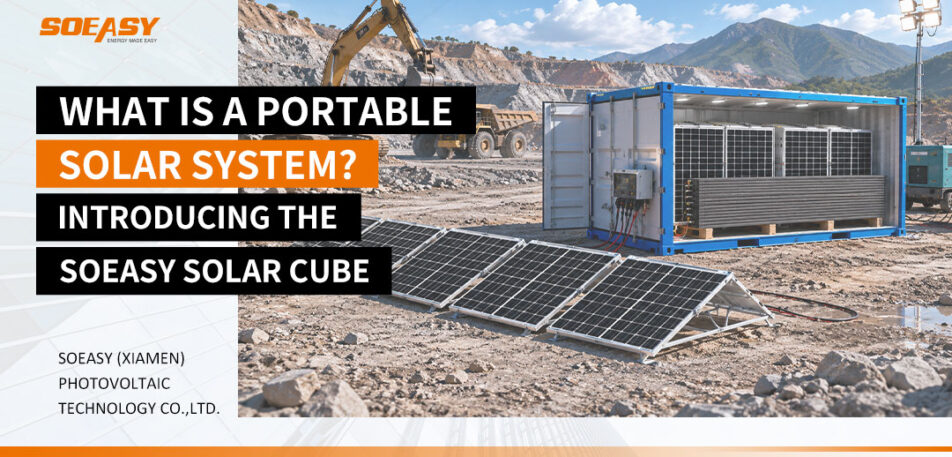
 As industries continue to expand into remote and challenging environments, the demand for reliable, flexible, and sustainable power is growing rapidly. From remote construction sites and mining operations to disaster relief missions, outdoor events, and off-grid industrial facilities, many projects require electricity long before a permanent grid connection is available.
Traditionally, temporary power has relied on diesel generators or conventional solar installations. While diesel generators are portable, they require continuous fuel supply, generate emissions, and produce significant noise. Conventional photovoltaic (PV) systems, on the other hand, deliver clean energy but often require extensive civil works, foundation construction, and weeks of installation before they can begin generating electricity.
This is where portable solar systems offer a practical alternative. Designed for mobility and rapid deployment, these systems bring renewable energy to locations where speed, flexibility, and ease of installation are critical.
What Is a Portable Solar System?
A portable solar system is a factory-integrated photovoltaic power solution designed to be transported, deployed, relocated, and reused with minimal site preparation. Unlike traditional ground-mounted solar plants that are built for permanent installation, portable systems are engineered to deliver clean electricity wherever temporary or mobile power is required.
The primary objective of a portable solar system is to reduce deployment time while maintaining reliable energy generation.
A typical portable solar system consists of:
- High-efficiency solar panels
- A durable mounting structure
- An inverter for AC power conversion
- Electrical protection and wiring systems
- A transportation platform such as a container, trailer, or skid-mounted frame
Because these components are largely pre-assembled at the factory, installation work on-site is significantly simplified, allowing projects to become operational much faster than conventional PV systems.
Why Are Portable Solar Systems Becoming More Popular?
Growing demand for temporary and off-grid electricity has accelerated the adoption of portable solar systems across multiple industries. Several key advantages explain this trend.
Fast Deployment
Traditional solar installations typically require several weeks for civil engineering, structural assembly, electrical installation, and commissioning.
Portable solar systems dramatically shorten this timeline. Many solutions arrive pre-assembled and only require unfolding, positioning, electrical connection, and commissioning before generating power. This allows electricity to be available within hours—or even minutes—after arrival.
Flexible Relocation
Unlike fixed solar installations, portable systems are designed to move with the project.
This flexibility makes them ideal for:
- Temporary construction projects
- Seasonal industrial operations
- Equipment rental businesses
- Emergency response deployments
- Mobile work camps
Instead of abandoning infrastructure after a project is completed, the system can simply be relocated and reused at the next site.
Reduced Civil Works
Foundation construction is often one of the most time-consuming and expensive stages of traditional solar projects.
Portable solar systems significantly reduce or even eliminate the need for:
- Concrete foundations
- Ground piling
- Large-scale land excavation
By minimizing site preparation, project owners can reduce construction costs while preserving the original landscape.
A Cleaner Alternative to Diesel Generators
Diesel generators remain common for temporary power, but they come with ongoing fuel costs, maintenance requirements, carbon emissions, and noise pollution.
Portable solar systems provide a cleaner solution by offering:
- Zero fuel consumption during operation
- Lower operating costs
- Reduced carbon emissions
- Quiet power generation
- Less maintenance over the system lifecycle
For organizations pursuing sustainability goals, portable solar offers both environmental and economic benefits.
What Features Should You Look for in a Portable Solar System?
Not all portable solar systems are designed the same. Before selecting a solution, project owners should evaluate several critical factors.
Fast Deployment
A well-designed portable solar system should minimize on-site installation work through factory pre-assembly and simplified deployment procedures.
Modular Design
Modular systems provide greater flexibility by allowing capacity expansion or reduction based on changing project requirements.
Easy Transportation
Efficient logistics are essential. Systems compatible with standard shipping containers or trailers can be transported worldwide using existing freight networks.
Reliable Structural Design
Portable systems often operate in harsh environments. Durable structural materials and weather-resistant designs help ensure long-term reliability.
Easy Maintenance
Using standardized components simplifies maintenance, reduces spare parts inventory, and makes repairs easier, especially in remote regions.
Scalability
A quality portable solar solution should be able to adapt to different project sizes without requiring a complete redesign or replacement.
Introducing the SoEasy Solar Cube
One example of this new generation of portable solar systems is the SoEasy Solar Cube.
Developed to simplify temporary solar deployment, the SoEasy Solar Cube combines power generation, structural support, and transportation into one integrated solution.
The system features:
- A foldable integrated photovoltaic structure
- Factory pre-assembled modules
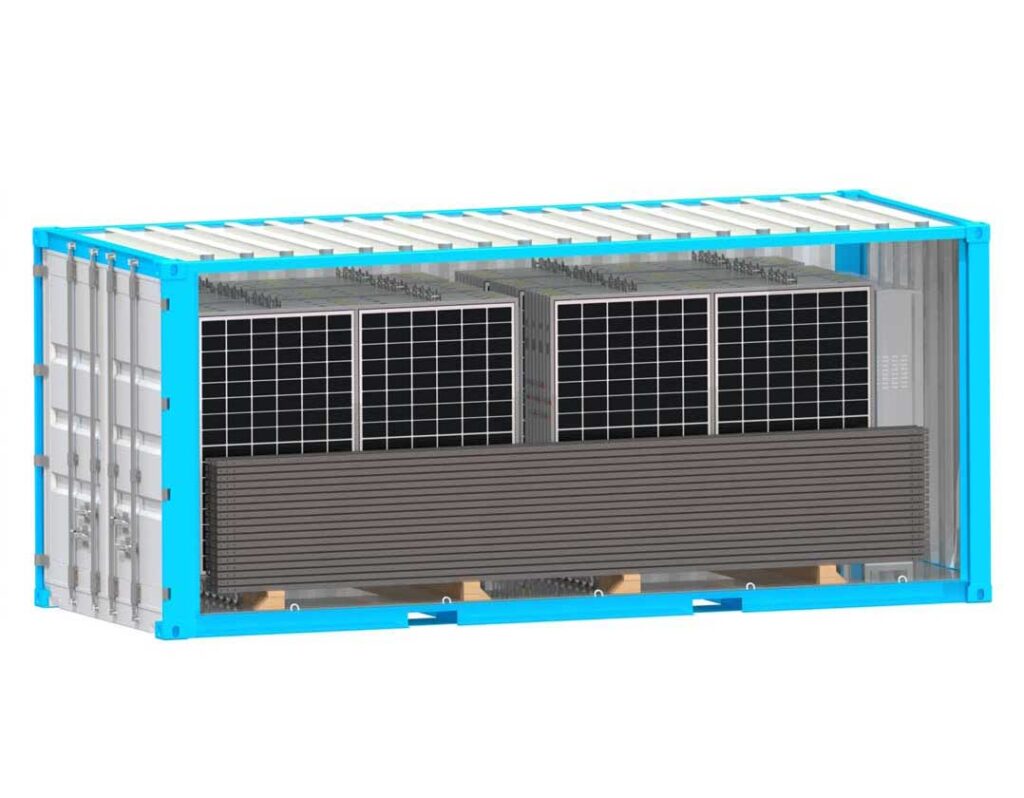
- Transportation inside a standard 20-foot ISO shipping container
- Rapid on-site deployment
The complete system integrates 96 high-efficiency N-type solar modules into six independent foldable units, delivering a total installed capacity of 44.16 kW. Once delivered to the project site, the modules can be unfolded, connected, and commissioned quickly, significantly reducing installation time compared with traditional solar projects.
| Specification | Details |
|---|---|
| Model | PVM20-50K |
| Solar Module Type | N-type monofacial solar modules, 460W / 24.5 kg / 1762 × 1134 × 30 mm |
| Number of Modules per Unit | 16 solar modules |
| Output Power per Unit | 7.36 kW |
| Inverter | Three-phase inverter, 400V, 50 kW |
| Transport Container | 20-foot standard ISO container (for transportation only) |
| Total Number of Solar Modules per Container | 96 solar modules (6 independent units) |
| Total PV Capacity | 44.16 kW |
| Container Weight | 2.2–2.4 tons |
| Payload Capacity (excluding container) | 0.8 tons (without rail system) / 1.2 tons (with rail system) |
What Makes the SoEasy Solar Cube Different?
Ready to Generate Power in Around 20 Minutes
Speed is one of the Solar Cube’s defining advantages.
Because the mounting structure and PV modules are pre-assembled in the factory, installation mainly involves unloading, unfolding, securing the structure, and completing electrical connections.
Instead of waiting weeks for construction, projects can begin generating electricity in approximately 20 minutes, making the system especially suitable for emergency applications and temporary worksites.
No Foundation Required
Unlike conventional ground-mounted PV plants, the Solar Cube requires no extensive civil engineering.
There is no need for:
- Concrete foundations
- Ground piling
- Major land preparation
With optional rail systems, the Solar Cube can also adapt to challenging environments such as deserts, grasslands, mining areas, and uneven terrain while minimizing environmental disturbance.
Six Independent Modular Units
The Solar Cube is designed around six independently operating PV modules.
This modular architecture provides several advantages:
- Flexible capacity expansion
- Improved operational reliability
- Simplified maintenance
- Reduced downtime
If one module requires maintenance, the remaining modules can continue producing electricity, ensuring greater system availability.
Standard Components for Easy Maintenance
Maintenance is often overlooked when selecting portable energy equipment.
The Solar Cube uses widely available standard hardware—including latches, hinges, turnbuckles, and stainless steel wire ropes—instead of proprietary components.
This design philosophy offers several practical benefits:
- Easier sourcing of replacement parts
- Lower maintenance costs
- Reduced spare parts inventory
- Faster servicing in remote locations
Designed for Global Transportation
International logistics were considered from the beginning of the product design.
The Solar Cube is fully compatible with a standard 20-foot ISO container, allowing transportation through:
- Ocean freight
- Truck transportation
- Rail logistics
- Multimodal transportation networks
Using standardized container dimensions simplifies global shipping and enables efficient relocation between projects.
Who Can Benefit from the SoEasy Solar Cube?
The Solar Cube is suitable for a wide range of temporary, mobile, and off-grid applications.
Typical users include:
- EPC contractors managing temporary project sites
- Construction companies requiring reliable on-site electricity
- Mining and resource extraction companies operating in remote locations
- Disaster relief and emergency response organizations
- Industrial parks seeking flexible daytime power solutions
- Solar equipment rental companies offering Energy-as-a-Service (EaaS)
- Event organizers powering festivals, exhibitions, and outdoor venues
- Developers of remote infrastructure and off-grid industrial projects
Its combination of rapid deployment, mobility, and modular scalability makes it an attractive solution wherever traditional infrastructure is unavailable or impractical.



3 Comments
Please send me a quotation for this 20footer van 96 panel complete with battery and 220v output single phase 60hz hybrid inverter
Joe Dan
12 Jul, 2026Thanks for your interest in our Solar Cube, our product manager will contact you via email
soeasy
12 Jul, 2026Great content! Keep up the good work!
ExoWatts
12 Jul, 2026