English

 Post by
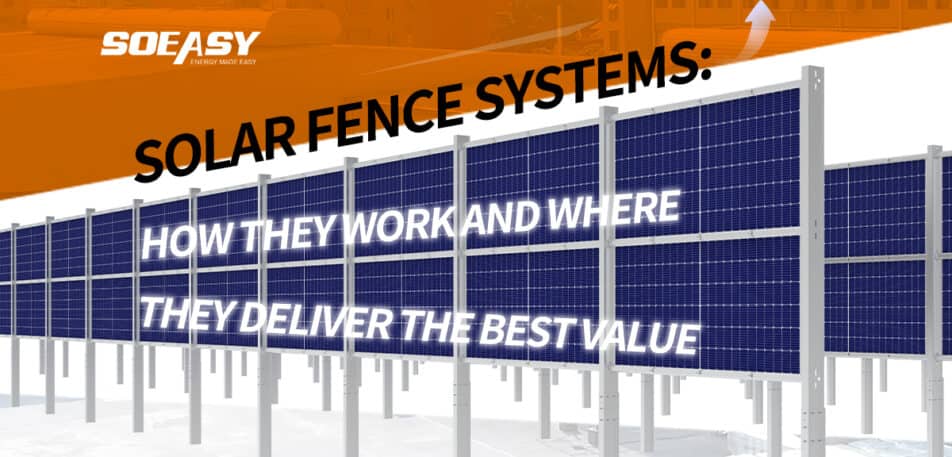
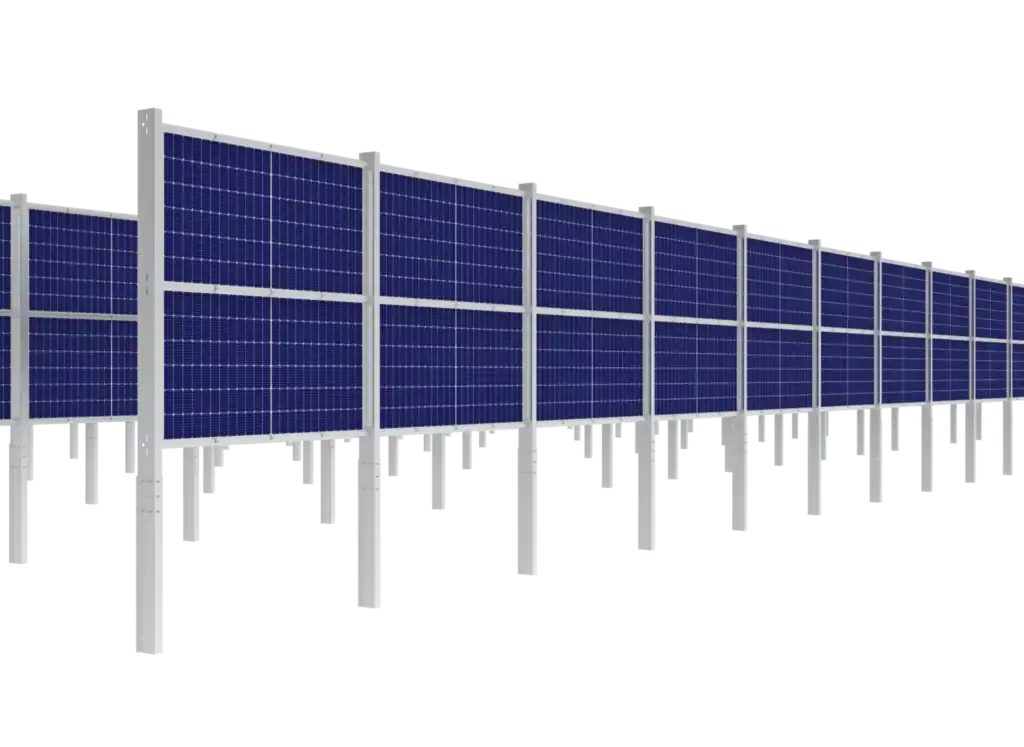
 Vertical Photovoltaics (VPV), also known as Solar Fence Systems, refer to PV installations where modules are mounted at a near-vertical angle. While traditional solar arrays rely on horizontal or tilted orientations, vertical PV systems make use of spaces that are often underutilized. As a result, they are well suited for building façades, transportation facilities, agricultural land, and various types of urban infrastructure. With the growing demand for renewable energy, vertical PV solutions are gaining increasing attention for their practicality and long-term potential.
Key Advantages of Vertical PV Systems
1. Efficient Use of Vertical Space
Vertical PV maximizes the value of limited space.
For example, it makes excellent use of building façades, fences, and highway noise barriers.
Additionally, in agrivoltaic projects, vertical installation minimizes shading on farmland, enabling more even sunlight exposure and supporting both agricultural production and energy generation.
2. Enhanced Bifacial Generation
Vertical arrays create favorable conditions for bifacial modules.
They can capture low-angle morning and evening sunlight; moreover, they are able to utilize reflected and diffused light from the surrounding environment. Consequently, total energy output can improve under suitable conditions.
3. Reduced Dust Accumulation
Because the panels are installed in an upright position, dust and debris are less likely to accumulate.
Therefore, maintenance requirements decrease, and long-term performance becomes more stable.
4. Better Performance in High-Latitude or High-Albedo Regions
In regions with low solar elevation angles, vertical PV can receive sunlight more effectively.
In contrast, traditional tilted systems may suffer from suboptimal angles during winter or cloudy seasons.
Furthermore, vertical PV benefits from strong reflectivity in snowy or high-albedo areas, which helps maintain consistent generation.
5. Building-Integrated Potential
Vertical PV can be integrated into building façades or curtain walls.
This enables BIPV (Building-Integrated Photovoltaics) applications, which not only generate electricity but also enhance architectural aesthetics.
In addition, such integration supports energy-efficient building design.
6. Minimal Environmental Disruption
Vertical PV solutions disturb the ground less than traditional ground-mounted arrays.
As a result, they are suitable for agricultural land, ecological zones, and environmentally sensitive areas where minimizing land impact is essential.
Typical Application Scenarios
1. Building Facades and Curtain Walls
PV modules can be incorporated into external walls, which helps reduce building energy consumption.
At the same time, this supports carbon-reduction initiatives.
2. Highway Noise Barriers
Noise barriers along expressways offer ready-made vertical surfaces.
By integrating PV modules into these structures, operators can effectively increase land-use efficiency.
3. Agrivoltaic Systems
Vertical arrays in farmland improve light distribution for crops while generating clean electricity, creating dual economic value.
4. Urban Infrastructure (Fences, Billboards, Street Facilities)
Vertical PV systems can be applied to municipal structures, enhancing urban space efficiency and contributing to sustainable city development.
5. Mountainous and Remote Areas
Because vertical installations adapt well to slopes or narrow terrain, they offer a practical solution for supplemental power in remote locations.
Moreover, their reduced footprint makes them easier to deploy in challenging environments.
Key Features of Soeasy Solar Fence System
Soeasy Solar Fence: Demeter DUAL is designed for high durability, simple installation, and strong adaptability. Therefore, it is suitable for agricultural sites, roadways, perimeter fencing, and public infrastructure projects.
1. High Level of Pre-Assembly
Most components are pre-assembled before delivery.
Consequently, on-site installation time is shorter, and overall project efficiency increases.
2. U-Shaped Post Structure
- Clean and elegant appearance; optional surface treatments such as custom colors.
- Optimized material usage to reduce manufacturing cost.
- Simple structure with low maintenance requirements, minimizing long-term operational expenses.
3. Adaptable to Multiple Terrains
The dimensions of the U-shaped structure can be adjusted to meet different site conditions.
It supports stable installation on flat land, slopes, and uneven ground, offering reliable performance against wind and snow loads.
4. High-Corrosion-Resistance ZAM Material
Zinc-Aluminum-Magnesium steel provides excellent corrosion resistance, enabling reliable long-term operation in coastal, industrial, and other harsh environments.
5. Adjustable Post Height
The post height can be customized according to agricultural spacing, fencing requirements, or local wind-load standards. This flexibility helps enhance installation accuracy and project adaptability.
Vertical PV systems offer clear benefits in space utilization, bifacial generation, and reduced maintenance.
As technology and structural design continue to advance, these systems are expected to play an increasingly important role in distributed solar applications.
Ultimately, vertical PV solutions provide valuable opportunities for urban upgrades, agrivoltaics, and public infrastructure improvement.
SOEASY remains committed to developing reliable and adaptable vertical PV mounting solutions that help customers achieve efficient and cost-effective solar projects.
Vertical solar fence systems maximize space, boost bifacial generation, and suit diverse projects with durable design—learn more on our solar fence product page: Fence: Demeter DUAL
Floating: Aqua FPV
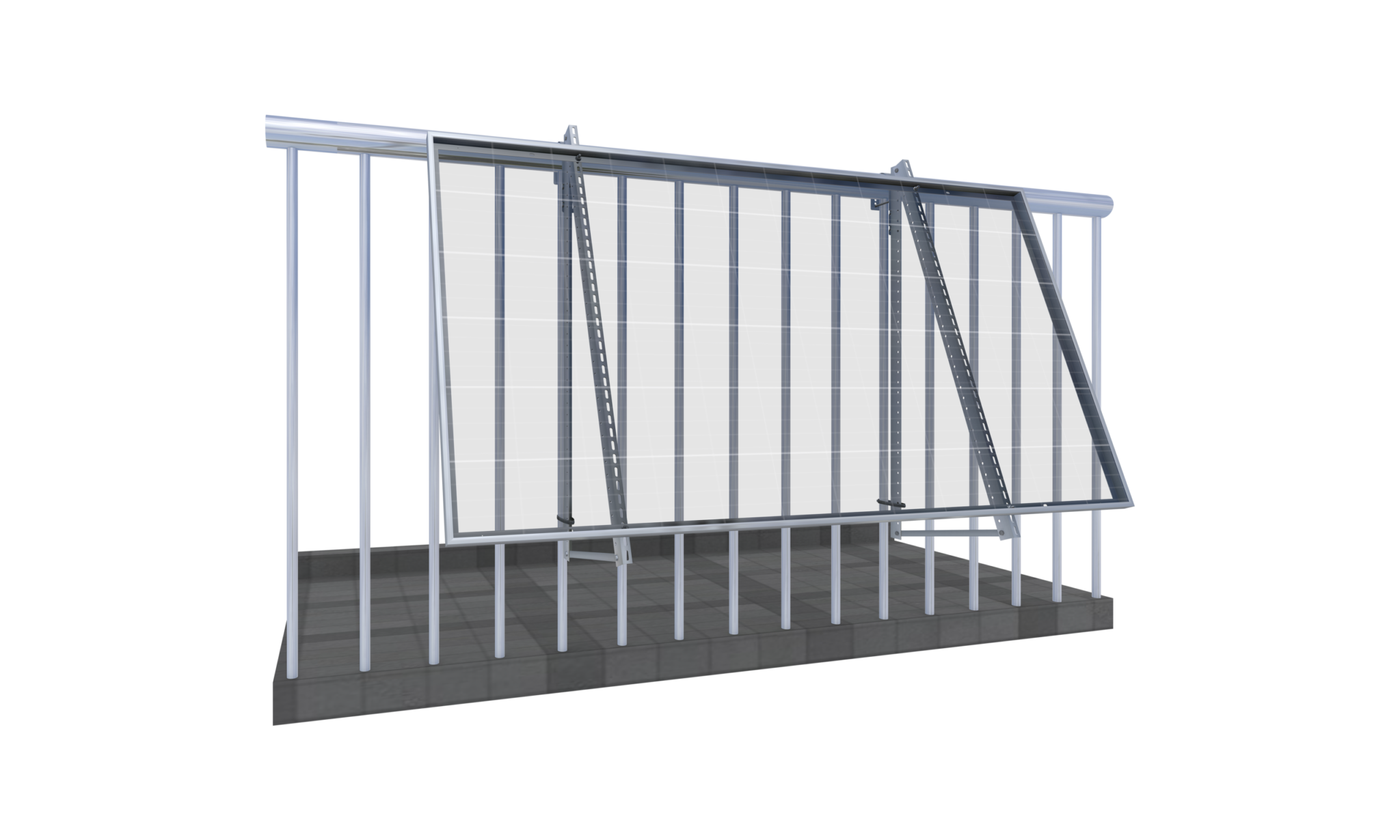
Balcony: Solaris FLEX