English

 Post by
 Introduction: Choosing the Right Fixing Solution for Metal Roof Solar Projects
Metal roofs are widely used in commercial and industrial solar installations due to their lightweight structure, durability, and large usable area. However, not all metal roofs are the same.
Different profiles—such as standing seam, trapezoidal, and corrugated roofs—require different mounting approaches. Choosing the wrong solution can result in:
- Structural instability under wind or snow loads
- Roof leakage due to improper sealing
- Increased installation time and labor cost
- Long-term maintenance and corrosion issues
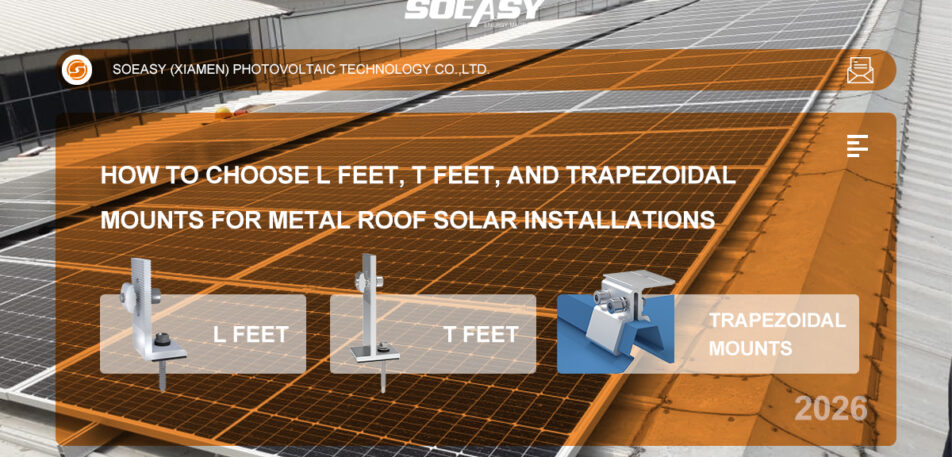
Among all available options, L Feet, T Feet, and Trapezoidal Mounts (Mini Rail systems) are the most commonly used solutions.
This guide provides a clear comparison, selection logic, and engineering insights to help you choose the most suitable solution.
Types of Metal Roofs and Suitable Mounting Options
| Roof Type | L Feet | T Feet | Trapezoidal Mounts |
|---|---|---|---|
| Trapezoidal Roof (High Rib) | ✅ Suitable | ✅ Suitable | ✅ Recommended |
| Trapezoidal Roof (Low Rib) | ✅ Suitable | ✅ Suitable | ⚠️ Limited space |
| Standing Seam Roof | ⚠️ With adapter | ⚠️ With adapter | ❌ Not suitable |
| Corrugated Roof | ⚠️ With base plate | ⚠️ With base plate | ❌ Not suitable |
Key takeaway:
Trapezoidal roofs offer the most flexibility, while standing seam roofs typically require clamp systems.
L Feet vs T Feet vs Trapezoidal Mounts: Key Differences
L Feet Solar Mounting
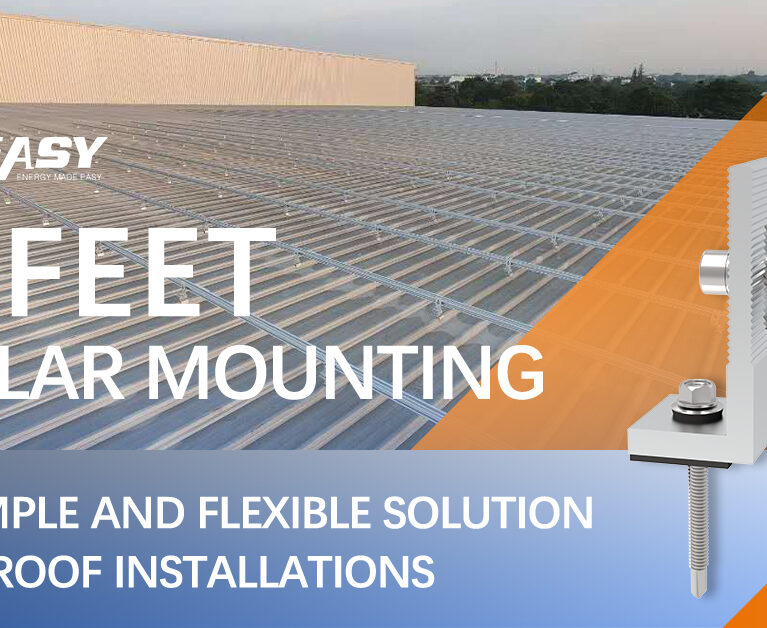
L Feet are L-shaped brackets fixed to purlins and used with rail systems.
Best for:
- Standard commercial and industrial projects
- Medium to large-scale installations
Advantages:
- Flexible and widely compatible
- Adjustable height
- Cost-effective
Limitations:
- Requires rails (more components)
- More installation steps
- Higher waterproofing requirements
T Feet Solar Mounting
T Feet feature a wider base, offering improved load distribution and structural strength.
Best for:
- High wind regions (coastal, typhoon-prone areas)
- Snow load regions
- Large-span steel structures
Advantages:
- Higher structural stability
- Better wind and snow resistance
- Stronger long-term reliability
Limitations:
- Higher cost
- Requires precise installation
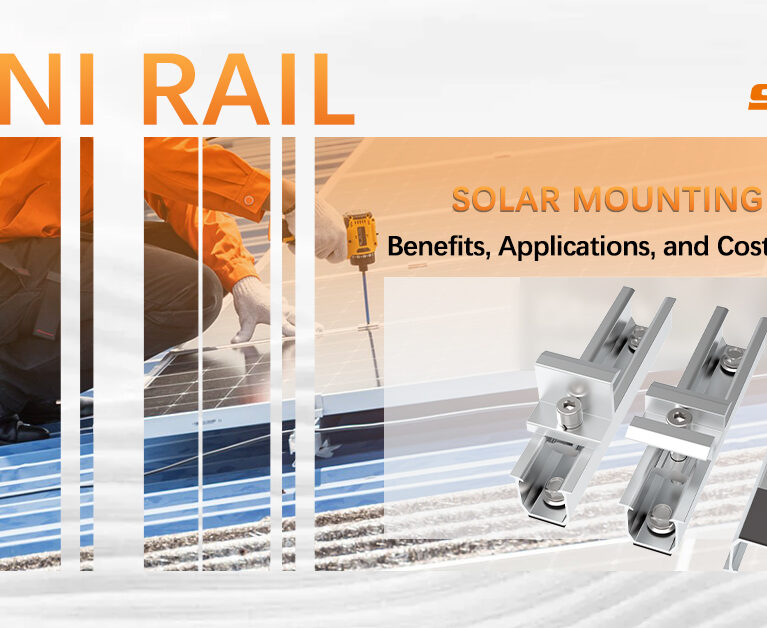
Trapezoidal Mounts (Mini Rail Systems)
Designed specifically for trapezoidal roofs, these mounts can often eliminate the need for long rails.
Best for:
- Small to medium distributed solar projects
- Cost-sensitive installations
- Fast deployment scenarios
Advantages:
- Rail-free or short rail design
- Faster installation (30–50% time saving)
- Lower material and labor cost
- Lightweight system
Limitations:
- Must match roof profile
- Not ideal for large-scale or high-load projects
Waterproof Performance Comparison
| Solution | Penetration Method | Waterproof Risk | Recommended Sealing |
|---|---|---|---|
| L Feet | Through sheet + purlin | Medium | EPDM washer + sealant |
| T Feet | Through sheet + purlin | Medium | EPDM washer + sealant |
| Trapezoidal Mounts | Through rib crest | Lower | Pre-installed EPDM + optional sealant |
Best practice:
Always use EPDM washers + weather-resistant sealant for double protection.
Load Performance Comparison
| Load Condition | L Feet | T Feet | Trapezoidal Mounts |
|---|---|---|---|
| Standard Wind | ✅ | ✅ | ✅ |
| High Wind | ⚠️ Reinforced design | ✅ Recommended | ⚠️ More fixing points |
| Heavy Snow | ⚠️ Check required | ✅ Recommended | ⚠️ Check required |
| Extreme Conditions | ⚠️ Custom design | ✅ Best option | ❌ Not recommended |
Installation Efficiency Comparison
| Factor | L Feet | T Feet | Trapezoidal Mounts |
|---|---|---|---|
| Rails Required | Yes | Yes | Optional |
| Components | More | More | Fewer |
| Installation Steps | Multiple | Multiple | Simplified |
| Installation Speed | Standard | Standard | 30–50% faster |
Which Solution Should You Choose?
Quick Decision Guide
- High wind / snow load? → Choose T Feet
- Small project (<200kW) or tight schedule? → Choose Trapezoidal Mounts
- Standard commercial project? → Choose L Feet
Common Mistakes in Metal Roof Solar Installation
1. Not Checking Roof Structure
Always verify roof type, rib height, and purlin spacing before design.
2. Fixing Without Purlins
All fixing points must penetrate into purlins (≥20–25 mm).
3. Poor Waterproofing
Use EPDM + sealant, not standard rubber washers.
4. Choosing Based Only on Cost
Low-cost solutions may fail under high loads.
Engineering Design Considerations
- Ensure proper fixing point spacing based on load calculation
- Verify pull-out resistance of fasteners
- Use stainless steel (304/316) components
- Align module layout with purlin direction
FAQ: Metal Roof Solar Mounting
Which is better, L Feet or T Feet?
T Feet provide higher structural strength and are recommended for high-load environments, while L Feet are more cost-effective for standard projects.
Can trapezoidal mounts be used without rails?
Yes, many trapezoidal mounting systems support rail-free installation, reducing material and labor costs.
How do you prevent roof leakage?
Use EPDM waterproof washers combined with weather-resistant sealant at all penetration points.
Are trapezoidal mounts suitable for large projects?
They are more suitable for small to medium systems. Large-scale projects typically benefit from rail-based systems.
Conclusion: Choose Based on Project Needs, Not Habit
Each solution—L Feet, T Feet, and Trapezoidal Mounts—serves a specific purpose.
Key principles:
- Prioritize structural safety
- Match the mounting system to roof type
- Ensure waterproof reliability
- Consider long-term performance, not just initial cost
SOEASY Metal Roof Solar Mounting Solutions
At SOEASY, we provide complete mounting solutions for all types of metal roofs:
- L Feet systems for standard applications
- T Feet systems for high-load environments
- Trapezoidal mounting systems for fast installation
- Full accessories: EPDM washers, fasteners, sealants
- Custom solutions for different roof profiles
Contact us today to get a tailored solution for your project.