English

 Post by
 In rooftop solar projects, the choice of fixing method directly impacts system safety, durability, and installation efficiency. Even a small connection component, if improperly designed or installed, can lead to serious risks such as system uplift under strong winds or roof leakage due to failed waterproofing.
For corrugated roofs—such as asbestos or fiber cement sheets—and lightweight roof structures, traditional fixing methods often face limitations. These roofs are typically fragile, uneven, and have limited load-bearing capacity.
In such scenarios, the hanger bolt solar mounting system stands out as a reliable and efficient solution. Thanks to its unique dual-thread design and strong anchoring capability, it is widely used in various rooftop solar mounting applications.
This guide provides a comprehensive overview of hanger bolts, including their structure, working principle, key advantages, application scenarios, and installation guidelines.
What Is a Hanger Bolt in Solar Mounting Systems?
Definition
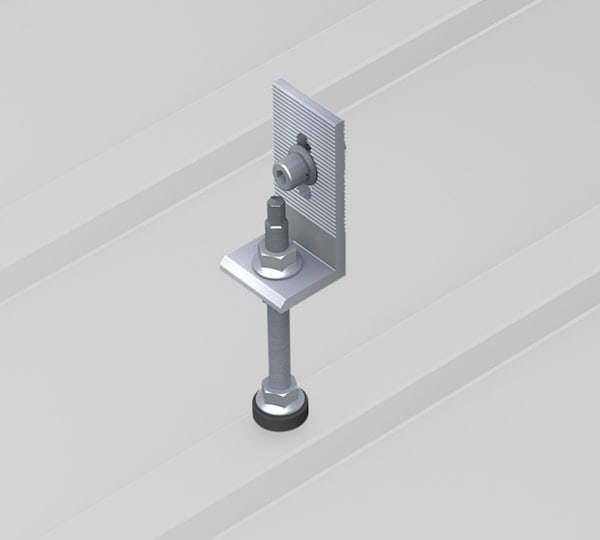
A hanger bolt is a double-ended fastener with different thread types on each side, designed to securely connect solar mounting systems to roof structural members such as purlins or rafters.
Its design concept is simple:
One end anchors into the structure, while the other connects to the mounting system—creating a reliable load transfer path.
Structure and Materials
A standard hanger bolt consists of:
- Wood thread / self-tapping thread end
For anchoring into wooden rafters or steel purlins - Metric thread end (M8 / M10)
For connecting L feet, rails, or mounting components - Unthreaded middle section (optional)
Allows penetration through roofing layers
Common Materials
- Stainless Steel (SUS304 / SUS410)
Ideal for coastal, humid, or corrosive environments - Carbon Steel with Zinc-Nickel Coating
Cost-effective for standard environments
Typical Lengths
Common sizes include:
100 mm, 150 mm, 200 mm, 250 mm, 300 mm
Length selection depends on roof structure thickness and required embedment depth.
Working Principle
The hanger bolt operates based on a “two-point connection, one load path” principle:
- Anchoring end is screwed into the structural member (purlin/rafter)
- Connection end links to the mounting system via nuts
- Load transfer flows from modules → mounting system → hanger bolt → roof structure
This ensures loads are transferred directly to structural elements, not fragile roofing materials.
Key Advantages of Hanger Bolt Fixing
1. Strong Structural Anchorage
- Direct connection to purlins or rafters
- Higher pull-out and shear strength than standard screws
- Suitable for high wind and snow load conditions
2. Wide Roof Compatibility
- Wood structures → wood thread
- Steel structures → self-tapping thread
3. Flexible Installation
- Adjustable height via nuts
- Compatible with L feet, rails, and clamps
4. Ideal for Corrugated Roofs
- Penetrates multiple layers (roof sheet + insulation)
- Works with wave base to distribute load
- Prevents cracking of fragile roofing materials
Typical Applications
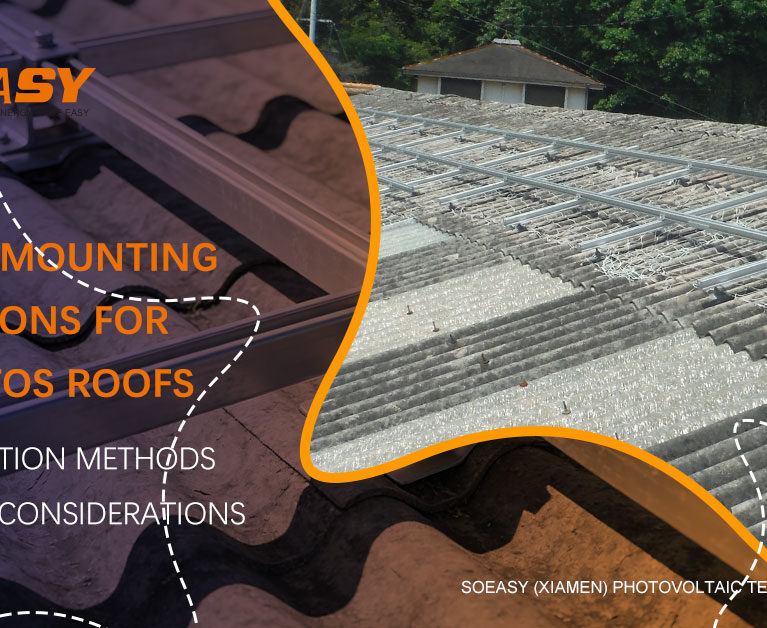
1. Corrugated Asbestos Roofs (Primary Application)
Recommended Solutions
- Hanger Bolt + Wave Base
- Hanger Bolt + L Foot
Design Logic
- Wave base distributes pressure across the corrugated surface
- Hanger bolt penetrates layers and anchors into purlins
- L foot connects rails and modules
Key Points
- Must fix into purlins (≥25 mm embedment)
- Never apply direct pressure on roofing sheets
- Use torque control during installation
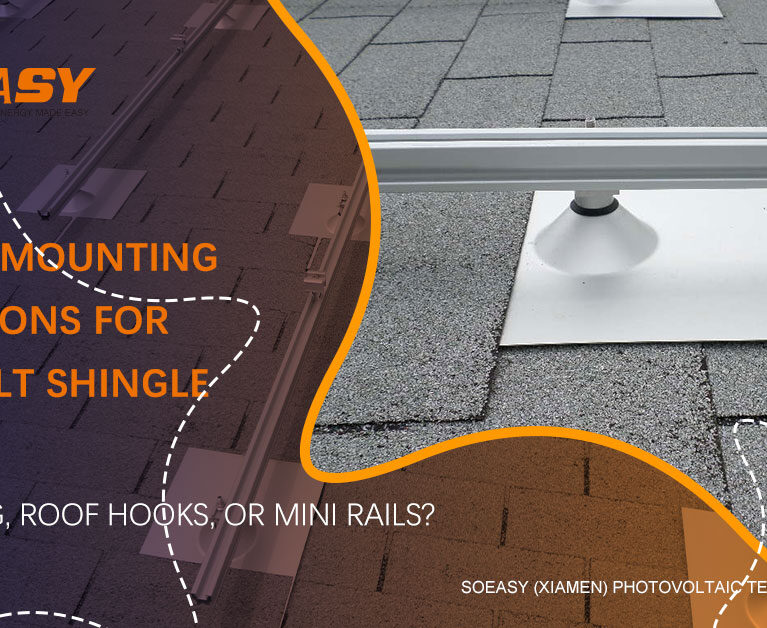
2. Asphalt Shingle Roofs
Although less common, hanger bolts can be used in specific scenarios:
- When higher pull-out resistance is required
- When flashing installation is not feasible
Requires proper sealing with EPDM washers and sealant
3. Industrial Steel Roofs
Widely used in large-span industrial buildings:
- Direct anchoring into steel purlins
- High structural reliability
- Efficient installation with power tools
Installation Guide
1. Preparation
- Identify roof structure (wood or steel)
- Locate purlins accurately
- Select appropriate bolt length
2. Installation Steps
- Pre-drill if necessary (for thick steel or hardwood)
- Place wave base and sealing components
- Install hanger bolt using appropriate tools
- Control torque at 20–25 N·m
3. Mounting System Installation
- Attach L feet or rails
- Adjust height for alignment
4. Waterproofing
- Apply sealant at all penetration points
- Ensure complete sealing coverage
Design and Selection Guidelines
Length Calculation
Bolt length should meet:
Total length ≥ roof thickness + ≥25 mm embedment + 20–30 mm exposed thread
Material Selection
- Corrosive environments → SUS304 / SUS410
- Standard environments → coated carbon steel
Torque Control
- Recommended: 20–25 N·m
- Avoid over-tightening or under-tightening
Use with Wave Base
For corrugated asbestos roofs:
Wave base is essential to prevent cracking and distribute load
Comparison with Other Fixing Methods
Hanger Bolt vs L Foot
- Hanger bolt → stronger anchorage, deeper penetration
- L foot → simpler, faster installation
Use hanger bolts for high-load or multi-layer roofs
Hanger Bolt vs Mini Rail
- Hanger bolt → structural anchoring component
- Mini rail → integrated lightweight system
Combine hanger bolts with rails for heavy-duty systems
FAQ
What roofs are hanger bolts suitable for?
Corrugated roofs, wood roofs, steel roofs, and insulated roofs
Is wave base necessary?
Yes, especially for asbestos roofs
Do hanger bolts require pre-drilling?
Depends on material thickness
What is the recommended torque?
20–25 N·m
Hanger Bolt Fixing: A Reliable Solution for Rooftop Solar
Hanger bolts provide a reliable, flexible, and high-strength fixing solution by transferring loads directly to roof structural elements rather than fragile roofing materials.
Best Use Cases
- Corrugated asbestos roofs → Hanger Bolt + Wave Base
- Steel roofs → Hanger Bolt + L Foot
Why Choose SOEASY
- Full range of hanger bolt sizes (100–300 mm)
- Material options for different environments
- Optimized designs for wood and steel structures
- Customized solutions for project-specific needs
Contact SOEASY for reliable and efficient solar mounting solutions.