English

 Post by
 I. Why Foundation Selection is Critical for Solar Success
In the architecture of a photovoltaic (PV) plant, the mounting foundation is often overlooked, yet it remains one of the most vital components. Acting as the “roots” of the system, it ensures structural stability and long-term operational safety. The quality of your foundation strategy directly dictates project safety, construction timelines, total costs, and lifecycle sustainability.
An unsuitable choice can lead to construction delays, budget overruns, and severe structural risks. For large-scale ground-mounted plants, foundation costs typically account for 20%–40% of the total mounting system cost. Today, the industry relies on two primary solutions: Ground Screw Foundations and Concrete Foundations. This analysis explores the core of these technologies to provide a professional basis for your decision-making.
II. An Overview of Ground Screw Foundations
2.1 Structure and Working Principle
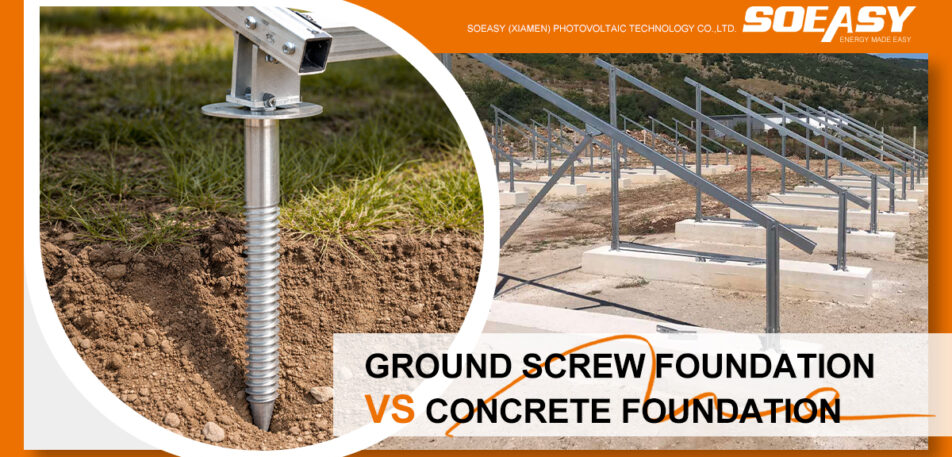
A ground screw is a helical steel pile composed of a high-strength steel shaft with welded spiral blades. Using specialized hydraulic or mechanical drivers, the screw is rotated into the ground to a predetermined depth. As it penetrates, the blades compact the surrounding soil, creating significant vertical compression and uplift resistance, as well as lateral load capacity.
2.2 Materials and Corrosion Protection
- Base Material: Generally utilizes Q235B or Q355B low-alloy, high-strength structural steel.
- Anti-Corrosion Technologies:
- Hot-Dip Galvanization: The industry standard, with an average thickness of ≥85µm, providing over 25 years of protection in standard environments.
- Zinc-Aluminum-Magnesium Coating: A next-generation technology offering superior “self-healing” properties for cut edges and enhanced durability in highly corrosive environments.
- High-quality ground screws are designed to match the 25-year+ lifespan of a PV power plant.
2.3 Typical Application Scenarios
- Distributed Ground-Mount Projects: Commercial and industrial projects requiring rapid deployment with minimal land hardening.
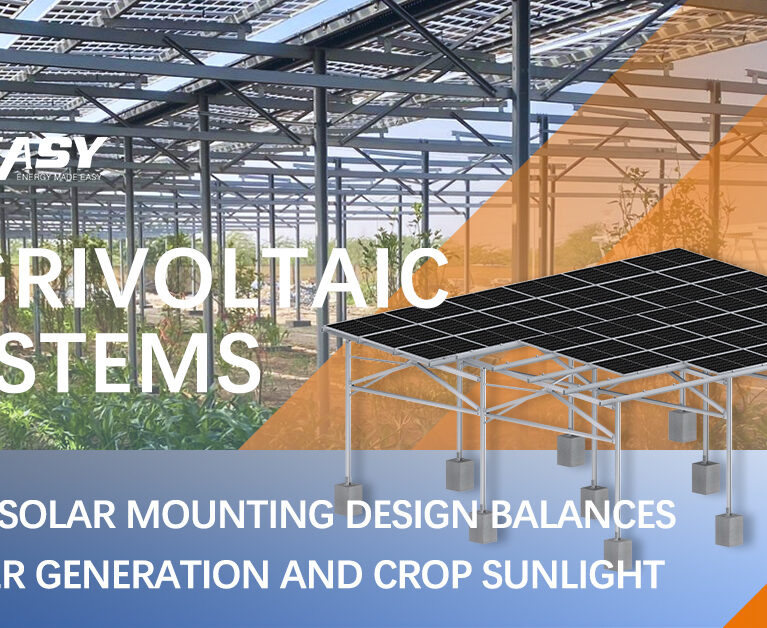
- Agrivoltaics and Fishery-Solar Hybrids: Projects requiring minimal soil disturbance to protect arable land or aquatic ecosystems.
- Temporary or Relocatable Projects: Scenarios requiring land rotation or temporary power; ground screws can be fully extracted and recycled.
- Ecologically Sensitive Areas: Grasslands or wetlands where environmental protection and fast ecological recovery are mandatory.
III. An Overview of Concrete Foundations
3.1 Primary Structural Forms
- Isolated Foundations: The most common form, where individual concrete blocks are cast for each pillar.
- Strip Foundations: A continuous concrete beam connecting a row of pillars to better distribute loads, ideal for sites prone to uneven settlement.
- Pile + Cap Foundations: Used in soft soil or high-load scenarios; precast or cast-in-place piles are driven deep, topped with a concrete cap for maximum stability.
3.2 Construction Workflow
Concrete foundations involve a linear “wet work” process including site leveling, excavation, rebar installation, and pouring. However, the mandatory curing period (typically 7–28 days) creates a significant bottleneck. Furthermore, this timeline is heavily dependent on weather; rain or low temperatures can compromise both quality and schedule.
IV. Ground Screw vs. Concrete: Performance Comparison
| Feature | Ground Screw Foundations | Concrete Foundations |
| Construction Efficiency | High. Mechanical installation takes minutes. No curing; immediate loading. | Low. Complex “wet” processes and mandatory curing periods. |
| Cost Structure | Lower total cost due to reduced labor and zero waste disposal. | Lower material costs, but high labor, machinery, and hidden weather costs. |
| Environmental Impact | Eco-friendly. Zero excavation, zero waste soil, and fully recyclable. | High impact. Causes soil disruption and generates construction waste. |
| Flexibility | High. Easy to adjust, expand, or relocate the entire array. | Permanent. Nearly impossible to adjust or move once cast. |
V. Strategic Selection Guidelines
- By Soil Condition: Use ground screws for firm soil, sand, or gravel. For deep, soft silt or clay, concrete piles are often more reliable.
- By Project Lifespan: Ground screws are highly economical for short-term (<15 years) or distributed projects. For 25–50 year utility-scale plants, both are viable.
- By Regulatory Requirements: In regions with strict environmental laws (Europe, Japan, Australia) or on agricultural land, ground screws are often the only compliant choice due to easy soil restoration.
VI. Industry Trends: The Future of Solar Foundations
The global market is rapidly shifting toward ground screws. They have already surpassed concrete in many mature overseas markets because of their adaptability and lower Balance of System (BOS) costs. Additionally, new Zinc-Aluminum-Magnesium coatings and high-strength steel continue to increase their durability and load capacity.
VII. Conclusion: Finding the “Right Fit”
There is no “absolute winner”—only the foundation most suited to your specific site. While ground screws represent the modern trend of efficiency and sustainability, concrete remains a classic solution for extreme stability.
At SOEASY, we provide more than just high-quality ground screws and mounting structures; we deliver “one-stop” customized design services. From initial geological surveys and pull-out tests to 3D mechanical modeling, our engineers ensure your project achieves the perfect balance of performance and cost.